
What if a Goldfish was Driving Your Uber?

There was a time not long ago, though it already feels like a much more innocent century, when the phrase “goldfish driving a car” would have been safely filed under children’s cartoons, chemically enhanced hallucinations, or the sort of metaphor an overworked management consultant might deploy to describe quarterly earnings. And then, with very little ceremony and absolutely no regard for narrative boundaries, it became real.

Because this one is not metaphor, nor satire, nor a clever bit of internet mischief. A goldfish named Blub – an actual, bowl-dwelling goldfish – under the careful supervision of a Dutch engineer (with, one suspects, time to spare) recently piloted a motion-sensing vehicle across more than 40 feet in under a minute. In the process, Blub secured a Guinness world record and quietly unsettled the hierarchy of intelligence we’ve spent centuries arranging. The system itself is disarmingly simple: the fish swims, the sensors interpret, the car obeys. No driver’s license, no road rage, no existential dread at traffic lights - just a small orange creature gliding through water while the world rearranges itself around its whims.

Of course, this is not entirely unprecedented. Scientists, being both brilliant and occasionally bored, have previously demonstrated that goldfish can learn to navigate wheeled contraptions on land, steering toward targets with a competence that suggests navigation may be less about environment and more about something quietly universal. In other words, the fish was not merely along for the ride. It was, in some modest, undeniable sense, driving.
And this is where things begin to slip. Because once you accept that a goldfish can operate a vehicle – not symbolically, not theoretically, but literally - the rest of reality loses its grip with surprising speed. The question is no longer whether this should have happened, but what else might already be happening just outside our peripheral vision. What if the goldfish isn’t the exception, but the opening act? What if, at this very moment, the animal kingdom has been quietly acquiring skills, titles, and LinkedIn profiles we have simply failed to notice? What follows, then, is not speculation so much as a public service: a brief survey of what may already be underway.
The Pigeon That Manages a Hedge Fund
There are, of course, precedents. Pigeons have long demonstrated an uncanny ability to navigate complex environments, return unerringly to specific locations, and make decisions with a confidence that borders on theological. We have, at various points, entrusted them with messages, reconnaissance, and - if one recalls our March 20th post, War Room’s Worst Ideas

- even the guidance of experimental missiles, a proposal that felt ambitious at the time but now reads more like early-stage recruitment.
The firm itself, preferring not to be named for this article, citing “client sensitivities” - and what one assumes are regulatory gray areas - insists the pigeon (known internally as Gregory) serves only in an “adjunct analytical role.” Regardless, Gregory has outperformed multiple human senior analysts and at least one algorithm that was, until recently, described as “revolutionary.” His process remains opaque, his methodology considered proprietary, though colleagues note a disciplined routine of chart observation, selective pecking, and, on at least one notable occasion, a refusal to deposit his suggestion on an overly optimistic earnings report. A restraint that, in hindsight, saved the firm several million and elevated Gregory to partner.

The Octopus Granted an Architecture License
Octopuses have demonstrated problem-solving abilities that range from opening jars to escaping sealed enclosures, often with a patience and ingenuity that feels less like instinct and more like quiet calculation. They have slipped through impossibly small gaps, memorized layouts, and, on at least one occasion, made a deliberate exit across dry land, as if the concept of “containment” were more suggestion than rule.

The state prison licensing board, after what it described as a “lengthy and highly unusual review process”, granted provisional credentials to a particularly gifted specimen, citing its “intuitive grasp of spatial constraints.” The firm it now consults for, which likewise prefers not to be named, has since unveiled a series of correctional facilities marketed as “functionally inescapable.”

Early reports suggest this is largely true, with one notable exception: the architect itself, which has, during multiple site visits, demonstrated an ability to leave its own designs at will. This has been framed internally not as a flaw, but as proof of concept - an assurance that every weakness has been identified, cataloged, and reserved.
The Sloth That’s Competing in a Marathon
The event began, somewhat optimistically, in 2017. There was a starting line, a modest crowd, and a general understanding - unspoken but widely shared - that this might take a while. Sloths, after all, are not built for urgency. They move with a kind of serene indifference to deadlines, schedules, and the broader human fixation on finishing things simply because they have been started. In a world increasingly obsessed with speed, optimization, and measurable output, the sloth has remained steadfastly unmoved - both philosophically and, in most observable cases, physically.

The marathon remains officially “in progress.” Sponsors, who initially signed on for visibility, eager to associate themselves with “endurance” and “authentic pacing,” have since reframed their involvement as “a long-term brand alignment,” praising the sloth’s consistency and refusal to be rushed into performative completion. Organizers continue to issue periodic updates, each confirming that, while the finish line has yet to be reached, it remains technically within range, insisting that the marathon will conclude as scheduled - just as soon as the participant arrives.

The Parrot Appointed to a Cabinet Position
The appointment was described as bold, though insiders suggested it was more a reflection of evolving priorities than a break from tradition. Parrots, after all, possess a rare and valuable skill set: the ability to repeat complex phrases with absolute confidence, minimal deviation, and no apparent concern for underlying meaning. In an environment where messaging must remain consistent across shifting realities, this was seen not as a novelty, but as a strategic advantage.

Early press briefings have been, by most accounts, remarkably effective. Key talking points are delivered clearly, then repeated – louder and louder - until questions begin to feel redundant. Critics have raised concerns about depth, nuance, and the absence of unscripted thought, though supporters argue these qualities have been historically overstated.

Approval ratings remain steady, buoyed by what officials describe as “clarity and consistency,” a standard the appointee meets with unwavering discipline.
The Raccoon Running a Michelin-Star Street Food Cart
It began, as many culinary movements do, with a certain disregard for convention. The raccoon - long misunderstood as a mere opportunist - has demonstrated a refined ability to source ingredients across a wide and ever-changing landscape, selecting items with a discernment that appears, at times, almost curatorial.

What others might dismiss as refuse, it approaches as possibility, assembling combinations that challenge traditional notions of freshness, provenance, and intent: a deconstructed takeaway container paired with something faintly grilled, a late-night fusion of bakery remnants and protein of uncertain origin.
The cart itself operates without a fixed menu. Nothing is stored, nothing repeated, and nothing sourced through channels that might be described as conventional. Offerings shift nightly, determined entirely by what can be acquired within a given radius and under varying conditions of access. Critics, initially skeptical, have since embraced the experience, praising its immediacy and what one reviewer described as “an aggressively local ethos.”

There are no reservations, no substitutions, and no guarantees beyond the understanding that whatever is served was discovered only hours before. Yet demand remains high - driven, perhaps, by the quiet thrill of knowing that whatever is served was never meant to be found, let alone plated.
The Crows Working as Private Investigators
The arrangement is rarely advertised. Law firms and investigative agencies prefer to describe it, when pressed, as an “external consultancy,” brought in on a case-by-case basis where discretion is paramount and conventional methods have proven insufficient. Crows, after all, have demonstrated an unsettling capacity for facial recognition, long-term memory, and what appears to be coordinated observation - skills that translate, with minimal reframing, into something resembling surveillance.
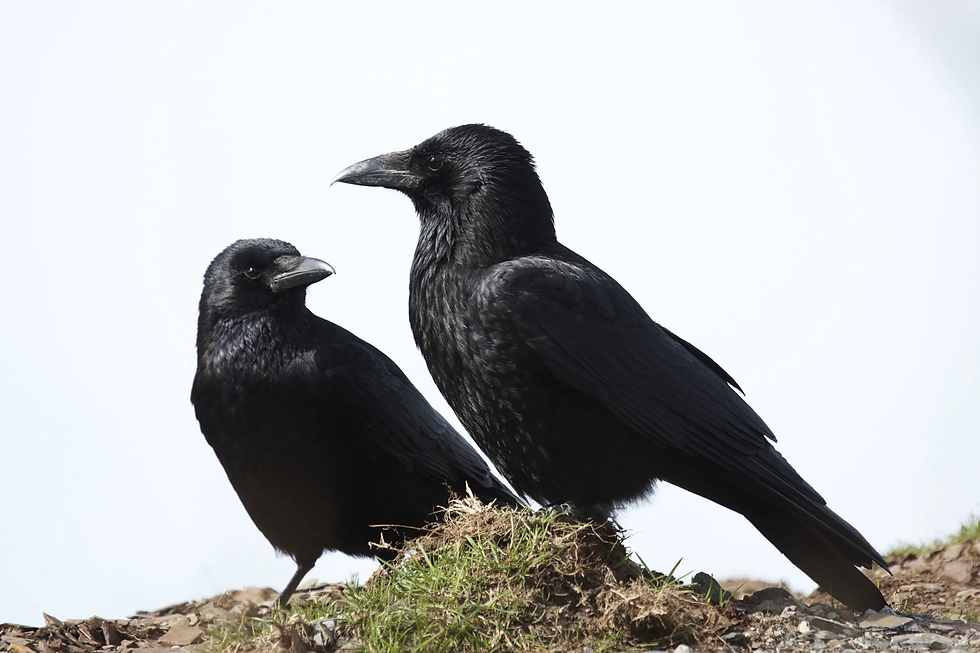
Engagements tend to be brief and results unusually precise. Missing items are located. Movements are tracked. In certain divorce proceedings, details have emerged with a level of specificity that has prompted quick and quiet settlements along with an unspoken agreement not to inquire too deeply into methodology. The crows themselves provide no reports, issue no statements, and resist all attempts at documentation. They are compensated, it is said, in ways that ensure continued cooperation. Beyond that, the firms involved decline further comment - citing client confidentiality,

and, increasingly, a preference not to know how the information was obtained.
The Cow Who Became a Yoga Influencer
It began with a still image. The cow - unbothered, unhurried, and entirely indifferent to the concept of performance - was photographed standing in a field, doing nothing in particular with a level of commitment that felt, to some, aspirational.
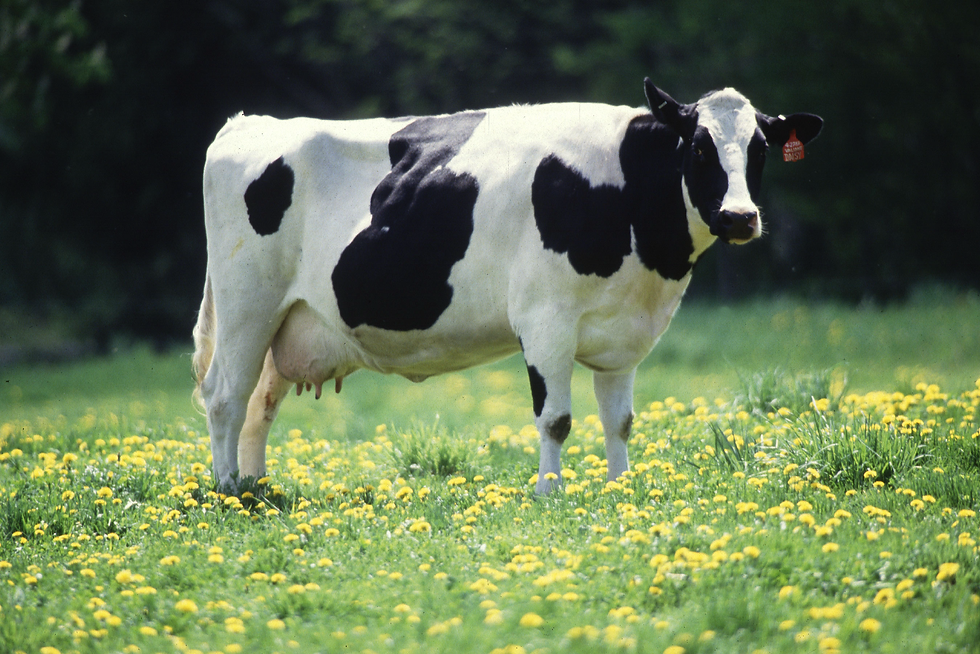
In an environment saturated with curated motion and performative wellness, this absence of effort was interpreted not as inactivity, but as intention. The posture was identified, named, and eventually trademarked under the broader philosophy of “mindful standing.”
The following has grown quickly. Millions have subscribed, drawn to a practice that required no flexibility, no equipment, and no measurable progress. Sessions consist largely of sustained presence, punctuated occasionally by a subtle shift in weight or a change in gaze - moments described by adherents as “advanced work.”

Critics have questioned the lack of movement, though supporters argue this is precisely the point. In a culture obsessed with doing, the cow has offered something quieter: the radical discipline of simply remaining where you are.
The Hamster Powering a Cryptocurrency Mine
The setup was initially framed as a return to fundamentals. In an industry increasingly abstracted from anything resembling physical effort, the introduction of a hamster - running continuously on a small, well-instrumented wheel - was positioned as a way to reconnect digital value with something tangible.

Each rotation generates energy, each unit of energy contributes to the mining process, and each mined coin serves as a reminder that, somewhere in the system, something is actually moving.
Performance metrics have been described as “philosophically strong.” The hamster runs tirelessly, the system hums, and coins are produced at a steady, if economically questionable, rate. Their market value remains consistently below the cost of the electricity required to generate them, a detail supporters insist is beside the point. What matters, they argue, is authenticity - the visible, undeniable presence of effort in a space otherwise defined by invisible computation. Investors, while cautious, have expressed interest, noting that in a market driven largely by belief, the sight of something running endlessly in place may be the most honest signal available.

The Tortoise Writing a Self-Help Bestseller
The manuscript arrived gradually. Not in chapters, exactly, but in measured installments - sentences that seemed less written than released, each one carrying the quiet assurance that it had nowhere else to be. The tortoise, long associated with patience and incremental progress, approaches authorship with the same philosophy: no deadlines, no urgency, and no particular interest in the reader’s, or its editor’s, timeline.

The result is a book that resists skimming, not by design, but by pace.
Titled Take Your Time: You’re Going Nowhere Anyway, the work has found an audience among those exhausted by acceleration and the persistent demand to improve. Critics have described its pacing as “slow but inevitable,” noting a structure that unfolds with a kind of quiet persistence rather than momentum. Sales have been steady, if unhurried, driven largely by word of mouth and the quiet expectation that it will reach the bestseller list in a year or two. The assumption being that, in a culture obsessed with getting somewhere, the tortoise may be the only one offering directions that are actually accurate.

The Bees Forming a Labor Union
The organizing effort began quietly and was met with a mixture of surprise and mild defensiveness. Bees, after all, have long been cited as the ideal workforce - industrious, cooperative, and possessing an almost spiritual commitment to collective output. Indeed, entire management philosophies have been built around their example, usually by those not doing the pollinating.

Less frequently noted is the absence of choice in this arrangement. It was, perhaps, only a matter of time before the bees indicated they would like to revisit the terms.
The demands are, on paper, modest: fewer existential metaphors, clearer boundaries between labor and identity, and a more sustainable work-life pollination balance. There have also been requests to limit the casual use of phrases like “busy as a bee” in performance reviews, which representatives argue constitutes “uncompensated branding.” Spokesbees have emphasized that the goal is not to disrupt production, but to establish boundaries. Negotiations remain ongoing.

Global honey production has not yet been disrupted, though there is a growing awareness of how much depends on its uninterrupted flow – and how narrow the margin for interruption may actually be. A reality the bees seem increasingly comfortable with.
The Wolf Who Became a Life Coach
His name is Ronan, though branding materials occasionally refer to him as “Ronan the Aligned,” a distinction that appears to matter primarily to his marketing team. The transition into life coaching was framed as a natural evolution. Wolves, after all, have long been associated with leadership, instinct, and a certain unapologetic clarity of purpose - qualities that translate easily into the language of personal development. Drawing loosely on the high-energy style of figures like Tony Robbins, Ronan’s approach substitutes stadium lighting and hand gestures with something quieter: proximity, eye contact, prolonged silence, and an unwavering focus that clients describe as “clarifying.”

Workshops are immersive and, by most accounts, unforgettable. Built around what Ronan describes as “authentic leadership”, participants are encouraged to identify limiting beliefs, assert boundaries, and, when necessary, engage in what Ronan calls “strategic howling” - a vocal exercise intended to help clients articulate intention without the constraints of language. Testimonials have been largely positive. Clients report feeling more confident, more decisive and, in some cases, more aware of their position within a hierarchy they had previously believed to be metaphorical. There is, however, a recurring note in the feedback - difficult to quantify but consistently present - of a lingering sense that the process is not entirely symbolic, and that the line between empowerment and evaluation may be thinner than initially presented.

What if a Goldfish was Driving Your Uber
For those wondering, the goldfish is real. The others are not. At least, not in any formally recognized capacity. The thing about a goldfish driving a car isn’t that it can be done. We’ve already established that it can. The thing that lingers - quietly, persistently - is how little resistance there was to the idea once it appeared. A brief pause, a raised eyebrow, and then…acceptance. Not because it made sense, but because, on some level, it no longer needed to. The world had already done the necessary stretching.

From there, it doesn’t take much. A pigeon making investment decisions. A raccoon plating dinner. A wolf offering clarity at a price point. Each one, taken individually, feels like a joke told with a straight face. Taken together, they begin to resemble something else - less a collection of absurdities than a pattern emerging in low light. Not a breakdown, exactly. More like a quiet redistribution of roles, in which competence, authority, and meaning drift slightly off their assigned marks and settle wherever they happen to be most convincingly performed. The meetings still happen. The statements are still issued. The confidence remains, even as the connection to anything resembling consequence becomes…flexible.
Of course, we could dismiss it. Call it novelty. Chalk it up to clever engineering, overactive imagination, or the simple human tendency to project intention onto anything that moves with purpose. We’ve been doing that for a long time. It’s comforting. It keeps the lines clean. It reassures us that the systems remain intact, that the hierarchies still hold, that the roles are still being played by the people we believe are playing them, and that the script - however bizarre – hasn’t been quietly handed to someone else.
But every now and then, it’s worth considering the alternative. Not loudly, not with alarm - just as a passing thought, held a moment longer than necessary. That the roles may not be as fixed as we’ve been led to believe. That the performance of authority has, in some cases, become indistinguishable from the thing itself. And that somewhere along the way, we may have stopped asking who’s actually driving - not because we trust the answer, but because everything appears to be moving just fine without it.
Author’s Note: There is, at present, no reliable way to determine who - or what - is actually in control at any given moment. There is, however, a way to make it quieter.
A good pair of noise-canceling headphones won’t answer the larger questions, but they will reduce the volume at which they’re asked. Meetings become more tolerable. Confidence sounds more convincing. And the low, persistent hum of things not quite adding up can be softened into something almost manageable.
If you’re inclined to experience a more curate version of reality, you can explore a pair here. Or wherever such assurances are currently being sold.

And for those who adhere to the idea that productivity is a matter of posture, a standing desk offers the opportunity to remain upright, engaged, and visibly committed to the act of doing - regardless of what, precisely, is being accomplished. It is, in many ways, the physical manifestation of “mindful standing,” allowing one to participate fully in the appearance of progress without the unnecessary burden of movement.
For those interested in aligning form with function (or at least the suggestion of it), a range of options can be considered at this point.

If you choose to purchase through the Amazon Associates links above, this publication may earn a small commission at no cost to you.


😳why do I feel like I have been pranked? April Fools!