
Waiter, There’s a Frog in my Psyche

There are certain holidays that arrive with dignity. Memorials. National observances. Days draped in solemnity and civic posture. Then there is Frog Jumping Day, which hops around every May 13th. This is a holiday that asks the citizenry - without irony, apparently - to gather around moist amphibians and celebrate their ability to briefly defy gravity before landing face-first in dirt. It’s the sort of occasion that could only emerge from a species with both too much free time and an unhealthy confidence in committees. Somewhere, at some point, a group of adults looked at a frog and thought: Yes. But how far can it jump under pressure?

The thing about frogs is that humanity has never known precisely what to do with them. We’ve worshipped them, dissected them, eaten their legs in garlic butter, turned them into princes, used them in apocalyptic scripture, and assigned them the impossible burden of symbolizing transformation itself. Frogs have spent centuries trapped in the middle of our existential crises, quietly minding their own swampy business while civilizations projected meaning onto their damp little bodies like over-caffeinated literature professors. The frog, meanwhile, has maintained the expression of a creature mildly annoyed at being involved at all.

In America, this confusion was converted into organized gambling. The nation’s great literary career, that of Mark Twain, was launched in part by a story involving a competitive jumping frog named Daniel Webster and a cheating scandal involving buckshot. One hesitates to call this the foundation of American letters, though technically it’s difficult to argue otherwise. While Europe was busy producing symphonies and political revolutions, the United States was perfecting the art of wagering whiskey and money on amphibian athleticism.
And perhaps that’s why frogs have endured in the public imagination long after more majestic animals have faded into decorative obscurity. Lions became logos. Eagles became currency. Horses became therapy for hedge-fund managers. But frogs remained stubbornly feral - croaking from drainage ditches, appearing in fairy tales, surviving extinctions with the exhausted resilience of underpaid municipal workers. They are ancient, vaguely judgmental, and biologically improbable. Which, come to think of it, may also explain why humans feel such an immediate kinship with them.

Mark Twain and the Frog that Launched a Career
If one were forced to identify the precise moment American literature abandoned all hope of dignity, it would likely be sometime around 1865, when Mark Twain published The Celebrated Jumping Frog of Calaveras County and accidentally revealed the national soul to itself.

Europe had its tragic poets, its tortured philosophers, its grand moral epics. America, meanwhile, introduced itself to the literary world with a story about a gambling frog sabotaged by performance-enhancing buckshot. It was, in its own way, refreshingly honest. One suspects Twain understood immediately that the American psyche would never truly trust art unless someone was being hustled near a barrel of whiskey.
The story emerged from the California Gold Rush, that glorious national fever dream in which thousands of men abandoned stability, hygiene, and occasionally basic literacy in pursuit of shiny rocks buried beneath mountains. Gold camps were places of astonishing boredom interrupted by brief explosions of catastrophe. Men gambled compulsively because there was little else to do besides freeze, lose money, and contract diseases whose treatments involved alarming amounts of mercury. Under such conditions, absolutely anything capable of movement became a potential sporting event. Horses raced. Dogs fought. Men wrestled bears. Someone, inevitably, looked down at a frog and thought: I’ll bet mine jumps farther than yours.

And this, more or less, was the operating system of the American frontier: the unshakable belief that competition improves all things, including activities that did not previously exist. Twain’s frog, the magnificently named Daniel Webster, is trained with almost athletic seriousness, as though the creature were preparing for the Olympics rather than being yelled at beside a muddy mining camp by men smelling faintly of bourbon and existential collapse. Then comes the betrayal. A stranger secretly fills the frog with buckshot, rendering poor Daniel Webster too heavy to jump. The scam is beautiful in its simplicity. America’s foundational comic masterpiece turns out to hinge on an amphibian doping scandal.
Naturally, the joke refused to die. Because human beings, once exposed to irony, inevitably convert it into tourism. What began as Twain’s sly satire evolved into the real-life annual frog-jumping jubilee in Calaveras County, where crowds still gather to measure frog trajectories with the kind of solemn concentration usually reserved for moon landings and tax audits.

Children cheer. Adults place bets. Local officials pretend this all makes perfect civic sense. And somewhere beneath the noise and kettle corn and souvenir T-shirts, Twain’s original joke continues quietly croaking beneath the surface: civilization is, at best, a thin layer of formality stretched over a gambling contest in the dirt.
Frogs in Mythology, Religion, and Ancient Panic
Long before frogs became the mascots of children’s cartoons and novelty racing events, they occupied a far stranger role in the human imagination: they were omens. Tiny damp prophets squatting at the edge of civilization. Creatures emerging mysteriously from mud after heavy rains, appearing in impossible numbers, then vanishing again as though recalled by some unseen management office beneath the swamp. To ancient people who were forced to invent explanations while standing ankle-deep in marsh water, this behavior seemed less biological than supernatural. Frogs did not simply arrive. They materialized. Like noisy mildew.

The ancient Egyptians, for instance, regarded frogs with tremendous respect, largely because the Nile’s flooding brought both fertile soil and armies of frogs in its wake. To them, the frog became a symbol of fertility, rebirth, and renewal. The goddess Heqet was depicted with the head of a frog, overseeing childbirth and new life.

Which is, objectively speaking, one of the more generous interpretations humanity has ever assigned an amphibian. Elsewhere in history, frogs received somewhat less flattering reviews. Medieval Europeans, who viewed nearly everything damp with profound suspicion, associated frogs with witchcraft, plague, curses, and swamp-based evil generally. If a peasant found frogs behaving oddly near a well, there was a decent chance someone nearby would eventually be accused of consorting with Satan. Civilization, at the time, was going through a phase.
Then there was the Bible, which included frogs among the plagues visited upon Egypt - a detail suggesting that even several thousand years ago people already understood the uniquely psychological horror of encountering frogs in excessive quantities. One frog is whimsical. Two frogs are interesting. Ten thousand frogs covering your floors, ovens, roads, and sleeping quarters begin to feel less like nature and more like an organized campaign of emotional warfare.

The frog’s great historical gift has always been scale. They arrive suddenly and collectively, transforming from adorable into apocalyptic with astonishing efficiency.
And yet, despite all this, fairytales eventually promoted frogs into royalty. Somewhere along the line, European folklore decided frogs might secretly be princes trapped beneath curses, implying that monarchy itself was perhaps only one unfortunate spell away from swamp life.

For centuries humanity couldn’t decide whether frogs represented fertility, evil, transformation, divine punishment, or lunch. That uncertainty is precisely what makes them fascinating. Frogs are among civilization’s most over-interpreted animals: creatures upon which humanity has projected every anxiety imaginable while the frogs themselves continued doing what they had always done - lurking silently in reeds, blinking judgmentally, and eating whatever wandered too close.
Frog Science Is Unsettling
Scientifically speaking, frogs are less a coherent species than a collection of biological dares that somehow survived the evolutionary review process. They absorb water through their skin. They breathe partially through that same skin. Some freeze solid during winter and thaw back to life later like amphibian leftovers forgotten behind the ice cream. Others possess transparent flesh through which one can observe their internal organs operating in real time, as though nature briefly partnered with a low-budget science-fiction director.

Frogs don’t appear designed so much as negotiated. They resemble what happens when evolution experiments during happy hour and nobody sober is left to edit the final draft.
Consider the poison dart frog, a creature roughly the size of a paperclip yet capable of killing grown humans with alarming efficiency. Brightly colored and almost decorative, these tiny amphibians look like something sold in boutique gift shops before revealing themselves to be chemically weaponized rainforest grenades.

Elsewhere, hallucinogenic toads secrete compounds so powerful that humans, being humans, immediately decided to lick them recreationally. There is perhaps no cleaner summary of civilization than this: evolution develops potent amphibian toxins over millions of years, and within approximately eight minutes someone in cargo shorts attempts to smoke it behind a music festival.
Then there are the smaller horrors. Frog legs twitch after death because nerves continue firing independently, a detail generations of schoolchildren discovered during dissections while reconsidering their future in medicine. Some frogs survive being frozen by flooding their tissues with glucose, essentially turning themselves into biological cocktails until spring arrives. Glass frogs reveal beating hearts through translucent skin with the calm indifference of creatures that have never understood privacy as a concept.
Beneath all this weirdness lies something quietly grim. Frogs are environmental indicators - fragile little alarms for the planet’s health. When frogs begin disappearing, ecosystems are usually collapsing alongside them. Pollution, habitat destruction, climate shifts, and fungal pandemics have devastated amphibian populations worldwide, turning the cheerful slogan “Save the Frogs” into less of a novelty bumper sticker and more of a planetary distress signal. Humanity spent centuries mocking frogs, dissecting frogs, racing frogs, frying frogs, and hallucinating on frogs, only to discover they were among the first creatures warning us that we had poisoned the water. The frogs, as it turns out, were not strange because nature was broken. They were strange because nature was trying absolutely everything it could to survive us.

Frogs in Literature and Pop Culture
Few animals have enjoyed a public relations career as wildly inconsistent as the frogs. Bears are always bears. Wolves remain reliably wolfish. But frogs have spent centuries shape-shifting through culture with the unnerving versatility of seasoned character actors. They are one of the few creatures capable of appearing simultaneously in children’s bedtime stories, Greek theater, internet extremism, and French cuisine without anyone pausing long enough to ask whether civilization may have lost narrative control entirely.
In literature, frogs arrived early and never really left. The Frogs, written by Aristophanes in 405 BC, used choruses of croaking frogs as comic punctuation while wandering through the underworld in search of artistic salvation.

Fairytales later promoted frogs into enchanted aristocracy, giving us the frog prince: a slimy amphibian whose primary qualification for monarchy appeared to be surviving a kiss. This became an enduring lesson taught to children for generations, namely that repulsive swamp creatures may secretly be noblemen, which in retrospect explains a surprising amount about European history.
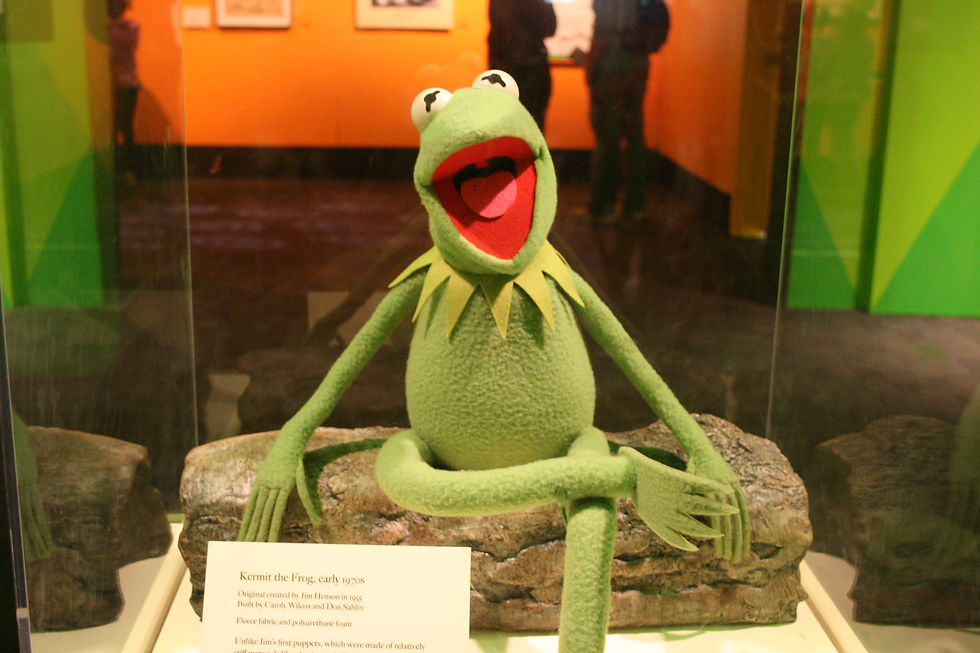
Then came the gentler amphibians. Kermit the Frog emerged as a kind of exhausted vaudevillian philosopher, permanently trapped managing chaos with the weary restraint of a middle-school vice principal.
Meanwhile, Arnold Lobel’s Frog and Toad gave the world two softly melancholic amphibians quietly navigating friendship, seasonal depression, and the emotional logistics of cookies.

These stories endured because frogs possess a strangely human quality: they always seem vaguely overwhelmed by existence. Even at rest, a frog appears to be contemplating unpaid taxes or the collapse of local government.
Naturally, the internet eventually got involved and things deteriorated quickly. Pepe the Frog began as an obscure comic character before mutating into one of the strangest cultural evolutions of the digital age: part meme, part political symbol, part cautionary tale about what happens when irony loses adult supervision.

Meanwhile, Japanese folklore treated frogs with far more dignity, often portraying them as symbols of luck, travel, and safe return. Which feels refreshingly mature compared to the Western tendency to alternate between worshipping frogs, weaponizing frogs, and sautéing them in butter. Through all of it, frogs have remained oddly adaptable cultural vessels, absorbing whatever anxieties or hopes each era needed to project onto them.
Humans Have Been Weird About Frogs for a Long Time
By this point, one begins to suspect the frog’s true evolutionary mistake was not developing vulnerable skin or an unfortunate body shape but simply remaining visible long enough for humans to notice it. Humanity cannot encounter a creature for more than five minutes without assigning it symbolism, monetizing it, worshipping it, eating it, or forcing it into organized competition. Frogs merely had the bad luck of being available. Had they lived quietly at the bottom of the ocean or atop inaccessible cliffs, they might have escaped history entirely. Instead, they chose ponds. And ponds, tragically, are where people gather.

Over the centuries we’ve transformed frogs into weather prophets, carnival attractions, educational trauma, and appetizers. Rural folklore once held that a frog’s croaking could predict rain. Medieval superstition treated frogs as omens of disease or witchcraft. Schools dissected them in fluorescent classrooms while children attempted emotional detachment with varying degrees of success. Restaurants served their legs sautéed in garlic butter, carefully avoiding discussion of the remaining frog attached to the situation.

Meanwhile, entire festivals emerged around frog-jumping contests in which adults leaned over measuring tapes with the grave concentration of NASA engineers monitoring lunar trajectories.
And naturally, because the modern world insists on industrializing every form of absurdity, frogs eventually became internet content. Meme frogs. Reaction frogs. Political frogs. Motivational frogs. Somewhere along the digital timeline, humanity collectively decided that complex emotional states could best be expressed through the face of a mildly alarmed amphibian. At the same time, elsewhere, people continued licking psychedelic toads in search of enlightenment, proving that technological advancement has done remarkably little to interrupt humanity’s ancient habit of bothering frogs for spiritual guidance.

Maybe that’s the real thread connecting all of this - the mythology, the literature, the science, the gambling, the hallucinogens, the French cuisine, the cartoon puppets, the swamp prophecies, the internet memes. Frogs became mirrors. Humanity kept looking at these damp little creatures and seeing whatever it most needed to explain: fertility, luck, corruption, transformation, apocalypse, nobility, friendship, madness, dinner. The frogs themselves offered no opinion. They simply continued croaking in reeds exactly as they had for millions of years, quietly surviving ice ages, extinctions, and human civilization with the exhausted patience of creatures who long ago accepted that the dominant species on Earth was going to make this everybody’s problem.

Waiter, There’s a Frog in my Psyche
Maybe frogs endure because they remind us of something faintly uncomfortable about life itself: that existence is mostly damp improvisation pretending to be a plan. Frogs are ancient things. Older than empires. Older than borders. Older than most of the ideas humans use to reassure themselves that history is moving toward something meaningful. Long before philosophers began writing dense books about the human condition, frogs were already sitting half-submerged in mud beside stagnant water, blinking slowly at dragonflies with the serene patience of creatures entirely unconcerned with legacy.
And the frog doesn’t care what humans have made of it. It doesn’t care about Mark Twain, fairy tales, memes, mythology, French cuisine, psychedelic rituals, or children’s television. It has no interest in symbolic transformation. No opinion on fertility rites. No investment in internet discourse. A frog simply waits. Motionless. Ancient little lungs pulsing beneath translucent skin while something smaller and more distracted wanders fatally close.

There is something almost admirable about that level of focus in an age where most humans cannot survive six seconds without checking their phones for emotional updates.
Maybe that’s why frogs unsettle people slightly, even now. They seem less evolved than uninterrupted. Little survivors from an earlier draft of the Earth still lingering around drainage ditches and ponds while the rest of us build stock exchanges and streaming platforms and political systems that collapse every eighteen months. Frogs freeze solid and wake up again. Frogs survive poison. Frogs adapt. Frogs vanish when the water turns toxic. They are blank amphibian canvases onto which humanity continuously paints its neuroses, then acts surprised when the results become unsettling. Somewhere beneath all the jokes and folklore and absurd festivals sits the uncomfortable realization that frogs may actually understand the planet better than we do.
And somehow, despite all this (or perhaps because of it) humanity looked at that little amphibian crouched in the mud and decided: Yes. This should be a holiday. So, every May 13th, people gather to celebrate frog jumping with the solemn enthusiasm of a species trying very hard not to think about itself for a few hours. Children laugh. Adults place bets. Someone measures airtime with civic seriousness. The frogs leap because something nearby startled them. And civilization, as always, mistakes this for meaning.
Authors Note: If this essay has inspired you to explore the rich and emotionally confusing relationship between humanity and frogs a bit further - and, statistically speaking, at least one of you now owns a swamp-themed coffee mug - there are options available.
For those wishing to revisit the literary moment America officially decided amphibian gambling qualified as culture, you can pick up a copy of The Celebrated Jumping Frog of Calaveras County here.

For readers interested in informing both neighbors and wandering amphibians that parking regulations will be enforced with absolute swamp authority, there is also this entirely unnecessary - but strangely endearing - frog parking sign here.

And finally, because every discussion involving frogs eventually arrives at our exhausted green patron saint of quiet resignation, Kermit the Frog, you can acquire your very own Kermit doll here.

As always, any purchases made through these links help support the continued production of essays examining the thin and increasingly questionable line between human civilization and organized nonsense.
If you choose to purchase through the Amazon Associates links above, this publication may earn a small commission at no cost to you.



Now, I am beginning to feel a very slight remorse over chowing down on those delicious “tastes like chicken” frog legs. Hmmmmm. Just a little remorse…..