
Airports are Where Time Goes to Die

There are places in the world where time behaves responsibly. Small towns and villages, for instance. Libraries. Hardware stores run by men named Dale who still repair things instead of merely replacing them. In these places, time proceeds in a reasonably orderly fashion. Morning becomes afternoon. Afternoon becomes evening. People eat lunch at approximately lunchtime. Clocks remain more or less aligned with reality. Humanity, while flawed, continues pretending it has some contractual relationship with time.
Then there are airports.
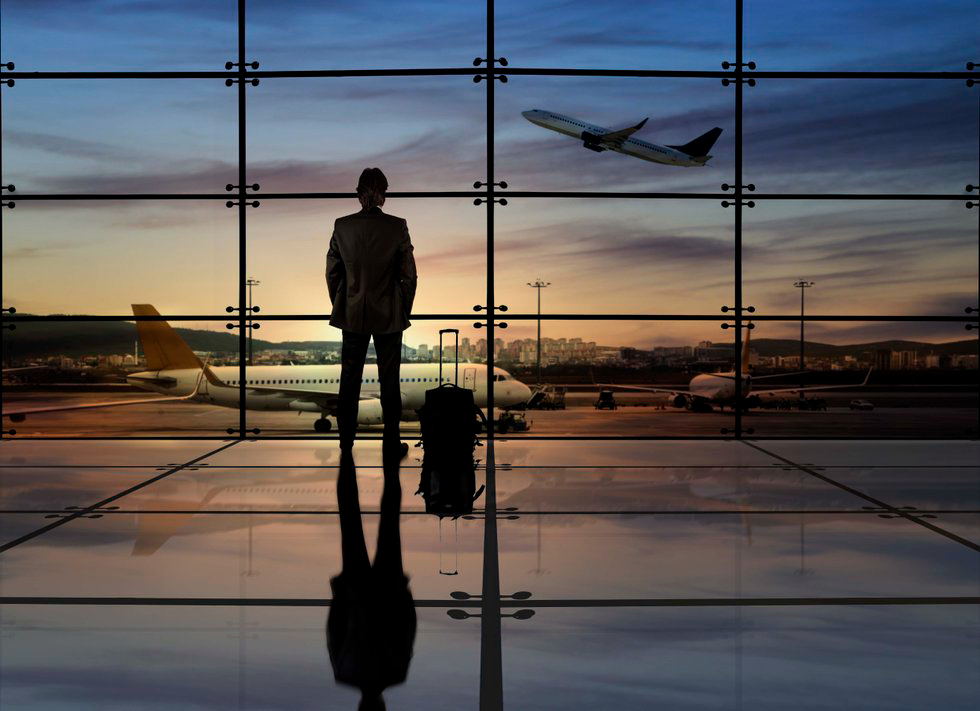
Airports operate under an entirely different cosmology. A man drinking a gin and tonic at 6:14 in the morning sits beside a woman asleep face-down on a backpack while an infant screams with the spiritual conviction of a televangelist confronting demons. Somewhere nearby, someone is eating Pad Thai out of a cardboard container. Nobody appears alarmed by any of this. The concept of “appropriate hours” has been quietly strangled somewhere between Security and Gate C17. Time zones collapse into one another like unstable governments. Breakfast and dinner become philosophical suggestions. Humans cease to function as citizens of nations and instead become migratory livestock carrying neck pillows.

The airport itself encourages this psychological deterioration. It’s all fluorescent lighting and synthetic carpeting. The windows suggest daylight but cannot be trusted. Every corridor feels temporary. Every meal costs the equivalent of a modest municipal tax. A digital board calmly informs travelers their flight has been delayed another forty-seven minutes, as though forty-seven minutes were a real unit of measurement in a building where an hour can pass in six minutes or linger indefinitely like a civil lawsuit. Entire emotional breakdowns occur beside charging stations without attracting so much as a sideways glance from nearby businessmen eating yogurt parfaits.
Airports, in other words, are where time goes to die. Or perhaps more accurately, where humanity willingly escorts time into a windowless holding cell, feeds it overpriced pretzels, and forces it to listen to repeated boarding announcements until it loses the will to continue. Because nowhere else on earth do human beings so completely surrender their understanding of chronology, dignity, and basic behavioral norms quite like they do inside the great glass and steel purgatories we euphemistically refer to as terminals.

Security Checkpoints and the Elasticity of Time
There is perhaps no clearer demonstration that modern civilization has quietly abandoned reason than the airport security line. Here, fully grown adults remove their shoes on command while holding clear plastic bags full of miniature liquids like nervous chemistry students fleeing a raid. Belts disappear. Watches vanish. Laptops emerge from backpacks only to be returned moments later after advancing approximately fourteen feet. A man who successfully manages regional investments for a multinational corporation suddenly finds himself being scolded by a nineteen-year-old named Tyler for forgetting a travel-sized conditioner bottle. Nobody questions any of this. Humanity simply shuffles forward in socked feet surrendering dignity one gray plastic bin at a time.

Time itself becomes unstable in the security line. Ten people ahead of you can require either four minutes or the complete emotional duration of a Victorian naval expedition. Entire personal transformations occur while waiting to pass through the body scanner. Relationships weaken. Religious beliefs are reconsidered. Somewhere near the conveyor belt, a father of three briefly contemplates abandoning society altogether and opening a bait shop in rural Montana. The line appears motionless until, without warning, it suddenly accelerates with the chaotic urgency of livestock escaping floodwaters, forcing everyone to half-jog while carrying backpacks, passports, and the fading remnants of self-respect.
The true genius of airport security is that it has convinced the public this experience represents order rather than repressed panic wearing a laminated badge. Contradictory instructions echo continuously across the terminal like bureaucratic jazz riffs. Shoes off. Laptops out. No, keep the laptops in. Boarding passes ready. Not yet. Step aside. Arms up. Empty your pockets. Remove your hat. Keep moving. Entire civilizations have probably collapsed under less confusing administrative guidance. And yet people obey instantly, because nothing makes human beings more cooperative than retractable belt barriers and the vague possibility of missing a flight to Disneyland.

International Waters for the Morally Flexible
Something peculiar happens to human beings the moment they pass through airport security. Ordinary social laws no longer apply. The airport exists in a strange legal and psychological gray zone somewhere between a shopping mall, a refugee processing center, and international waters. Here, otherwise reasonable adults begin making decisions that would alarm their families under normal circumstances. Men who require silence and fiber supplements before 9 AM suddenly order beers at sunrise with the reckless confidence of Scandinavian pirates. Entire families consume noodles, curry, red wine, and ice cream simultaneously at hours normally reserved for regret or sleep. A woman who would never spend twenty dollars on a sandwich outside the terminal calmly purchases hummus in biodegradable packaging for the approximate GDP of a small fishing village.

The airport encourages temporary moral exemptions from adulthood. Business executives who would never wear sweatpants to dinner will willingly wander Terminal C in compression socks carrying stuffed neck pillows shaped like livestock. Couples begin passive-aggressive arguments in three different languages over passport custody. Backpackers sleep face-down across rows of chairs with the tranquil surrender of medieval plague victims. Somewhere near Gate 22, a man openly brushes his teeth beside a charging station while another watches a film without headphones at maximum volume, apparently unaware he has declared war on civilization. Nobody intervenes because airports quietly lower humanity’s expectations of itself. One does not seek dignity in Terminal B. One seeks functioning Wi-Fi and perhaps an electrical outlet not already occupied by a German tourist charging seven separate devices.

Even the concept of time morality disappears. Breakfast becomes theoretical. Noon loses jurisdiction. Alcohol flows according to departure schedules rather than sunlight. Travelers speak casually of being “on Tokyo time now” or “adjusting to Madrid,” as though jet lag were a sophisticated medical philosophy rather than the body slowly realizing it has been transported through the atmosphere inside a pressurized aluminum tube. The airport permits all of this because airports understand something deeply unsettling about the modern world: if you disorient people thoroughly enough - physically, emotionally, chronologically - they will pay forty-three dollars for trail mix and call it self-care.
Humanity, Gathered Beneath Fluorescent Lighting
Airports may be the last remaining places on earth where humanity still assembles in its full bewildering entirety. Not digitally. Not ideologically sorted by algorithms. Physically. Rich and poor. Honeymooners and fugitives. Toddlers, sticky with mango juice beside diplomats carrying leather briefcases worth more than compact automobiles. A backpacker who has spent six months “finding himself” in Southeast Asia sits across from a woman who appears capable of dissolving a multinational corporation with a single phone call. Somewhere nearby, exhausted parents negotiate with tiny terrorists over crackers while a retired couple from somewhere pleasantly coastal discuss whether they should have packed more antihistamines. Civilization, in all its strange unevenness, gathers beneath the same departure boards to await further instruction from a gate agent named Priya or Lars or Michelle.

The remarkable thing is how quickly airports flatten social identity. Outside the terminal, people cling fiercely to status, ideology, profession, nationality, and self-importance. Inside the terminal, everyone eventually becomes the same creature: slightly confused mammals guarding chargers and monitoring screens for updates about Gate C46. Luxury watches lose authority beside delayed departures. Political opinions dissolve in the face of a canceled connection in Frankfurt. Entire hierarchies collapse the moment a boarding announcement triggers two hundred people to stand up simultaneously despite belonging to Boarding Group 7. The airport is perhaps the closest modern society comes to genuine equality.
And suffering, oddly enough, creates a kind of temporary tribe. Strangers exchange silent looks of mutual despair beside overcrowded charging stations. Entire conversations occur through nothing more than shared eye-rolls during boarding delays. Human beings who would never acknowledge one another in ordinary life suddenly unite against a common enemy: weather in another city. Somewhere over the years, airports stopped being transportation hubs and quietly became holding pens for the internationally displaced. Yet somehow, despite the exhaustion, confusion, and creeping spinal damage caused by airport seating, humanity keeps returning. Because buried beneath the fluorescent despair lies one stubbornly optimistic idea: that somewhere else might be better than wherever we currently are.

Everywhere and Nowhere at Once
The strange thing about airports is that, despite technically being attached to specific countries, they gradually erase all meaningful sense of location. You may physically be in Doha or Sao Paulo or Amsterdam, but emotionally you are simply “at an airport,” which is less a place than a condition (Singapore’s life reaffirming Changi Airport respectfully excluded).

The architecture changes slightly. The duty-free perfume selections become more aggressive in certain regions. Some terminals offer sushi while others offer mysterious sandwiches sealed in triangular plastic containers. But the essential atmosphere remains identical: polished floors, exhausted faces, overpriced bottled water, and the faint suspicion that no one has seen natural sunlight in several weeks.
Modern airports have perfected a kind of globalized neutrality that feels both impressive and faintly dystopian. Every terminal contains the same luxury boutiques, the same glowing advertisements featuring unnaturally hydrated people, the same ambient music that sounds as though it was composed specifically to discourage emotional outbursts. Entire nations now introduce themselves to visitors through a sequence of moving walkways, biometric scanners, and retail corridors selling handbags no traveler actually needs. It’s difficult to feel culturally enriched while being funneled past a cosmetics display at high speed toward Gate D11. Humanity once crossed borders through mountains, rivers, and oceans. Now it does so through food courts and escalators.

And maybe that’s why time behaves so strangely inside airports: because airports themselves exist outside ordinary geography. They are transitional places. Limbo with signage. One moment you’re drinking coffee while staring at tropical rain through giant windows in Singapore; sixteen hours later you are standing beneath gray skies in Helsinki wondering what day it is and why your phone believes breakfast should occur immediately. Crossing time zones reveals something quietly clarifying about civilization: time itself is mostly administrative. A loose international agreement maintained by exhausted governments and calendar applications. Airports merely expose the illusion. They remind travelers that the planet is enormous, humanity is perpetually in motion, and somewhere over the Arctic Circle there is always a man eating lasagna at what his body insists is three in the morning.
Airports are Where Time Goes to Die
Eventually, after enough delays and gate changes and overpriced coffee consumed beneath artificial lighting, everyone in the airport begins to look the same. Not physically, of course. Humanity remains gloriously inconsistent in matters of haircuts and footwear. But the expressions converge. The businessman in polished shoes. The student sleeping on a backpack. The elderly couple quietly sharing sandwiches wrapped in foil. All acquire the same distant fluorescent stare of people who have temporarily surrendered control over their own existence to weather patterns, mechanical systems, and a woman on the overhead speakers calmly announcing that Flight 782 to Istanbul will now depart “shortly,” a word carrying all the precision of medieval astrology.

And yet there is something strangely human about the whole spectacle. Airports reveal people at their least curated. Nobody truly maintains dignity in transit. The masks slip. Vanity weakens. Strangers help one another lift luggage into overhead bins with the weary solidarity of disaster survivors. Entire friendships briefly form beside charging stations and disappear forever at boarding calls. People cry openly in airports in ways they rarely permit themselves elsewhere - reunions, departures, homesickness, relief. The terminal becomes a place where humanity’s usual performances grow thin enough for something honest to leak through the cracks.

Then comes the boarding announcement. Instantly, the entire gate area rises with frantic urgency despite the obvious reality that the aircraft cannot leave without them. Human beings begin forming lines that are not technically lines, dragging wheeled suitcases behind them like obedient little livestock heading toward destiny. Someone inevitably stands too close. Someone else has misplaced a passport. A child begins screaming with the psychic intensity of an exorcism. Outside the windows, baggage carts drift across the tarmac beneath blinking lights while enormous machines prepare to launch several hundred anxious primates through the upper atmosphere inside a metal tube powered largely by confidence and fuel combustion.
And somehow, despite everything - despite the delays, the indignities, the credit card maxing meals - people keep coming back. Because airports, for all the pain they inflict, still represent one of the few remaining places where human beings publicly admit they want something beyond the life directly in front of them. Something different. Something better. A reunion. An escape. A second chance. Maybe just warmer weather and a hotel pool with questionable cocktails. Doesn’t matter. The details are irrelevant. What matters is the movement itself. The belief that somewhere else matters enough to endure the journey. And so, people board. Tired, overpacked, mildly dehydrated, carrying too much baggage (both literal and otherwise) shuffling toward the aircraft with the quiet exhausted optimism of a species that, against all available evidence, still believes the horizon might eventually forgive them.
Airports are where time goes to die, certainly. But they are also where hope puts on comfortable shoes, checks a suitcase, and waits patiently near Gate 14 for permission to leave the ground.
Authors Note: If you’re going to spend twelve consecutive hours wandering through the fluorescent psychological obstacle course known as modern air travel, you might as well do it with a few strategic advantages.
The Zeoprix Memory Foam Travel Pillow is less a neck pillow and more a temporary ceasefire agreement with your cervical spine.

Soft enough to prevent your head from snapping sideways like a malfunctioning marionette during turbulent naps yet structured enough to preserve a small fragment of human dignity while sleeping upright beside Gate C27. Comes complete with eye mask and earplugs.
And because humanity has somehow created a world where every country appears to have held its own independent electrical outlet referendum, there’s the Ceptics Universal Travel Adapter.

Compact, powerful, and capable of charging enough devices to sustain a minor diplomatic summit. Useful in over 200 countries, which is approximately 197 more than most airport Wi-Fi networks actually function in.
As always, any purchases made through these links help support the continued production of essays examining the thin and increasingly questionable line between human civilization and organized nonsense.
If you choose to purchase through the Amazon Associates links above, this publication may earn a small commission at no cost to you.


Thank you for this painfully entertaining trip through airports. As someone who traveled every week for the last 30 years of my career, I experienced every situation you mentioned and a few you didn’t ! A suited up business traveler who lost it after his two weather cancellation and one crew cancellation (they went past their contractual/safety time limit) at the Chicago International Airport, and had a full rage filled tantrum throwing his briefcase and all the contents went flying, unlike its owner who had to be dragged out by CPD, because he refused to walk.
I hate to admit it, but I miss the chaos, the humanity, in the inhumanity, the gate lice etc.
I must be disturbed!
BTW,…