
The Curious Business of Clowns

Nobody knows exactly when humanity invented the clown. Archaeologists have uncovered evidence of agriculture, organized religion, warfare, taxation, and fermented beverages stretching back thousands of years. Somewhere in the long, improbable march of human civilization, someone looked at another grown adult, watched them paint their face, climb into trousers large enough to shelter a small family, deliberately trip over their own feet, and concluded, "Yes. This is exactly what our society has been missing."

It’s an oddly universal decision. Ancient civilizations had comic performers. Medieval courts employed jesters. Indigenous cultures across the world developed sacred tricksters and ceremonial clowns. Circuses made them celebrities. Birthday parties made them unavoidable. Hollywood eventually made them terrifying. Every civilization, it seems, eventually arrived at the same curious conclusion: what society really needed was a professional fool.

Clowns, for their part, have never seemed particularly interested in choosing a lane. They’ve entertained children and advised kings, mocked dictators and frightened moviegoers, stumbled into pies and, on occasion, stumbled into profound truths. Depending on the century and the culture, they’ve been dismissed as fools, revered as teachers, tolerated as social critics, or paid in cake.
Which raises a question that is far more interesting than whether clowns are funny or frightening. If civilizations separated by oceans, languages, religions, and thousands of years all independently decided they needed some version of the painted fool, maybe the clown was never really the joke. Maybe he was simply the only one willing to admit we were all performing.
Every Civilization Invented a Fool
For something so seemingly ridiculous, the clown has an extraordinarily respectable resume. Long before oversized shoes squeaked across circus rings, nearly every civilization had already hired someone whose official duties included making people laugh, breaking social conventions, and occasionally saying the things everyone else preferred to leave unsaid. It's one of history's stranger constants. While cultures disagreed over gods, borders, and whose army deserved to win, they showed remarkable agreement on one point: every society needed a fool.
The ancient Egyptians employed comic performers to entertain at festivals and royal gatherings. The Greeks celebrated buffoonish characters in their comedies, delighting audiences by exposing vanity through exaggeration and absurdity. The Romans embraced jesters and comic actors with equal enthusiasm, proving that even an empire capable of constructing aqueducts and conquering continents still appreciated watching someone pretend to fall down a flight of stairs. Civilization, it seems, has always enjoyed alternating between monumental achievements and spectacularly juvenile humor.

Across Asia, royal courts often kept professional fools whose wit could entertain while quietly puncturing the pomposity that naturally accumulates wherever crowns, titles, or excessive self-importance are found. Meanwhile, throughout the Americas, many Indigenous nations developed sacred clown and trickster traditions whose purpose was to reveal truths by turning the world upside down.
That's a curious pattern. Humanity independently invented farming, writing, mathematics, and cities because they solved obvious problems. The clown solved no such practical dilemma. Nobody has ever looked at a failed wheat harvest and concluded, "What this village really needs is a guy in a funny costume pretending to chase an invisible butterfly."

Yet generation after generation, civilizations kept creating some version of the fool anyway. Which suggests the clown wasn't invented because society could afford a little nonsense. Maybe it was invented because society simply couldn't function without it.
The Sacred Fool
For all their pratfalls and painted smiles, clowns have rarely been just entertainers. In many societies, they occupied a peculiar position somewhere between comedian, philosopher, and licensed troublemaker. Their real talent wasn't juggling or slapstick. It was saying the unsayable. While everyone else carefully observed the rules of polite society, the fool's job was to see what happened when those rules were gleefully ignored.
Among many Indigenous nations of North America, sacred clown traditions served purposes far deeper than amusement. Although each tradition was distinct, many operated as mirrors to the human ego, reminding communities that wisdom sometimes arrives wearing the costume of absurdity.

These ceremonial clowns intentionally inverted established behaviors - walking backward, uttering the unspoken, exaggerating ordinary behavior, or violating everyday expectations - not because they had lost their minds, but because they were inviting everyone else to examine theirs. By turning the familiar upside down, they revealed assumptions that had become so familiar no one noticed them anymore. Sometimes the surest path to wisdom was to behave as though the world itself had gone wonderfully mad.
Medieval court jesters operated under a surprisingly similar arrangement. Surrounded by courtiers whose livelihoods depended upon agreeing with the king, the fool enjoyed an unusual privilege: he could disagree. Wrapped inside jokes, songs, and absurd performances were observations that would have cost almost anyone else their position, if not their head.

It was an extraordinary arrangement when you think about it. The one person dressed most ridiculously was often the only person permitted to speak sensibly. The bells on his hat weren't merely decoration; they were something of a diplomatic passport.
Maybe that's why calling someone a "clown" has become such a curious insult. Historically, the clown wasn't the least perceptive person in the room but the exact opposite. The fool stood just far enough outside the system to see what everyone inside it could no longer recognize. If everyone marched east, the clown wandered west. If everyone whispered, the clown shouted. If everyone insisted the emperor looked magnificent, the clown had the awkward habit of asking whether anyone else had noticed the draft.

The costume was absurd. The observations often weren't.
When the Philosopher Joined the Circus
Somewhere along the way, the fool got a new job description. The sacred clown who once challenged communities to examine themselves gradually gave way to the circus clown whose primary responsibility was to fit inside tiny automobiles and emerge in improbable numbers.

The court jester who had once risked offending kings became an entertainer expected to offend no one, except perhaps the occasional balloon animal. It wasn't a conspiracy so much as a career change. The clown hadn't disappeared. He'd simply found steadier employment.
That sort of transformation is hardly unique. Civilization has a habit of sanding the sharp edges off its most useful ideas. The philosopher becomes a motivational speaker. The revolutionary becomes a brand. The sacred fool becomes the fellow making balloon giraffes beside the bounce house while toddlers negotiate over who gets the blue sword. History rarely throws good ideas away. It simply repackages them until they're domesticated enough to sell in the gift shop.

The rise of the modern circus in the eighteenth and nineteenth centuries completed much of that transition. Clowns became beloved fixtures of popular entertainment, masters of slapstick, physical comedy, and cheerful chaos. They were extraordinarily talented performers, to be sure, but their purpose had subtly shifted. Instead of holding up a distorted mirror to society, they increasingly became part of the spectacle itself. The laughter remained but the social commentary had quietly slipped out the side entrance.

And yet, something about the old fool stubbornly refused to disappear. Even beneath the oversized shoes, painted smiles, and exploding cigars lingered the faint outline of a much older character - the outsider who understood that the quickest route to the truth was rarely a straight line. It was only a matter of time before someone remembered what clowns had originally been hired to do.
The Last Great Court Jester
For a while, it seemed the ancient fool had settled comfortably into retirement, content to tumble through circus rings and children's birthday parties. Then, in the early twentieth century, a bowler hat, bamboo cane, and toothbrush mustache came wobbling onto the screen and quietly reminded the world what clowns had once been hired to do. Charlie Chaplin wasn't merely a comic actor. Whether he intended it or not, he became the heir to a tradition that stretched back thousands of years.

His Little Tramp remains one of cinema's most recognizable figures precisely because he possessed almost nothing. He was poor, hungry, awkward, perpetually outmatched, and forever one missed meal away from disaster. He stumbled, slipped, and endured every indignity imaginable with a stubborn dignity that somehow made the audience laugh rather than pity him. Like the sacred fools before him, he stood outside respectable society looking in.

And from that vantage point, he saw things everyone else missed.
Then came The Great Dictator. Without abandoning the comic language that had made him famous, Chaplin simply changed the target. The pratfalls remained, but now the man falling wasn't the Tramp - it was tyranny itself. The clown stopped making fun of his own misfortunes and began making fools of dictators. It was a breathtaking return to the fool's original vocation. After centuries spent entertaining the powerful, the clown once again entertained by mocking power. The question was no longer, Why are clowns funny? It had become, Who, exactly, is the joke on? (dictator)
Maybe that's why Chaplin's greatest performance still resonates nearly a century later. He understood something that civilizations from ancient Egypt to medieval Europe had understood long before Hollywood existed: laughter is at its most powerful when it punches upward. Kings could survive criticism. Dictators could survive opposition. But both had an extraordinary vulnerability to ridicule. Fear demands solemnity to survive. The moment people laugh at a tyrant, they begin to see him for what he has always been - a man in an elaborate costume, desperately hoping no one notices the absurdity of the performance.

Why We Fear Clowns
For creatures whose stated mission is to make us laugh, clowns have developed a successful side hustle in the land of nightmares. Somewhere between the circus ring and the movie theater, they acquired a reputation for inspiring equal parts delight and dread. It turns out that painting on a permanent smile while behaving in thoroughly unpredictable ways is not universally reassuring. Who could have guessed?
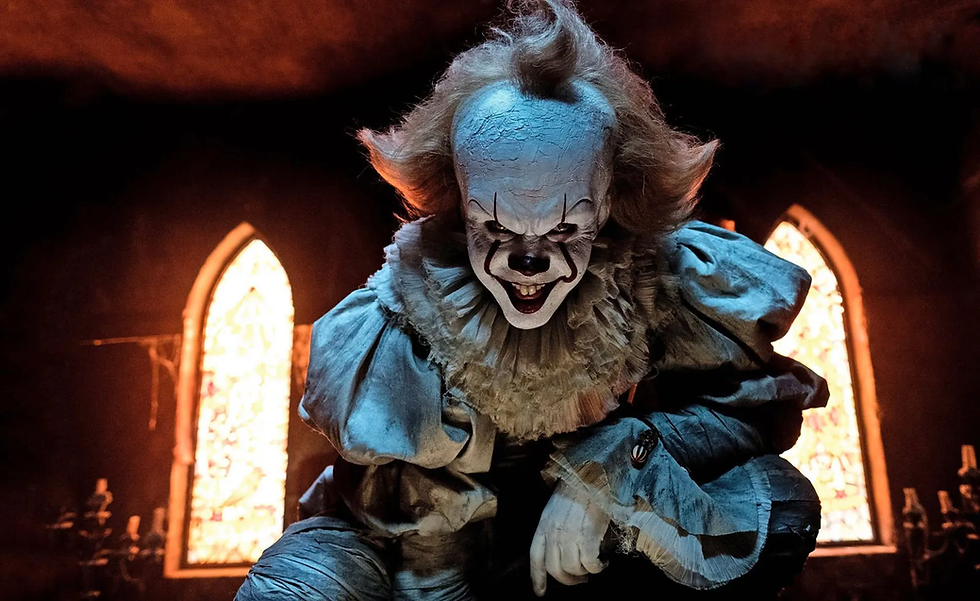
Psychologists have offered a number of explanations. Human beings are remarkably skilled at reading faces, intentions, and social cues. Clowns scramble those signals. Their expressions never quite match their emotions. Their smiles are fixed. Their behavior is exaggerated, impulsive, and delightfully unconcerned with the unwritten rules that make everyday interactions feel safe. Our brains spend every waking moment trying to predict what other people will do next. The clown politely declines to cooperate.
Maybe that's why horror writers have found clowns such willing accomplices. They didn't invent the unease; they merely built on it. Long before sinister circuses and sewer-dwelling monsters arrived on the scene, clowns already occupied an uncomfortable place somewhere between familiar and foreign, comforting and unsettling. They looked almost human while behaving just differently enough to make us wonder what, exactly, lay beneath the paint.

Then again, maybe we've been asking the wrong question all along. Maybe we don't fear clowns because they wear masks. Maybe we fear them because they don't. The painted face announces itself as a performance. There’s no pretense of authenticity. The rest of us, meanwhile, spend an extraordinary amount of time applying our own invisible makeup - professional smiles, social personas, carefully rehearsed opinions, and public identities tailored to whatever audience happens to be watching. Compared to that, the clown is almost refreshingly honest. At least he has the courtesy to let you know he's wearing a costume.
The Curious Business of Clowns
Clowns have survived for thousands of years because they perform a service far more valuable than making balloon animals or squeezing into tiny cars. Every civilization eventually discovers the same uncomfortable truth: left entirely to our own devices, human beings become terribly impressed with themselves. We build hierarchies, invent titles, polish reputations, and convince ourselves that our customs are simply the natural order of things. Every now and then, someone needs to wander into the room wearing impossible shoes and a ridiculous haircut to quietly remind us that we're all just making this up as we go along.
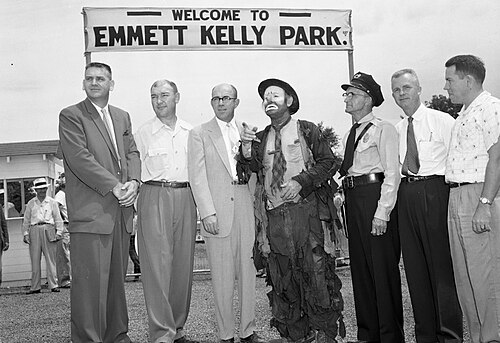
Maybe that's why the fool has always stood just outside polite society. Close enough to understand the rules. Far enough away to ignore them. Whether wearing ceremonial paint, a jester's cap, a bowler hat, or a red nose, the clown has never merely entertained civilization. He's tested it. He’s poked at its certainties, laughed at its pretensions, and occasionally rescued it from the dangerous illusion that power and wisdom are the same thing.
Somewhere along the way, we forgot that. We kept the oversized shoes but misplaced the oversized questions. We traded the licensed truth-teller for the birthday entertainer, and in doing so, lost sight of the peculiar genius behind the painted smile. The greatest clowns were never asking us to laugh at them. They were inviting us to laugh at ourselves, which has always been considerably healthier.

The curious business of clowns, then, was never really about the costume. Costumes change. They always have. These days, many of them are tailored, come with flag pins instead of water squirting flower lapels, and appear behind podiums rather than beneath circus tents. The performance, however, remains remarkably familiar. The only difference is that, once upon a time, the clown stood outside the palace making fun of the king. Now, every so often, the king discovers it's easier to put on the makeup himself.
Author's Note
As we’ve seen, every civilization eventually realizes it needs a fool. Some hired court jesters. Others embraced sacred clowns. Hollywood gave us Charlie Chaplin, who somehow managed to remind the world that a well-timed laugh could be just as effective as a well-aimed speech. If you'd like to spend some time with the man who brought the ancient fool into the modern age, we'd highly recommend Charlie Chaplin's My Autobiography.
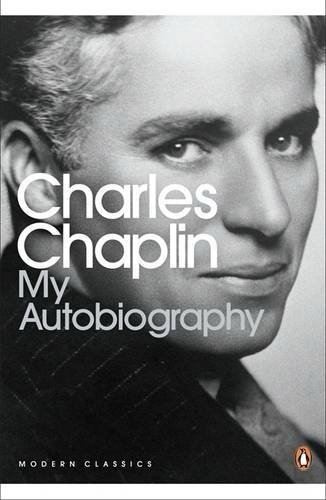
It's a fascinating look at the life of the little tramp who proved that comedy could topple egos just as effectively as banana peels. → https://amzn.to/4p0k4ST
Of course, no discussion of fools would be complete without mentioning the only member of a deck of cards who doesn't have to follow anyone else's rules. To celebrate 140 years of professional mischief, the Bicycle 140th Anniversary Playing Cards are a beautiful reminder that every deck still reserves a special place for its own jokers. Civilization has always understood that sometimes the most interesting character isn't the king - it's the one quietly ignoring him.

And finally, should you decide that you really want to get in on the act, there’s the 7-Piece Clown Costume Set.

It comes complete with oversized shoes, wig, hat, gloves, and the obligatory red nose. We can't promise it will make you wiser, funnier, or more insightful. We can, however, promise you'll discover very quickly which of your neighbors secretly have coulrophobia. As for wearing it to the next city council meeting or political rally...we’d suggest leaving the makeup to the people already behind the podium. → https://amzn.to/4auT4VL
As always, any purchases made through these links help support the continued production of essays examining the thin and increasingly questionable line between human civilization and organized nonsense.


Michelle, great observation! That is their purpose, to call out the absurdity of our world and comment on it, from a different perspective!
Hmmmmmm.
So does that mean that the reporter has become that person as well? Especially the commentator types (Tucker Carlson, Van Jones, Brett Baier, Rachael Maddow) who believe they are news reporters, but maybe they are the modern day court jesters?
I watch our late night comedians to get fresh perspectives on daily news. Maybe that's why they evolved? Publicists, like me, ever-seeking a news angle to promote something? 😂 🤡