
Man’s Second Favorite Pastime
- tripping8
- Apr 10
- 11 min read

There’s an elegance to human folly, a certain lacquered sheen we apply to our more questionable habits. We like to think it’s sophistication - an evolved impulse toward experience, risk, narrative - but most of the time it’s simply the old itch for trouble while wearing a silk scarf. For centuries we’ve crafted entire lifestyles around pretending our impulses are intentional. We call it taste. We call it culture. Mostly, it’s just our talent for dressing recklessness in cologne and good lighting.

Civilization itself has always been a negotiation between desire and discipline, and desire tends to win because it makes a better entrance. Whole empires have risen and fallen on the whims of people convinced they were making rational choices. We talk about intention, about purpose, about the noble architecture of our choices. But beneath the varnish, we’re still chasing the same flicker of excitement that once kept our ancestors from dying of boredom on long winter nights. We’ve simply upgraded the setting. Added nicer chairs and softer lighting.
And it’s funny, really, how persistently we return to the things we insist we only indulge occasionally. Because, even now, in our curated age of clean design and ergonomic self-improvement, the old hunger persists. We chase distractions with the sort of devotion monks once reserved for prayer. We call it harmless. We call it social. We call it anything that allows us to ignore the quiet, persistent thrill of not entirely knowing how things will turn out.
Which brings us to man’s second favorite pastime - our longstanding, quietly shameful love of chance. Not just the act itself, but the sprawling theater around it: fortunes made and unmade in a moment, elaborate systems built on flawed math, rituals that border on the devotional, and entire institutions that have learned to package uncertainty as entertainment. We return to it again and again, not because we expect to win, but because the possibility - however remote - feels just convincing enough to keep us seated at the table.
A Brief History of Losing Well
Long before the first velvet rope was installed or the first complimentary drink was poured, there were bones - small, polished, carried like secrets. The earliest known dice date to over 12,000 years and were used by Native American hunter-gatherers. Around 5,000 BC, dice carved from the knucklebones of sheep and dogs appeared in ancient Mesopotamia, which suggests that almost as soon as humans learned to count, they also learned how to misplace their confidence in numbers.

From there, things escalated with enthusiasm. The Egyptians developed games of chance that doubled as spiritual exercises, because when you’re dealing with practiced uncertainty you’re gonna want the gods on your side. The Chinese introduced early forms of lottery-style gambling to help fund state projects - an early indication that governments would eventually recognize chance not merely as a pastime, but as a revenue stream. Meanwhile, the Romans, who approached leisure with the same excess they brought to empire, gambled with a fervor that required periodic bans, which were enforced just loosely enough to remain largely symbolic.
By the 17th century, gambling had acquired a certain polish. In 1638, the city of Venice opened the Ridotto, widely considered the world’s first government-sanctioned casino - a place where the aristocracy could lose money in a controlled environment.

It was, in many ways, a masterpiece of social engineering: risk, contained within architecture; chaos, politely managed. The house, even then, understood something essential - people are far more comfortable surrendering to chance when it’s wrapped in ceremony.
Around this time, many of the games we still recognize today began to take shape, each carrying its own quiet promise of reward. Blackjack emerged in French casinos as vingt-et-un, offering players the seductive illusion that skill might tilt the odds. Roulette followed, a spinning declaration that fate could be both random and theatrical. Baccarat found favor among those who preferred their risks to feel elegant, while Poker evolved in the saloons of 19th-century America, where bluffing became not just a tactic, but a philosophy. Across the Pacific, Mahjong developed its own intricate culture of chance, skill, and social ritual - proof that, regardless of geography, humans share an enduring fascination with the uncertain outcome.
Bets, Big and Small
There’s a particular kind of confidence required to place a large bet. Not the loud, performative kind - the chest-thumping bravado of someone who wants to be seen - but a quieter, more dangerous conviction. History is full of such moments. In 1980, a Texan oil heir named William Lee Bergstrom walked into a Las Vegas casino with a suitcase containing $777,000 in cash, placed it all on a single roll of the dice, and won. He returned later with $538,000, repeated the performance, and lost. It’s difficult to say which part feels more inevitable.

Royalty has always had a habit of treating reality as negotiable. Take Henry VIII, who - between marriages, wars, and the occasional restructuring of the church - managed to gamble away enormous sums of money and, in one particularly inspired moment, reportedly lost the bells of St. Paul’s Church in a single wager. The man who won them, Sir Miles Partridge, was later executed for treason, which suggests that even when you win, there may be administrative follow-ups.
Prince Alexander Golitsyn, a Russian nobleman with a marked enthusiasm for cards and a less admirable devotion to his marriage, is said to have wagered his wife, Maria, in a high-stakes game against Count Lev Razumovsky in the early 1800s. He lost. Razumovsky claimed his winnings, and Maria eventually divorced Golitsyn and married the count instead. It remains one of history’s more spectacular examples of a domestic dispute being settled with the logic of a very bad poker night.

What all of this suggests is that the size of the bet is rarely the interesting part. It’s what people decide counts as a reasonable collateral. Money, land, spouses, reputations, entire geopolitical situations - it all seems to enter the conversation eventually. And once it does, the outcome tends to feel less like chance and more like something we probably should have seen coming.
Lucky or Not
Luck, as a concept, has always enjoyed better press than it probably deserves. We speak of it as though it were a quality - something a person might possess in the same way they possess charm or good posture - when in fact it behaves more like weather: unpredictable, occasionally generous, and just as likely to ruin your afternoon without explanation.
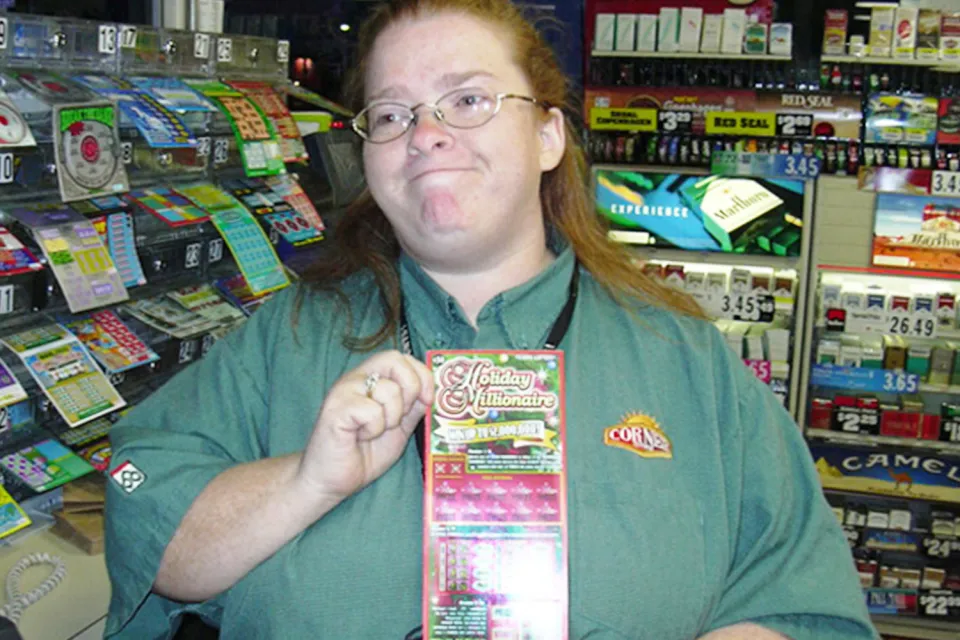
Consider Joan Ginther, a woman who managed to win the lottery four separate times, collecting over $20 million in total. Statistically, this should not happen – estimated at 1 in 18 septillions. Not “impossible”, but functionally impossible in the way that being struck by lightning multiple times while holding winning tickets begins to feel almost coordinated. And yet, there she is - quietly purchasing scratch-offs and defying probability with the kind of consistency usually reserved for physics.
At the other end of the spectrum sits Ashley Revell, who sold everything he owned, flew to Las Vegas, and placed his entire net worth on a single spin of roulette. Red. The ball landed on red. He doubled his money and, in a move that borders on mythological, walked away. It’s the sort of story that gets repeated not because it’s instructive, but because it feels like it shouldn’t have an ending that neat.
And then there are the professionals - the ones who try, with admirable persistence, to remove luck from the equation entirely. The MIT blackjack team, a loose collective of mathematically inclined students and graduates, spent years quietly winning millions by counting cards, exploiting the thin edge where probability bends, ever so slightly, in the player’s favor. It worked - until it didn’t. Casinos adjusted, security tightened, and the system, like most systems, eventually closed the gap.
To some luck is a lady, to some it’s breaking a leg or the crossing of fingers, others are just waiting for the force to be with them.

What all of this suggests isn’t that luck favors the bold, or the prepared, or even the particularly deserving. It suggests something far less comforting: that luck operates on its own terms, occasionally brushing up against human lives in ways that feel meaningful only because we insist on finding patterns where none were promised.
Superstitions & Rituals
For something supposedly governed by mathematics, gambling has always attracted an impressive amount of magical thinking. Numbers are studied, odds are calculated, systems are refined - and then, just before the dice are rolled or the cards are dealt, someone quietly crosses their fingers, taps the table twice, or refuses to sit down until the energy feels right. It’s less contradiction than it is coexistence. We trust the math, right up until the moment we don’t.
Casinos, of course, are happy to accommodate this. Walk through any gaming floor and you’ll notice certain numbers appearing, and others, conspicuously absent. The number four, for instance, is often avoided in parts of Asia due to its association with death, while eight is embraced with almost aggressive enthusiasm. Indeed, entire buildings have been designed around these preferences with the fourth or the thirteenth floors missing on the elevator panel depending on preference.

Players develop their own rituals with equal sincerity. Dice are blown on, cards are tapped, machines are chosen not for their payouts but for their “feeling.” There are lucky shirts, unlucky chairs, and highly specific sequences of behavior that must be followed - not because they work, exactly, but because not following them feels reckless. As though a minor adjustment or brief hesitation might somehow improve the odds. It won’t, of course. But that’s never really been the point. The ritual isn’t there to change the outcome. It’s there to make the uncertainty feel manageable, to give shape to something that otherwise refuses to hold still. And in a setting where very little is guaranteed, that small illusion tends to be enough.

Government Gambles
Governments often tend to disapprove of gambling in much the same way certain aristocratic uncles disapprove of gin: loudly, publicly, and usually while keeping a private supply locked in a cabinet nearby. For centuries, states have denounced games of chance as corrosive to public virtue, right up until the moment they discovered there was money to be made from them. Moral outrage, it turns out, becomes wonderfully flexible when there’s a revenue stream attached.
The lottery remains the finest example of this institutional sleight of hand.

A few coins exchanged for a dream and, if the posters are to be believed, a contribution to schools, roads, hospitals, or whichever public good needs softening in this year’s advertising campaign. In practice, it is one of the more elegant arrangements modern governments have devised - a tax collected largely from people who prefer not to think of themselves as paying taxes. The genius lies in presentation: no one has ever queued eagerly to buy a municipal bond but offer the same citizen a one-in-several-million chance at sudden wealth and they’ll line up cheerfully beneath fluorescent lighting.
Some governments have gone further and built entire economies around organized risk. Las Vegas, though not a sovereign state in the strict constitutional sense, has long functioned as a kind of municipal experiment in sanctioned temptation: a desert city sustained largely by the mathematics of hope.

Macau has done much the same on a grander scale, overtaking Las Vegas in gaming revenue and demonstrating that if one is going to build an economy on probability, one may as well do so with chandeliers large enough to reflect it properly.

Even Monaco, polished and perched on the Mediterranean, owes no small part of its glamorous survival to the fact that people will travel remarkable distances for the chance to lose money elegantly.

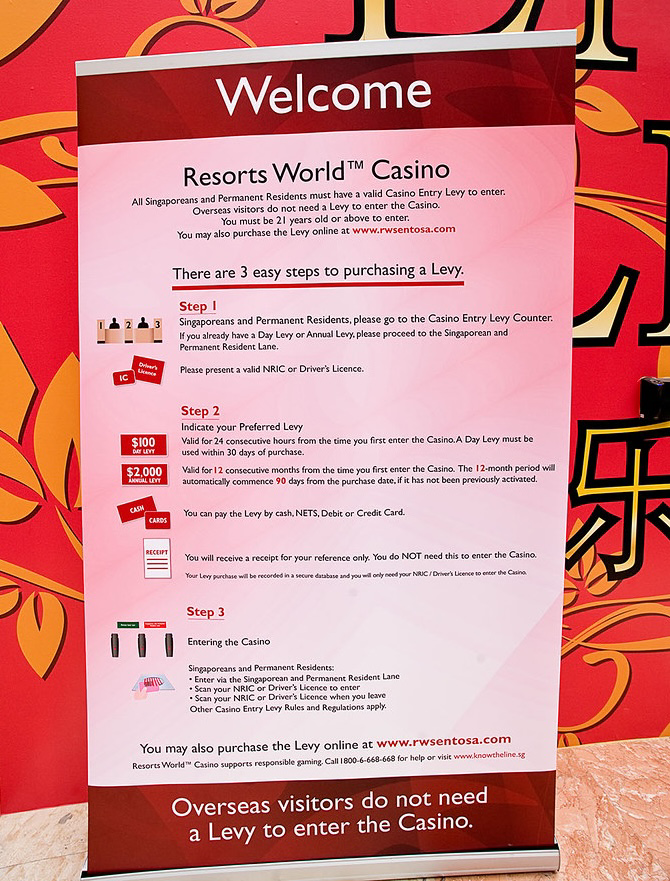
National habits can be revealing. Australians, for example, spend more per capita on gambling than almost anyone else on earth, a statistic that sounds less like data than a mild national confession. In Singapore, citizens pay entry levies to enter certain casinos while tourists stroll in freely - an arrangement suggesting that governments are perfectly happy to sell temptation, provided locals are charged a modest fee for the privilege of resisting it badly.
And then there is the law itself, that endlessly inventive machine for deciding which forms of chance are respectable and which are criminal. In some countries, betting on horse racing is perfectly legal while poker is suspect; in others, slot machines flourish in airports where ordinary citizens would struggle to open a neighborhood card room without triggering parliamentary debate. The distinction is rarely moral and almost never logical. More often, it comes down to who is licensed to profit from the uncertainty.
Tomorrow’s Almost Here
If the future has a defining virtue, it is its talent for making old vices look sleek and well-designed. Gambling, once conducted with sheep bones, greasy cards, and men named Neville in poorly lit back rooms, now arrives wrapped in algorithms and minimalist interfaces, humming quietly from the privacy of your phone. The velvet curtain has been replaced by touchscreen glass, the croupier dressed in nothing more than a line of code.

Online gambling has already transformed the old geography of chance. One no longer needs to travel to Las Vegas or Macau to experience the calibrated thrill of improbable optimism; it can now be summoned while waiting for coffee, sitting in traffic, or pretending to listen during a budget meeting. Entire casinos exist in digital space, complete with live-streamed dealers, simulated roulette wheels, and blinking interfaces designed with the sort of psychological precision once reserved for military applications and breakfast cereal packaging.
Then there is cryptocurrency, which appears to have been invented partly to answer the question: what if money itself felt more like gambling? Blockchain casinos now allow wagers to be placed in currencies that can fluctuate wildly in value before the roulette wheel has even stopped spinning, adding a pleasing second layer of uncertainty for those who find ordinary risk insufficiently textured.

Artificial intelligence is also entering the room. Algorithms can now track player behavior in real time, adjusting odds, tailoring promotions, and identifying precisely when someone is most likely to make one more optimistic decision before bedtime. Meanwhile, virtual reality promises immersive casino experiences in which players may soon sit at digital baccarat tables beside strangers represented by expensive avatars, all from the comfort of their own homes, where at least the drinks are cheaper.

Man’s Second Favorite Pastime
What’s striking, in the end, is not merely how long gambling has been with us, but how effortlessly it has adapted to every age that has tried to civilize it. It’s moved with enviable ease between temples and taverns, palaces and back alleys, riverboats and smartphone screens, shedding old costumes only to reappear in newer, shinier ones. Few human habits have proved so endlessly portable. Empires collapse, currencies fail, technologies reinvent the texture of daily life, and still someone, somewhere, is convinced that the next hand will make everything right.

Perhaps that’s part of its peculiar genius: gambling has never required belief in the system, but rather belief in the exception. One need not trust the odds, the institution, or even one’s own judgment. One must only entertain, for a flicker of a moment, the possibility that probability has finally made a private arrangement on one’s behalf. It is an extraordinarily durable fantasy - small enough to fit inside a lottery ticket, grand enough to build cities in deserts and palaces on coastlines.
Governments, naturally, have learned to cultivate this fantasy with the same affectionate pragmatism they bring to any lucrative vice. They regulate from the front door and collect from the cashier’s cage, maintaining the charming fiction that they’re merely supervising events from a sober distance. In reality, many are seated comfortably at the same table, quietly taking their percentage while reminding everyone else to play responsibly. The house, as ever, is not merely winning; it’s drafting the legislation.
And so, the future arrives as it always does: dressed in sleeker fabrics, speaking in the language of innovation, but offering the same ancient bargain. The interfaces become smoother, the rituals more digitized, the losses wonderfully frictionless, yet the essential proposition remains untouched. A human being, confronted with uncertainty, still chooses to believe - against reason, history, and most available evidence - that this time the odds may finally develop a sense of personal loyalty. The future, in other words, looks very much like the past.
It simply loads faster.
And that is a bet you can take to the bank!

Authors Note: For readers who are feeling lucky, here’s a couple of products that we think you’ll find are real winners.
Poker Night in a Box: Cards & Chips SetPerfect for readers inspired to recreate their own minor empire of chance at the dining room table, this full poker set with chips, cards, dice, and carrying case brings a bit of casino theater home.

And for the reader who wants the backstory behind the bets, Roll the Bones: The History of Gambling is a sweeping historical look at gambling’s evolution from ancient rituals to modern casinos. Turn the page HERE to learn more.

If you choose to purchase through the Amazon Associates links above, this publication may earn a small commission at no cost to you.


Hmmm everyone in my family has a lucky number, except me!
I love the thought of gambling, but the actual gambling doesn’t not bring me a “high” as much as it increases my anxiety. Come to think of it, it’s probably the only thing that gives me anxiety!
I will occasionally play the lottery, although not when it become some huge inexplicably large number.. if I play my strategy is to play in the lower amounts like $20m it feels like I have a better chance! Of course I have never one even $1.00 which also makes me hate it even more.
Can’t even native selling off all my “stuff” and put it on a color at the mercy of…
I didn't realize those were my lucky numbers for my zodiac symbol. I'm going to play them on the lottery right now!
Joking aside, I went to a casino for the first time this year and played the roulette wheel, won $100 and then left. I can't imagine betting an entire net worth like that makes me kind of nauseous just to think about it.