
When Shame was a Political Weapon

Every community develops its own peculiar traditions. Some celebrate saints. Others commemorate battles. A few honor obscure vegetables with alarming enthusiasm. Then there's the Italian city of Trento, which apparently examined the annual calendar and decided that nothing brings people together quite like lowering someone into an icy river inside a steel cage. As civic festivals go, it leaves an impression.

The event is known as The Tonca, and while it has all the theatrical charm of medieval street theatre performed by people with an unhealthy appreciation for cold water, there's method beneath the spectacle. Each year, a mock tribunal reviews the previous year's most memorable blunders by public officials before ceremonially sentencing one unfortunate "winner" to an undignified dunking in the freezing Adige River. Today, a stunt double usually takes the plunge, which is probably just as well. Public humiliation ages better than hypothermia.
Strange as it sounds, Trento is hardly alone. History is filled with societies that invented remarkably creative ways to remind the powerful that titles, wealth, and impressive hats did not place them beyond ridicule. Some communities built stocks in the town square. Ancient Athenians voted troublesome politicians into temporary exile. Medieval Europeans marched offenders through the streets to the soundtrack of clanging pots and jeers of their neighbors.

Civilizations separated by centuries and continents somehow arrived at the same profound conclusion: if power couldn't always be restrained, maybe it could at least be embarrassed.
Which raises an awkward question for the modern world. We have ethics committees, investigative journalists, independent courts, anti-corruption agencies, parliamentary inquiries, and enough cameras to document every ill-advised decision in high definition. Yet many public figures now seem capable of surviving scandals that once would have ended a career before lunch. Somewhere between the medieval dunking cage and the twenty-four-hour news cycle, shame appears to have lost much of its political bite. And that may tell us something important - not just about our leaders, but about ourselves.
The Town That Scheduled Accountability
Imagine explaining The Tonca to someone who's never heard of it: "Every year we gather in the town square, hold a mock trial, announce the year's biggest public blunder, place the symbolic offender inside a steel cage, and lower them, briefly, into an Alpine river."

Most reasonable people would assume you've either mistranslated several important words or have been sampling Italy's wine a little too enthusiastically. Yet for the people of Trento, this curious ritual has survived for generations - not because anyone seriously believes an icy dunk produces better politicians, but because the ceremony says something every citizen immediately understands.
Public officials should never become so comfortable that they forget that the public is watching.

There is something refreshingly honest about that idea. The Tonca doesn't imprison anyone. It doesn't confiscate fortunes or issue criminal indictments. It simply transforms authority into comedy for a few memorable moments. One minute you're the center of attention. The next you're the closest thing Italy has to a human tea bag. It's difficult to appear all-powerful while dripping river water from your ears.
Of course, Trento isn't really punishing a person. It's performing a ritual. Like so many old traditions, the real audience isn't the person who earned their spot in the cage - it's everyone standing on the riverbank. The lesson isn't that leaders should fear cold water. It's that power has always been healthiest when those who hold it know they're not beyond becoming the punchline. As odd as the spectacle appears, communities across history kept rediscovering the same principle: when justice couldn't always be swift, laughter was often the next best thing.

Keeping Power Humble
If Trento seems unusually inventive, history suggests otherwise. Civilizations have spent thousands of years devising ways to remind leaders that power came with an expiration date - and, occasionally, a sense of humor.
The ancient Athenians, who contributed rather a lot to the idea of democracy, also invented ostracism. Once each year, citizens could vote to send someone into exile for ten years simply because they had become too powerful or too divisive. No prison sentence.
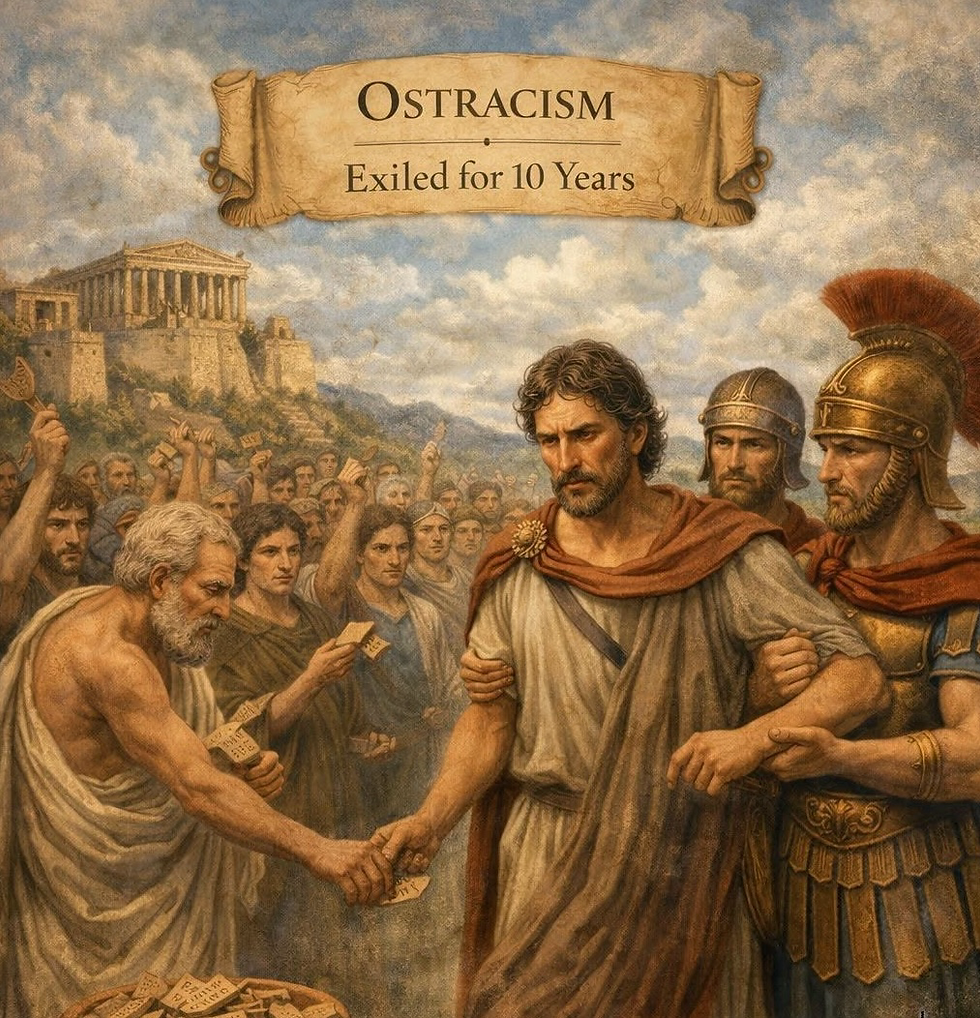
No dramatic courtroom confession. Just a polite civic reminder that perhaps everyone would appreciate a decade of quiet reflection somewhere else. It's difficult to imagine many modern politicians embracing a similar sabbatical.
The Romans approached the problem differently. During a victorious general's grand triumph through the streets of Rome - a parade complete with cheering crowds, flowers, and enough self-congratulation to fill a modern politician’s social media account - a slave was traditionally stationed behind the hero, quietly reminding him, "Memento Mori” - Remember, you are only a man."

Rome understood something surprisingly modern: unchecked admiration has a habit of convincing people they're infallible. Apparently even the greatest military machine in the ancient world was wise enough to understand that those in power occasionally needed to be reminded not to believe their own press releases.
Centuries later, towns across Europe burned effigies of unpopular rulers and public figures, transforming political frustration into public theatre. The targets changed with the times, but the message rarely did. Communities understood that ridicule wasn't merely entertainment; it was a civic language. Long before editorial cartoons, late-night comedians, and social media memes, ordinary people had already discovered one of the simplest ways to cut powerful figures down to size: make them look ridiculous.
When Embarrassment Still Had Teeth
For much of modern history, public life operated under an unwritten rule. You didn't have to be perfect. Politicians made mistakes. Business leaders cut corners. Celebrities exercised spectacularly poor judgment. The public could be surprisingly forgiving - right up to the moment it wasn't. Once trust had been sufficiently damaged, there remained one final expectation that now feels almost old-fashioned - you stepped aside.
British Secretary of State for War John Profumo did exactly that in 1963 after admitting he had lied to Parliament about his relationship with Christine Keeler.

It wasn't the affair that ended his career nearly as much as the deception. Across the English Channel, West German Chancellor Willy Brandt resigned in 1974 after it emerged that one of his closest aides was an East German spy. Brandt himself wasn't accused of espionage, yet he concluded that responsibility ultimately rested with the person in charge.

Whether one agrees with his decision or not, it reflected a political culture in which public trust was considered more valuable than personal survival. Even today, Japan's political culture continues to produce cabinet ministers who resign over ethical lapses, administrative failures, or simply the belief that they have lost the public's confidence. In many places, preserving the dignity of the office once mattered almost as much as keeping the office itself.
The expectation reached well beyond politics. Athletes stripped of titles often disappeared from public view rather than launching redemption tours before the ink on the headlines had dried. Corporate executives routinely resigned when scandals damaged their companies' reputations, whether or not criminal charges followed. Even Martha Stewart, whose temporary absence from public life wasn't entirely voluntary, largely followed the oldest rule in reputation management. After leaving prison she let the headlines calm down before asking people to admire her souffle again.

The entertainment industry, hardly famous for modest egos, generally understood that there was such a thing as lying low until the public's anger had cooled. Image consultants became very successful by teaching famous people one deceptively simple strategy: disappear for a while.
None of this meant public figures were more virtuous than they are today. History offers overwhelming evidence to the contrary. But embarrassment used to carry consequences. Reputation wasn't merely something to be managed; it was something that could be lost. The greatest punishment wasn't always a prison sentence or an election defeat. Often, it was the quiet realization that the spotlight no longer belonged to you - and that the only respectable response was to walk out of it.

When Shamelessness Became a Strategy
Then, somewhere along the way, embarrassment stopped ending careers. For some public figures, it became little more than another news cycle to survive. The old calculation - I've lost the public's trust, perhaps it's time to step aside - gradually gave way to a new one: If I can hold on long enough, everyone will eventually move on to something else.
The pattern has crossed ideological boundaries, although it has appeared in different forms and for different reasons. Few people demonstrated that shift more clearly than Italy's former Prime Minister, Silvio Berlusconi. Legal troubles, corruption allegations, conflicts of interest, sex scandals - each might once have been expected to end a political career. Instead, they often became part of his political identity.

To many supporters, every new controversy simply confirmed that he was being targeted by the establishment. Public embarrassment had been transformed from a liability into a campaign asset.
The strategy eventually spread well beyond Italy and found perhaps its most visible expression in Donald Trump, whose political career demonstrated that constant controversy could become a renewable political resource rather than a fatal liability. Long before entering politics, he understood something fundamental about modern media: attention itself has value.
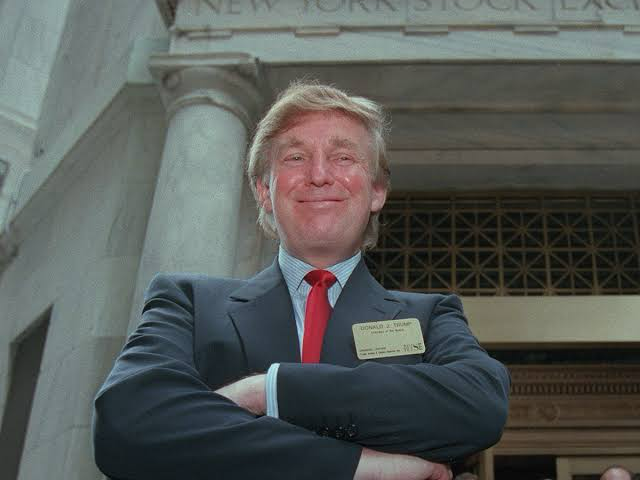
Supporters often interpreted criticism as proof that he was challenging entrenched interests, while opponents generated even more attention through constant outrage. The result was something previous generations of politicians might scarcely have recognized. Ridicule no longer guaranteed weakness. Under the right conditions, it could become fuel.
Technology quietly accelerated the transformation. The Romans, wise enough to recognize the intoxicating effects of applause, placed a man beside their victorious generals whose sole responsibility was to whisper, "Remember, you are only a man." Modern life has replaced that whisper with an algorithm. Every like, every share, every supportive comment, every carefully curated echo chamber gently suggests something a bit different: You were right all along. When thousands of people applaud every statement before you've finished making it, embarrassment has remarkably little room to grow.
None of this means shame has disappeared. It still ruins careers, destroys reputations, and occasionally forces powerful people from office. But it no longer behaves as predictably as it once did. Increasingly, the deciding factor isn't the scandal itself but whether the audience regards the accused as one of us or one of them. Once embarrassment became tribal, it stopped being a universal language. And when shame loses its universality, its ability to hold power accountable begins to weaken.

The Right to Laugh
History offers one final irony. The leaders who have feared ridicule the most were rarely democratic ones. Dictators, emperors, and authoritarian regimes have long understood that a joke can accomplish something an army sometimes cannot: it can make those in power look ordinary. Stalin had little patience for political humor. Hitler's regime prosecuted those who mocked the state. Around the world today, cartoonists, satirists, and comedians continue to find themselves arrested, silenced, or exiled for the dangerous crime of making powerful people look faintly ridiculous. It seems that authoritarian regimes can survive economic crises, military defeats, and international condemnation. Being laughed at is another matter entirely.

Free societies, by contrast, have traditionally tolerated - even celebrated - the right to laugh at their leaders. Political cartoons have skewered presidents, prime ministers, kings, and popes for centuries. Television comedians have built entire careers pointing out the absurdities of those in office. Editorial cartoonists have reduced the world's most influential figures to oversized noses, tiny egos, and remarkably unfortunate hairstyles.
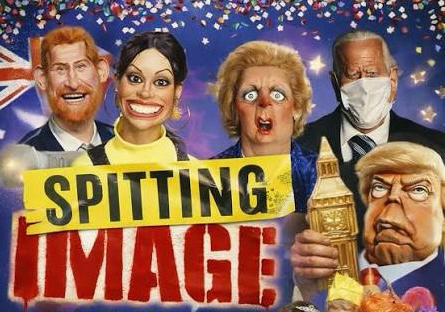
None of it has solved corruption, balanced a national budget, or guaranteed wiser leadership. But that was never really the point.
The point is that ridicule performs a quiet public service. It reminds us that titles are temporary, offices are borrowed, and no elected official should become so important that they're beyond becoming the subject of tomorrow morning's cartoon. Democracy doesn't merely survive criticism; it depends upon it. Every joke told about a president, every cartoon mocking a prime minister, every satirical sketch poking fun at parliament is a small reminder that power still answers to something greater than itself: the people.
Maybe that's why the people of Trento continue lowering that symbolic cage into the icy waters of the Adige River. Not because they imagine cold water can reform a politician. But because every generation benefits from the same gentle reminder: if those in power stop being willing to laugh at themselves, the public should never lose its willingness to laugh at them.
When Shame Was a Political Weapon
There is, when you think about it, something refreshingly democratic about a cage hanging over a river.

Not democratic in the constitutional sense. There are no ballots involved, no separation of powers, no carefully drafted articles concerning the rights of persons being lowered into extremely cold water. It’s democracy in the older, messier sense: a community deciding, together, that someone has made enough of a fool of himself to deserve a little public humiliation.
The Romans understood the principle, too. They could give a victorious general a parade, a cheering crowd and enough adulation to make an ordinary man start wondering whether perhaps he really was descended from Jupiter. Then, just behind him, came the slave whispering that he shouldn’t let all this go to his head, he was, after all, merely mortal. The Romans knew something we seem to have misplaced: applause can distort the judgment of the person receiving it.

Today, the slave has been replaced by the algorithm. It doesn't whisper Remember, you’re only a man. It tells you how many people agree with you. It shows you the applause. It finds you an audience that thinks your enemies are idiots and your critics are jealous. And if someone points out that you've made an extraordinary fool of yourself, there’s always another algorithm ready to point you to an audience waiting to explain why the fool is actually a hero.
That doesn't mean the old world was wiser. It simply understood that embarrassment was useful. A little humiliation could bring a person back down to earth. A little ridicule could puncture a swollen ego. And occasionally, an entire town might decide that the most appropriate response to political stupidity was to put the culprit in a cage and drop him into the nearest river.
That's why the image lingers. Not the cage, but the people standing around it. Because that's all shame ever was at its best - not a punishment, not a moral sermon, and certainly not a substitute for justice. Just the moment when enough people agree that the emperor is, in fact, not wearing very much.
Maybe the question we should be asking is, have we really become more tolerant of shameless politicians - or simply better at finding excuses not to be embarrassed by them?
Authors Note: If this article has left you with an inexplicable desire to spend more time with history, political satire, or people being subjected to water against their better judgment, we've got you covered.
📚 The Cartoon History of the Modern World — Larry Gonick
History doesn't have to be solemn to be serious. Larry Gonick's The Cartoon History of the Modern World takes centuries of revolutions, empires, ideologies, wars, politicians, and assorted human blunders and turns them into an irreverent graphic history. It's smart, funny, remarkably broad in scope, and very much in the spirit of this article: sometimes the quickest way to understand power is to make it look ridiculous.

Get The Cartoon History of the Modern World here – https://geni.us/MHsul
🎭 The Offensive Art: Political Satire from Beerbohm to Borat — Leonard Freedman
If you've ever wondered why dictators seem to have such a poor sense of humor, Leonard Freedman's The Offensive Art offers some answers. It explores political satire - and the often considerable efforts made to suppress it - across democratic, monarchical, and authoritarian societies, covering everything from cartoons and literature to television, film, and the internet. In other words, a history of people discovering that making powerful people look ridiculous can be both entertaining and surprisingly dangerous.

Get The Offensive Art here – https://geni.us/EY1no7
And finally, for anyone who read about Trento's Tonca and thought, You know, I could use one of those, there's this. The A11N Splash Bucket is essentially a compact alternative to a dunk tank: fill it with water, position an unsuspecting victim beneath it, and wait for someone to hit the target. It won't reform a politician, improve public discourse, or restore faith in government. But on a hot day, it may provide considerably more immediate satisfaction.

Get the A11N Water Dunking Splash Bucket here https://geni.us/LOQOrWA
As always, any purchases made through these links help support the continued production of essays examining the thin and increasingly questionable line between human civilization and organized nonsense.


Great piece this week and so appropriate as we enter the Midterms in the United States.
I don’t think the question is “have we become more tolerant….?” I think the question is “are we too distracted by all news that our attention span has keeps us unfocused …..?”
I mean the current administration is taking full advantage of our lack of attention and is distracting us with other “things”, Epstein Files? Ehhh. Let’s start a war, let’s build a needed ballroom, let’s add a name to the Kennedy Center. It’s bait and switch, a much bigger version of 3 card Monte, with far more dire consequences.
The media, sadly are willing accomplices because rather than ignore the card game, they…