
It Seemed Like a Good Idea at the Time…

There are few things more comforting than the conviction that you know what you’re doing. It’s the quiet confidence that comes from having a plan, having considered the possibilities, and having arrived at what appears to be the sensible conclusion. It’s how empires are administered, companies are managed, expeditions are organized and, presumably, how someone eventually decides that putting a revolving door on a submarine is worth investigating.

At the time, almost nothing looks like a disaster. The road ahead is still open. The spreadsheet still balances. The birds are still eating the crops. The elephants are still standing. The product still seems profitable. The foreign ambassador is still irritating you. There is, in other words, no little brass bell that rings when civilization is about to take a spectacular wrong turn. Most catastrophes begin with something far more reassuring: a perfectly reasonable idea.
And that may be the most dangerous thing about a bad decision. The truly memorable ones are rarely made by people who start off by announcing, I have a terrible idea. They are made by people who believe they have found a shortcut, solved a problem, protected an investment, improved an ecosystem, or demonstrated that they are not to be trifled with. What follows is a small historical catalogue of what happens when perfectly sensible thinking collides with reality - and reality, as always, turns out to have the final vote.

The Shortcut That Wasn’t
In the middle of the nineteenth century, California was as much a promise as it was a destination. For thousands of people living in the eastern United States, it represented land, opportunity and the possibility of starting over somewhere on the other side of a continent. The journey west was consequently undertaken by families rather than tourists, usually in wooden wagons loaded with food, tools, livestock and whatever possessions could be made to fit.

There were no paved roads, no reliable maps in the modern sense, no GPS, and certainly no possibility of abandoning the whole enterprise halfway through because the kids were getting bored. The journey could take months, and timing mattered. Arrive too late in the year and the Sierra Nevada mountains, which stood between emigrants and California, could become impassable under winter snow.
In 1846, one group of emigrants set off for California under the leadership of two families whose names would eventually become synonymous with one of the most notorious disasters in the history of the American West: the Donner and Reed families. The party eventually numbered around eighty-seven men, women and children, travelling along the established westbound trail. They were not reckless adventurers looking for trouble. They were ordinary people making an extraordinarily difficult trek, and like most people facing a long and unpleasant journey, they were interested in finding a way to make it shorter. They’d heard about the Hastings Cutoff, a supposedly faster route promoted by Lansford Hastings, an ambitious guide and writer who claimed that emigrants could save considerable time by abandoning the established trail and taking a new route south.

There was, however, a modest drawback to this proposition: Hastings had never actually led a wagon train through the route himself.
The Donner Party took the shortcut anyway. It turned out to be rather less of a shortcut than advertised. Instead of moving efficiently toward California, the emigrants found themselves cutting roads through difficult terrain, hauling wagons over mountains and struggling across the Great Salt Lake Desert. What had looked like an ingenious piece of logistical thinking became a slow-motion disaster, costing them precious weeks. By the time they eventually rejoined the main trail, they were dangerously behind schedule. Then came the part nobody really wants in the middle of a cross-continental migration: winter.

Snow closed the mountain passes of the Sierra Nevada, trapping the party on the eastern side of the range. Food dwindled, livestock died and repeated attempts to escape the mountains failed. Eventually, after months of starvation and desperation, some members of the party resorted to cannibalism. Of the roughly eighty-seven people who began the journey, fewer than fifty survived.
The grim irony is that the Donner Party didn’t make some obviously insane decision. They were just trying to save time. The established route looked longer; the new one promised to be faster; and the man recommending it sounded sufficiently confident to make the whole thing seem reasonable. What nobody had adequately established was whether the shortcut actually worked. It was, in retrospect, an almost perfect example of a dangerous human tendency: confusing the existence of a shorter route with the existence of a better one.

The Donner Party didn't set out to become a cautionary tale. They were simply people trying to get to California before winter. Unfortunately, they discovered that there’s a very large difference between being told that a road will save you time and actually knowing where that road goes.
Invading During a Pandemic
If the Donner Party demonstrated the dangers of taking a shortcut, the Scots of 1349 demonstrated another useful principle of military strategy: before invading your neighbor, it’s generally worth checking whether your neighbor is currently being devastated by a highly contagious and extraordinarily lethal disease. This was the Middle Ages, however, when strategic planning came with somewhat fewer spreadsheets, and Scotland had a longstanding grievance with England that apparently seemed more urgent than the plague.
The disease in question was the Black Death, which had arrived in Europe in 1347 and spread with terrifying speed.

By 1349 it had reached England, where it was killing an enormous proportion of the population. Towns and villages were being emptied, trade was collapsing and communities had little understanding of what was causing the disease or how to stop it. Medieval Europe had no antibiotics, no germ theory and no meaningful concept of quarantine on the scale we would recognize today. The plague was simply an unfolding catastrophe, and England was very much in the middle of it. Scotland had so far been spared the worst of the outbreak. One might therefore imagine that the sensible course of action would have been to keep the border closed, stay home and congratulate oneself on having avoided the apocalypse next door.
Instead, the Scots invaded England.

The reasoning was not entirely incomprehensible. England's ability to defend its northern border had been weakened by the plague, and Scotland saw an opportunity to take advantage of its traditional enemy while it was vulnerable. Scottish forces gathered and crossed into northern England. What they had not accounted for was the possibility that the plague might not be concerned with checking passports. The invading army encountered infected populations, and the disease quickly began spreading among the soldiers. The men who had marched south to take advantage of England's misfortune eventually turned around and carried the misfortune home with them.
The consequences were somewhat less glorious than the invasion may have promised. The plague spread through Scotland, producing the same devastation that had already been consuming England. The episode has survived in historical accounts because of its almost perfect combination of bad timing, bad judgment and spectacularly misplaced optimism.
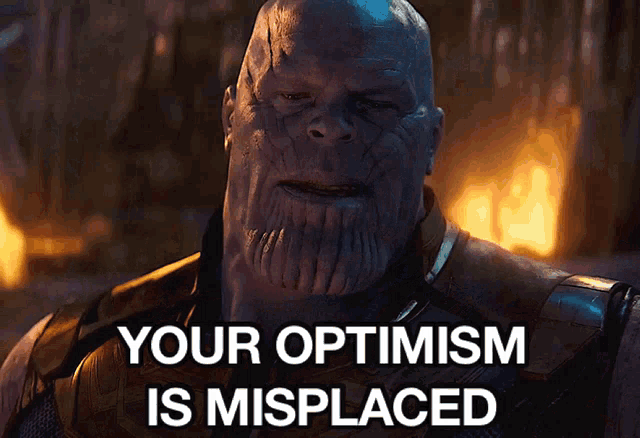
It’s hard to imagine a more literal example of discovering that your enemy's misfortune is not necessarily your opportunity. The Scots had looked across the border, seen a kingdom weakened by catastrophe and decided that this was the moment to strike. They were correct about one thing: England was vulnerable. They had simply failed to consider that that vulnerability might be contagious.
The Birds Were Just Doing Their Job
In 1958, China embarked on one of the most ambitious social and economic experiments in modern history. Mao Zedong had launched the Great Leap Forward, an attempt to transform China from a largely agricultural society into a modern industrial power at extraordinary speed.

Farms were reorganized into huge collective communes, backyard furnaces appeared across the countryside and millions of people were mobilized to increase agricultural and industrial production. It was an era in which the government expected nature itself to cooperate with the revolution. Unfortunately, nature had not been consulted.
Among the many campaigns of the period was something called the Four Pests Campaign, which targeted four creatures considered harmful to human health and agricultural production: rats, flies, mosquitoes and sparrows.

The logic behind eliminating the first three was reasonably straightforward. Sparrows, however, presented a more complicated problem. They ate grain, and in a country struggling to feed a huge population, grain was not something the government was inclined to share. Mao therefore ordered a nationwide campaign to eliminate them. Citizens were encouraged to destroy nests, smash eggs, kill chicks and, most memorably, prevent the birds from landing by banging pots, pans and other objects whenever sparrows tried to settle. The campaign was incredibly effective. The sparrows, after centuries of managing perfectly well without assistance from the Chinese government, were suddenly having a very bad year.

There was, however, something the campaign's architects had overlooked. Yes, sparrows did eat grain, but they also ate enormous quantities of insects. Once the birds had been dramatically reduced, insect and locust populations exploded. The creatures that had previously been controlled by the birds now had fewer natural predators, and crops began suffering from the very pests the campaign had been intended to prevent. The government eventually recognized the problem and brought sparrows back into China, including by importing them from the Soviet Union. By then, however, the damage had already contributed to a wider agricultural crisis in which famine ultimately killed tens of millions of people.
The sparrows, in other words, had never been the problem.

They had simply been doing several jobs at once, one of which happened to be eating some of the grain humans wanted for themselves. Remove one apparently inconvenient part of an ecosystem and the ecosystem has an irritating habit of noticing. The episode became one of history's great demonstrations of what happens when human beings look at nature as a collection of individual problems rather than a system in which everything is inconveniently connected. The Chinese government had correctly identified that sparrows ate grain. What it failed to ask was the rather important follow-up question: what else do sparrows eat?
The Elephants Were Doing What Elephants Do
There are few jobs more difficult than trying to save something from itself. Elephants, for example, are generally regarded as one of the more agreeable symbols of the natural world: intelligent, social, magnificent and, for reasons that presumably make perfect sense to elephants, capable of eating an astonishing amount of vegetation every day. The trouble begins when there are a great many of them in one place. Then all that intelligence, magnificence and appetite can become rather hard on the trees.
This became a serious concern in parts of southern Africa during the twentieth century, particularly in national parks where elephant populations had increased while traditional migration patterns had been restricted. Conservationists watched elephants knock down trees, strip vegetation and transform landscapes, and began worrying that too many elephants might eventually destroy the habitats on which elephants - and other animals - depended.

It was a perfectly reasonable concern. The less reasonable part came next. If the elephants were damaging the environment, the obvious solution was to have fewer elephants. So, authorities began culling them, sometimes on a truly industrial scale. In what became one of the more uncomfortable exercises in conservation history, tens of thousands of elephants were killed in an effort to save the wilderness.
The theory had a certain appealing simplicity. Too many elephants were eating too much vegetation; reduce the number of elephants and the vegetation should recover. It was conservation by subtraction, and subtraction has always had the advantage of being wonderfully easy to explain on a meeting-room whiteboard.

Unfortunately, the natural world refused to cooperate with the diagram. Vegetation did not recover as neatly as expected, and the ecological effects of elephant culling proved considerably more complicated than simply removing the animals and waiting for the trees to return. Eventually, the idea that the answer might lie in simply having fewer elephants gave way to a much more complicated approach to land management, including theories about using grazing animals to mimic some of the effects of natural herd movements.
The uncomfortable lesson was that the elephants were only part of the problem. Or, more accurately, they were a problem only if you looked at the ecosystem as a collection of separate pieces and assumed that removing the troublesome piece would make everything else behave itself.

It was like discovering that your house has too much dust and deciding that the best solution is to remove the furniture, the carpets, the curtains and eventually the walls. At some point, you may indeed have very little dust. You may also discover that you have misunderstood the purpose of a house. The elephants were doing what elephants do. The humans were doing what humans do rather more often: seeing a complicated system, finding something large and conspicuous to blame, and becoming extremely confident that removing it will solve everything.
The Salesman Who Told the Truth
There are certain things a person in business should probably never say in public. “Our competitors are better than us” would be one. “We're not entirely sure what we're doing” would be another. And if you happen to be the chief executive of a company whose entire business depends on convincing people that the things you sell are worth paying for, there is one particularly important rule: do not tell your customers that some of the things they have just bought are rubbish.
Gerald Ratner apparently needed this rule explained to him.
Ratner was the flamboyant chairman of Ratners, a British jewelry chain that had grown into one of the largest retailers of its kind in the United Kingdom.

In 1991, he was invited to speak at the Institute of Directors in front of several thousand business people. Ratner was not known for being particularly cautious, and rather than delivering the usual collection of corporate platitudes about excellence, customer service and exciting opportunities in the marketplace, he decided to entertain the audience. He explained that one of his company's £4.95 earrings was cheaper than a prawn sandwich and, according to his memorable assessment, probably wouldn't last as long. He also joked that one of the company's decanters was so cheap that it was cheaper than the glass it was made from.
The audience laughed. Ratner had succeeded in doing something many executives spend their entire careers trying to achieve: he had made a corporate speech entertaining. Unfortunately, several million of his customers were not in the audience, and they did not find the joke quite as charming. The remarks were reported in the press, and the public suddenly had a rather different way of looking at Ratners' products. The company had spent years telling people that its jewelry was affordable and attractive. Its chairman had now helpfully informed everyone that some of it was, essentially, rubbish.

Sales fell sharply, the company's share price collapsed and hundreds of millions of pounds were wiped from its value. Ratner himself eventually resigned, and the company later changed its name to Signet Group, presumably on the theory that if you have accidentally set fire to your brand, changing the sign might at least make the building look less flammable.
The remarkable thing is that Ratner's original comments were not some carefully planned act of corporate sabotage. He was joking. The audience understood that he was joking. The problem was that the joke depended on the existence of a distinction between something being cheap and something being worthless, and Ratner had rather enthusiastically erased that distinction himself. He had spent years selling people the idea that they were getting a good deal. Then, for a few laughs, he accidentally supplied them with a reason to wonder whether they had been getting a good deal at all. It was a spectacular reminder that honesty is not always the same thing as good marketing - and that when your customers are still buying your products, there are some jokes you should probably keep inside your head.
The Future Arrived at Kodak. Kodak Declined.
There is something peculiarly impressive about inventing the technology that could eventually save or destroy your business and then deciding that, on balance, you would rather not bother with it. It requires a special combination of foresight and denial: seeing the future clearly enough to build it, but not clearly enough to realize that you probably ought to do something about it.
In 1975, Steven Sasson, an engineer working at Eastman Kodak, was given an assignment involving a new kind of electronic imaging technology. Sasson was curious about what might be done with it and built something that, by modern standards, barely qualifies as a camera. It was the size of a toaster, weighed around eight pounds, captured images at a resolution that would make a modern smartphone blush and required about twenty-three seconds to record a single photograph onto a cassette tape.

There was no screen on which to admire the result. There was, in other words, absolutely no reason for anyone to become particularly excited about it. Except that it was the world's first digital camera.
Kodak's executives saw the device and understood that it was interesting. They also understood something rather more important: Kodak made an enormous amount of money selling photographic film, processing it and selling the paper on which photographs were printed.

Digital photography threatened to remove almost every step of that remarkably profitable process. Why would people continue buying rolls of film, having them developed and paying for prints if they could simply take photographs electronically? Kodak therefore did what a successful company with a very profitable existing business might reasonably do when confronted with a technology capable of destroying that business. It invested in digital photography, developed digital products but continued, for years, to behave as though film would remain at the center of photography. The company was not unaware of the future. It simply had a great deal invested in the past.
Eventually, the future became rather difficult to ignore. Digital cameras improved, prices fell and consumers discovered that photographs did not necessarily need to be printed, developed or stored in a shoebox. Kodak continued trying to navigate the transition, but its enormous film business became less valuable as the world changed around it. In 2012, the company filed for bankruptcy protection.

The irony was almost perfect: Kodak had not failed to invest in digital photography. It had actually invented it. The company had simply been sitting on the future while trying to protect the present. There is perhaps no better illustration of the problem with successful businesses: when you have spent decades becoming very good at making money from yesterday, tomorrow can begin to look suspiciously like a threat.
Never Insult Genghis Khan
There are many ways to deal with a diplomatic disagreement. You can negotiate. You can send a strongly worded letter. You can impose a tariff, recall your ambassador or, in particularly tense circumstances, agree to disagree and go home. What you probably should not do is kill the other ruler's representatives, humiliate the survivors and then wait to see what happens next. This is especially true when the other ruler is Genghis Khan,

a man who had already demonstrated a rather unconventional attitude toward the concept of not letting things go.
By the early thirteenth century, Genghis Khan had transformed the Mongol tribes into a formidable military power and was rapidly expanding his empire across Central Asia. He was also interested in trade. In 1218, a large Mongol caravan entered the territory of the Khwarazmian Empire, a powerful state covering parts of modern-day Iran, Uzbekistan, Turkmenistan and surrounding regions. The caravan was detained at the city of Otrar by its governor who accused the merchants of being spies. The exact circumstances remain debated, but the result was not especially conducive to international commerce: the merchants were killed and their goods were seized. Genghis Khan, understandably unhappy about this development, sent envoys to the Khwarazmian ruler, Shah Muhammad II, demanding that the governor be punished and attempting to resolve the dispute without going immediately to war.

This was the moment when diplomacy still had a chance. It did not take it. The Shah ordered one of the Mongol envoys killed and the other two humiliated by having their beards shaved before they were sent back. The precise details of who made which decision have been debated by historians, but the message reaching Genghis Khan was unmistakable: your merchants have been killed, your diplomatic representatives have been insulted, and we are not particularly interested in discussing the matter further. It was, from the perspective of conflict resolution, roughly equivalent to responding to a parking ticket by setting fire to the courthouse. Genghis Khan did not interpret the gesture as an invitation to further correspondence.
The Mongol invasion that followed was catastrophic for the Khwarazmian Empire. Mongol armies swept through Central Asia, capturing cities and destroying much of the empire in a campaign marked by extraordinary violence.

Shah Muhammad fled and eventually died in exile. What began with a dispute involving merchants and a governor in a provincial city ultimately helped trigger one of the great military campaigns of the medieval world. There is, of course, a temptation to look backward and ask how anyone could possibly have thought humiliating Genghis Khan's envoys was a sensible idea. But that’s precisely the point. Decisions that look insane from the other side of history can feel entirely different when you are sitting inside them. The Khwarazmian rulers were powerful men dealing with what they may have regarded as an upstart threat. Unfortunately, they had misjudged the upstart. Very badly. There are diplomatic mistakes, and then there are mistakes that cause an empire to discover the practical meaning of the phrase “You should probably have thought that through.”
It Seemed Like a Good Idea at the Time
And so, we arrive at the part of history where everyone looks like an idiot.
Which is, to be fair, one of history's great advantages. We know how the story ends. We know that the shortcut isn't a shortcut, that invading during a plague is perhaps not ideal, that eliminating an entire species from an ecosystem might have consequences, that insulting your customers is bad for sales, that the future eventually arrives whether your quarterly projections are ready for it or not, and that killing the diplomatic representatives of Genghis Khan may be the last notation on your professional resume. We have the luxury of looking backward with all the smugness that comes from possessing information nobody had at the time.

The people making these decisions had no such luxury. They had maps that were incomplete, information that was imperfect, theories that seemed convincing, businesses that were making money, enemies they believed they understood and problems that demanded solutions. The shortcut really did look shorter. The elephants really were damaging vegetation. The sparrows really were eating grain. Kodak really did have a very profitable film business. The mistake, more often than not, was not stupidity. It was confidence applied to a world that had failed to provide all the necessary information.
That may be the most dangerous phrase in human history: It seems like a good idea. Civilization is built on it. So are empires, businesses, expeditions, wars, inventions and an astonishing number of things that later require historians to use words like disaster, catastrophe and unintended consequences. We make decisions with the information available, convince ourselves that the variables we can see are the important ones, and then act surprised when the variables we couldn't see turn up with a chair and join the meeting.
That may be why these stories remain so compelling. They aren't stories about fools. They're stories about ourselves, only with the benefit of several centuries of hindsight and, occasionally, a much larger body count. Every one of these people woke up believing they were solving a problem. None of them had any idea they were providing material for a blog post nearly two thousand years later. And that’s probably the final indignity history can inflict: you can be completely sincere, reasonably intelligent, and absolutely convinced you're doing the sensible thing - and still end up as a cautionary tale.
So, before congratulating ourselves too enthusiastically on the superior wisdom of the present, it might be worth remembering that somewhere, right now, an intelligent person is making a decision that appears perfectly reasonable. Maybe it will work brilliantly. Maybe it will change the world. Or maybe, several decades from now, someone will look back at it, shake their head slowly and say, with the profound confidence of hindsight, “What on earth were they thinking?”
They were, of course, thinking what we all think - It seemed like a good idea at the time…
Authors Note: Having spent the last couple thousand words examining what happens when perfectly reasonable ideas go spectacularly wrong, it seemed only fair to offer you a few things that are, at least in theory, considerably safer.
First off, there’s the Donner Dinner Party. A wonderfully inappropriate party game based on the infamous 1846 expedition, in which players take on the roles of members of the stranded Donner Party and attempt to survive the journey across the Sierra Nevada. Because apparently the natural follow-up to reading about eighty-seven people becoming trapped in the mountains without enough food is to invite your friends over for dinner and make a game of it.

It's dark. It's ridiculous. It's definitely a must have! Donner Dinner Party — A Rowdy Game of Frontier Cannibalism
Then there’s the Genghis Khan Mongol Tour Vintage History T-Shirt.

Because nothing says I have carefully considered the diplomatic consequences quite like wearing the name of the man who turned one of history's worst diplomatic miscalculations into a military campaign. It's a particularly appropriate souvenir from our final cautionary tale - and considerably less dangerous than actually insulting Genghis Khan. Genghis Khan T-Shirt
Next up is the KODAK Printomatic Digital Camera, which seemed too appropriate to leave out.

The Printomatic is a decidedly more modern Kodak: a compact 5MP digital camera that also produces instant 2×3-inch color prints. In other words, you can photograph the future and have a physical copy of it almost immediately - which seems like something Kodak might have found useful in 1975. KODAK Printomatic Digital Camera
And finally, Good Idea Water. We have no historical evidence that drinking water improves decision-making, prevents military disasters or makes anyone less likely to declare war on an empire. But after reading about seven spectacular examples of people confidently making the wrong call, staying hydrated seems like a perfectly good idea. Good Idea Water

As always, any purchases made through these links help support the continued production of essays examining the thin and increasingly questionable line between human civilization and organized nonsense.


Interesting post this week......
So I remember learning about the Donner Party's ill fated trip, BUT I don't remember reading or hearing about the cannibalism!
Yikes AND worse that a game was made about it! I was just at a party and I was speaking about it and two of the 30 something's actually played the game!
I recall learning about the plague, but not the Scots ill timed invasion of England! That is some bad luck! Can you imagine how the world would have changed???
Sparrows and Elephants should never be messed with, ever! Why do we think we can control Mother Nature or anger Genghis Khan!