
Gold: The Universe Made It. We Made It Valuable.

There are things in this world that seem to have been designed with us in mind. Bread, for instance. Fire. Comfortable chairs. Perhaps the wheel, although after several thousand years of technological advancement it remains difficult to explain why we still haven't found a way to make a suitcase wheel survive more than three airport terminals. Then there are things that appear to have absolutely nothing to do with us at all. Stars. Black holes. Neutron stars colliding somewhere unimaginably far away. The universe, for the most part, carries on with its business without consulting us. (first)

And yet, occasionally, something arrives from that incomprehensible machinery of the cosmos, and we give it a meaning the universe never intended.
We’ve always been good at this. We see a shell on a beach and decide it represents wealth. We find a particularly attractive stone and decide it should be placed in a crown. We take bits of paper, print numbers on them and agree that they can be exchanged for houses, horses, dinner or, with sufficient optimism, happiness. We put tiny numbers on screens and somehow convince ourselves that they are worth more than the buildings, machines and human labor those numbers supposedly represent. It’s an extraordinary arrangement, when you think about it. Fortunately, most of us don’t.
We’ve always been susceptible to shiny things. Give humanity something rare, beautiful, durable and difficult to acquire and sooner or later someone will declare it priceless, someone else will start digging for it, a third person will build a vault to protect it, and eventually an economist will arrive to explain why none of this is as ridiculous as it sounds.

That something can have no particular use to us and yet become one of the most coveted substances on Earth says more about the human imagination than it does about the substance itself. And so, we’ve spent thousands of years pursuing it, worshipping it, dreaming about it, fighting over it and using it to measure how well everyone else is doing.
This particular object of obsession began long before humans were around to have it. The atoms of gold were forged in some of the universe's most violent events, scattered across space, incorporated into the material that eventually became our planet and then waited patiently for us to discover them. We took this cosmic relic, dug it out of the Earth, fashioned it into jewelry and crowns, stamped it into coins, locked it in vaults and eventually turned it into a metaphor for almost everything we wanted: wealth, power, beauty, permanence, success and, somewhat more hopefully, happiness. This is the story of gold - and of the peculiar human decision to take something the universe made, deciding it was valuable, and then spending several thousand years arguing about how much.

The Universe Made It
“The universe is under no obligation to make sense to you.”
— Neil deGrasse Tyson
There is something mildly insulting about learning where gold comes from. We like to think of it as an earthly possession, something that can be dug out of a mountain, weighed on a scale and locked in a vault. It has a price. It has a history. It has, in some cases, a very respectable security detail. But the gold itself predates all of this by an almost embarrassing margin. Before there were mines, merchants, kings or people arguing over the price of a necklace, there was simply an atom of gold being born in the violence of the early universe.
Gold is one of the elements that requires an extraordinary amount of energy to create. The leading explanation involves some of the universe's most spectacular catastrophes, particularly collisions between neutron stars called kilonovas.

These are the remnants of stars so dense that a teaspoon of their material would weigh an absurd amount on Earth. When two of them collide, they don't exactly exchange Christmas cards. They unleash enormous amounts of energy and neutron-rich material, creating the conditions in which heavy elements - including gold - can form. The resulting debris is then scattered into space, where it eventually becomes part of stars, planets and, eventually, jewelry counters.
Which means that the gold in a wedding ring may have had a more eventful past than the person wearing it. Its atoms would have been forged billions of years ago in an event so violent that it briefly outshone entire galaxies. They then drifted through space, became part of the material that formed our solar system and spent another few billion years waiting for human beings to develop metallurgy.
Yet scientists still don't have the entire story. Neutron-star mergers can clearly produce gold and other heavy elements, but the universe appears to contain more of these elements than our current understanding of their origins can comfortably explain. There may be other cosmic factories involved - perhaps rarer stellar explosions or other violent events we haven't fully accounted for. The universe, it seems, has been making gold for a very long time and remains reluctant to provide us with a complete manufacturing manual.
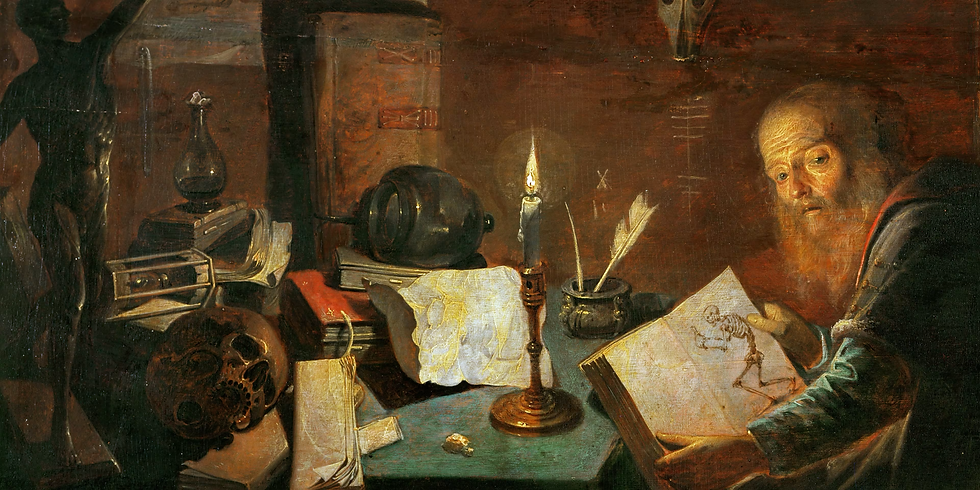
We, meanwhile, have been remarkably efficient at finding uses for it. We’ve made crowns from it, buried kings with it, built religions around it, started wars over it and eventually decided it would make an excellent way of keeping score. The universe created gold through unimaginable violence, eventually depositing the stuff on a small planet inhabited by a species that has spent much of its existence trying to decide what everything is worth.
Gold: Beautiful, Useless and Practically Indestructible
“All that glisters is not gold.”
— William Shakespeare
Gold has an unfair advantage over almost everything else on Earth: it looks like it knows it’s valuable. Silver is nice. Copper has its moments. Iron has spent several thousand years being tremendously useful without receiving nearly enough appreciation in spite of having an age named after it. Gold, by comparison, simply sits there glowing faintly yellow and behaving as though it’s already been promoted to upper management.
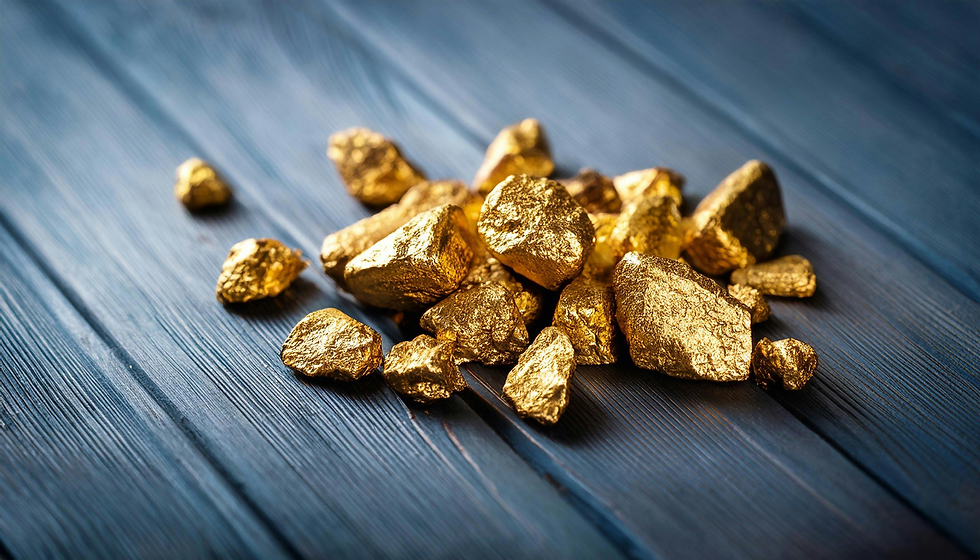
And, chemically speaking, gold really is kind of special. It doesn't rust. It doesn't tarnish easily. It doesn't react readily with most other substances. It can be hammered into sheets so thin that they become almost translucent and drawn into remarkably fine wire. It can be melted, reshaped, melted again and reshaped again without losing the essential material. Gold is, in other words, exceptionally good at remaining gold.
This turns out to be an important quality if you're planning to spend thousands of years being valuable. Civilizations rise, collapse, change languages, abandon gods, reinvent governments and occasionally discover that invading someone else's country was a terrible idea. Gold mostly shrugs. A Roman coin can disappear into the ground for two thousand years and, once recovered, still be recognizably a Roman coin. Gold doesn't care who is emperor.

It’s also scarce enough to be desirable without being so scarce that nobody can actually possess it. That balance matters. If gold were everywhere, it would be about as exciting as gravel. If there were only three atoms of it in the entire universe, it would be fascinating but not terribly practical. Instead, there’s enough to tempt humanity into looking for it, but never quite enough to satisfy anyone who finds it.
And then there’s the color. This seems trivial until you remember how many things humans have decided to make gold colored. Crowns. Statues. Religious objects. Medals. Picture frames. Fixtures in bathrooms belonging to people who want you to know they have money.

We don't merely value gold; we imitate it. There is something about that warm, unmistakable yellow that’s been telling the human brain “important” for thousands of years.
Which leaves us with an awkward conundrum. Gold is not particularly useful as food, shelter, clothing or a hammer. It won't keep you warm. It won't make you stronger. It won't get you through a famine or cure you during a pandemic. And yet civilizations have repeatedly treated it as though possessing a lump of the stuff is evidence that you have somehow beaten life itself. Maybe the real genius of gold isn’t what it does, but what it makes us think it does.
Somewhere Along the Way, We Decided It Was Money
“Gold is money. Everything else is credit.”
— J. P. Morgan
At some point in human history, someone looked at a lump of gold and thought, “This is lovely, but what if we could use it to settle arguments?” We don't know exactly who that person was, which is probably fortunate. History’s been rather unkind to people who introduce new ways of measuring wealth. But the basic idea was brilliant. Gold was durable, portable, divisible and difficult enough to acquire that people were willing to accept it in exchange for things they actually needed.

That last part’s important. Money doesn't work because a particular object possesses some mystical monetary quality. It works because people agree that it represents value. Before coins, people had traded using all sorts of things - livestock, grain, salt, shells, tools and other commodities. The trouble with many of them was that they could be inconvenient. A cow is difficult to divide into exact denominations.

Grain attracts mice. Salt is useful, but not terribly impressive when you're trying to impress a neighboring kingdom or a girlfriend. And nobody wants to carry twelve chickens around while negotiating the purchase of a house.
Gold solved several of these problems. It didn't spoil, it could be divided into smaller amounts, it was easy to recognize, and it was difficult to counterfeit. Eventually, civilizations began stamping pieces of the metal with official marks, essentially saying, “We have weighed this. It is what we say it is. Please stop biting it.”
Coins turned gold from something you possessed into something you could exchange. That was a profound change. A king no longer needed to hand over a chest of treasure every time he wanted something. A merchant could accept a small piece of stamped metal and trust that someone else would accept it later. Gold became portable wealth, which is one of those ideas that sounds perfectly sensible until you remember that portable wealth also makes it much easier to steal. And steal it we did.

Gold has been looted from temples, buried during invasions, confiscated by governments, smuggled across borders, hidden in walls and carried across oceans. Pirates, conquerors, prospectors and bankers have all spent considerable portions of human history worrying about where the gold was, who owned it and how to acquire it from the person currently holding it.
Eventually, gold became so closely associated with money that the two concepts were almost interchangeable. Governments issued currencies backed by gold. Banks stored it. Nations accumulated reserves. People spoke of being “worth their weight in gold”.

There was an elegant simplicity to the arrangement. Gold was valuable because people trusted it. Money was valuable because people trusted it. And once we understood that the important thing wasn't necessarily the metal itself but the agreement behind it, money could begin to take on a life of its own. Gold had started the conversation. Humanity, as usual, was about to make it considerably more complicated.
The Ocean Has $700 Trillion in Gold. Good Luck Getting It.
“There are two ways of being rich: one is to have all you want, the other is to want all you have.”
— Anonymous
There is, apparently, an enormous amount of gold in the ocean. Not in the form of treasure chests sitting neatly on the seabed, waiting for someone to arrive with a diving suit and an overly large backpack. The gold is dissolved in seawater, spread across all those billions of cubic kilometres of ocean in concentrations so tiny that extracting it economically is, at present, like trying to pay for dinner by collecting the glitter that falls off a Christmas card.
Estimates vary, but the quantity is extraordinary. The often-cited figure is around 20 million tons of dissolved gold, with a theoretical value that’s been estimated at roughly $700 trillion. That’s enough to make even the most aggressively optimistic treasure hunter sit up. Unfortunately, the ocean has neglected to put any of it in piles. There are no golden reefs. No underwater Fort Knox. No enormous yellow nuggets waiting at the bottom of the Mariana Trench with a little sign saying Please take one.

This is where gold offers us a useful lesson about money: something can be extraordinarily valuable and still be practically useless to you. The ocean may contain hundreds of trillions of dollars' worth of gold, but you cannot simply scoop up a bucket of seawater, extract the gold and retire. The gold is there. The value is there. What isn't there is an economically sensible way of getting the two together.
Human beings have been encountering a similar problem for thousands of years, although usually on a smaller scale. A treasure buried beneath a castle is still valuable even if you need a shovel and a small army to get past the guards at the gate. A gold mine is still valuable even if it happens to be three hundred miles from the nearest road. The problem begins when getting the thing costs more than the thing is worth. At that point, you haven't discovered a fortune. You've discovered a very expensive hobby.
We tend to talk about wealth as though it were a physical substance that can simply be accumulated. But what we call wealth is really a complicated mixture of scarcity, usefulness, accessibility and belief. Gold in the ocean scores remarkably well on scarcity and belief, but rather spectacularly poorly on accessibility and usefulness. It is a little like discovering that you own a magnificent mansion, but it’s located on another planet.

Money, Apparently, Is the Root of Everything
“Money is a terrible master but an excellent servant.”
— P. T. Barnum
Humanity has had a long time to form an opinion about money, and we have made remarkably little progress toward agreeing on one. Money is freedom. Money is the root of all evil. Money makes the world go round. Money can't buy happiness. Money is time. Money is power. Money is apparently so many different things that it must literally be exhausted by the end of every day.
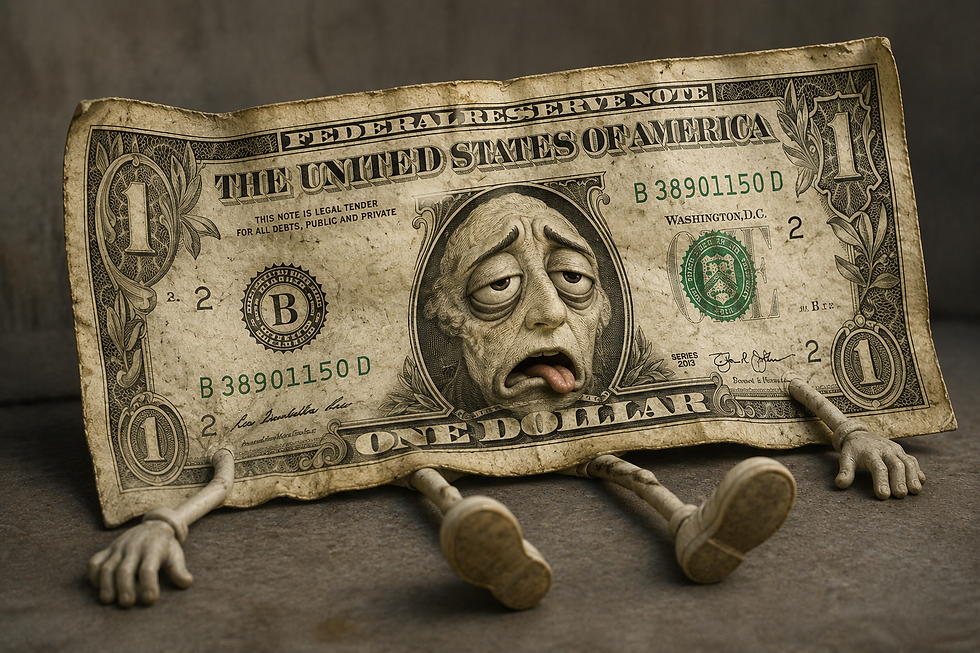
The contradictions are everywhere. We tell children that money isn't everything, usually while reminding them to save some. We admire people who become rich through hard work, then complain about people who become rich through luck. We say that wealth doesn't matter, then spend an astonishing amount of time comparing our wealth with everyone else's. And we insist that money can't buy happiness while enthusiastically accepting that it can buy a house, a holiday, a good meal and the services of a therapist - which seems, at minimum, to give happiness a fighting chance.
Benjamin Franklin, one of the USA’s founding fathers, had opinions about nearly everything and the good fortune to have many of them quoted for centuries. He observed that if you want to know the value of money, you should try borrowing some. It's a wonderfully practical definition. Money tends to become more philosophical when you have plenty of it and considerably more concrete when you don't.
Maybe that's why so many sayings about money sound contradictory until you consider who’s saying them. The rich tend to advise us that money isn't important. The poor tend to know precisely how important it is. Parents tell their children that money doesn't grow on trees, while governments have spent centuries demonstrating that they can apparently make it grow on printing presses. Economists call this monetary policy. Everyone else calls it making shit up.

And then there’s the famous warning that money is the root of all evil, which is actually a rather interesting case of a quotation becoming shorter and more useful as it travelled through history. The original biblical passage refers not simply to money, but to the love of money as a source of various evils. That small distinction matters. Money itself is simply a tool. It’s what people want from it - and what they are prepared to do to get it - that can become the problem.
Which brings us back to gold. Gold became money because people agreed that it represented value. Money became powerful because people agreed that it represented something else. And somewhere along the way, we became very good at wanting the representation almost as much as we wanted the thing itself.
And that’s the real trick of money. It doesn't have to be valuable. We just have to believe that it is.
So How Much Is Enough?
“How much money is enough? Just a little bit more.”
— John D. Rockefeller
There’s a question that’s probably been asked since the first person discovered that his neighbor had more goats: “How much is enough?” The annoying answer, judging by human history, appears to be slightly more than I have now. We can be perfectly content with what we own until we discover that someone else owns more of it. Then contentment becomes a surprisingly flexible concept.
Money does, of course, make life easier when it takes care of things like food, shelter, healthcare and the always to be expected unexpected bill.

Beyond that, however, the relationship between money and happiness gets considerably less straightforward. More money can buy comfort, freedom and experiences, but it can also provide us with more elaborate things to worry about.
The thing is that the finish line keeps moving. A modest income can seem like a fortune when you're struggling. A fortune can seem inadequate when your neighbors have two fortunes. Eventually, someone acquires a private jet and discovers that someone else has a larger private jet. At that point, we have left the territory of financial security and entered the far more mysterious realm of keeping score.
Maybe that's why gold has remained such a powerful symbol of wealth. It doesn't tell you whether you're happy. It doesn't tell you whether you're comfortable. It simply tells you that you have something other people want. And for thousands of years, that’s been enough to keep us digging.

All That Glitters
“People know the price of everything and the value of nothing.”
— Oscar Wilde
There’s something wonderfully circular about our relationship with gold. We decided it was valuable because it was rare, beautiful and durable. Eventually we built economies around that agreement, wrote laws to protect it, started wars over it and created entire industries devoted to finding more of it. Gold didn’t start out valuable. We made it valuable.
This is, of course, more or less how money works. A banknote is only a piece of paper. A number in a bank account is only a number. Neither can feed us, shelter us or keep us warm. Their usefulness comes from the collective agreement that they represent something else. Money is, in a sense, a very elaborate global group project in which everyone has agreed not to ask too many questions about the paper.

Gold has an advantage over paper, of course. It is actually something. It exists independently of our financial systems, it doesn't need a government to print it, and it doesn't disappear simply because someone decides to change the rules. But its value is still a human invention. Gold atoms don’t care whether an ounce is worth fifty dollars or fifty thousand. They remain stubbornly indifferent to the financial markets.
And maybe that's what makes gold so fascinating. It sits at the intersection of the physical and the imaginary. The metal is real. Its scarcity is real. Its durability is real. But the extraordinary importance we attach to it is something we have created. The same thing is true of money, status and much of what we call wealth.
We spend enormous amounts of time trying to acquire things that have value because we have collectively agreed they have value. Then we use those things to demonstrate our success to other people who have agreed to the same arrangement. It is an extraordinarily sophisticated system.
It is also, when you step back and look at it, completely bonkers.
Gold: The Universe Made It. We Made It Valuable.
Gold has been here a whole lot longer than we have. Its atoms were forged in violence on a scale that makes anything humans have ever built look like a child's science experiment.

They travelled through space, survived the formation of stars and planets, and several billion years of geological indifference, waiting patiently for us to arrive. We eventually dug them out of the ground, polished them, weighed them, put them around our necks and fingers, buried them with our dead, locked them in vaults, and spent the next few thousand years killing one another over who got to keep them. None of this was necessary. The gold was doing perfectly well without us.
But humans have never been particularly good at leaving things alone. We see a beautiful stone and decide it should be a jewel. We find a rare metal and decide it should be wealth. We discover a particularly scenic piece of land and decide it should be a luxury resort.

We take perfectly ordinary things - objects, places, possessions, numbers - and attach meaning to them until the meaning becomes more important than the thing itself. Gold simply happens to be one of the most successful examples. It’s rare, durable and beautiful, certainly. But none of those qualities explains the extraordinary importance we have given it. The metal is real. The obsession is ours.
That may be the most interesting thing about value. It’s not always sitting inside the object waiting to be discovered. We put it there ourselves. A gold coin is metal. A diamond is carbon. A banknote is paper. A painting is pigment on canvas. A house is timber, brick, glass and concrete. Yet we can look at these things and see security, beauty, status, history, success or even love. We don't simply see what something is. We see what we’ve decided it means.
And maybe that's why gold has endured while so many other symbols of wealth have disappeared. Kings have fallen. Empires have collapsed. Currencies have become worthless. Fortunes have been made and lost and made again. Gold has simply continued being gold. It never promised us happiness, security or immortality. Those were promises we made to ourselves. The universe gave us a metal. We gave it meaning. Then we spent thousands of years trying to acquire more of it, as though the next handful might finally answer the question we've been asking all along - How much is enough?
The answer, of course, remains the same.
Just a little bit more.
Authors Note: After spending a couple thousand words contemplating why humanity is so obsessed with gold, we felt it would be only fair to offer you the opportunity to acquire some.
Want to find your own? This gold prospecting kit gives you a compact sluice box, classifier pan, gold-trap mat, vials and carrying bag. In other words, pretty much everything you need to begin your career as a gold prospector - apart from the gold. That part remains between you, geology and an unreasonable amount of optimism. Order yours here: https://geni.us/3VeJlI

Prefer to skip the digging? You can always just buy 200 gold pirate coins instead.

They aren't actually gold, of course, but they look sufficiently treasure-like that your inner pirate should be satisfied. And, as we’ve clearly established, value is largely a matter of collective agreement. https://geni.us/z8eD
Or you could just eat it. These gold chocolate coins may be the most practical form of gold we've encountered. They're shiny, they're valuable, and unlike actual gold, they have the considerable advantage of being useful when you're hungry. https://geni.us/LUuArg

As always, any purchases made through these links help support the continued production of essays examining the thin and increasingly questionable line between human civilization and organized nonsense.


A very interesting read and it goes to show how ridiculous we are as humans. I mean we will turn anything scarce into something to be owned vs cherished . Maybe I am kidding myself, maybe they are the same.
I didn’t find it particularly fascinating that there is that much gold in the ocean and that some greedy human hasn’t figured out how to gather it .
My two favorite quotes:
“The universe is under no obligation to make sense to you”
- Neil deGrasse Tyson
“How much money is enough? Just a little bit more.”
- John D Rockefeller
There is a Twilight Zone episode (Rod Serling was a genius story teller, but as a young person he…