
Things That Really Shouldn't Be on Fire

Fire has always enjoyed a somewhat inflated reputation. We speak of discovering it as though one of our ancestors returned from the forest carrying a small flame cupped delicately in his hands while the rest of the tribe applauded. More likely, somebody noticed that lightning had set a tree ablaze, moved cautiously toward it, and eventually discovered that mammoth tasted considerably better after it had stopped being raw. Civilization has been taking credit for fortunate accidents ever since.

Still, fire did turn out to be useful. It kept predators away, made winters survivable, hardened tools, transformed metals and eventually allowed us to build steam engines, factories, cities and restaurants where a man can charge twenty-eight dollars for a piece of cauliflower because it has been “fire-roasted.” Prometheus supposedly stole fire from the gods and gave it to humanity. Had the gods been able to see the menu prices several thousand years later, they might have guarded it more carefully.

Over time, we became very confident about the arrangement. Fire belonged in fireplaces, furnaces, ovens and the occasional birthday cake. Water put it out. Firefighters arrived when it escaped. Insurance companies charged us money in case it escaped somewhere expensive. We installed alarms, sprinklers, extinguishers and little illuminated signs explaining which direction to run when several thousand years of human mastery suddenly stopped going according to plan.
And yet mastery may be overstating things. Because having spent hundreds of thousands of years learning how to control fire, humanity eventually progressed to the point where we could set fire to a river. We’ve also managed to ignite twenty-seven tons of Norwegian cheese, forty thousand pounds of potato chips, a giant Swedish Christmas goat with alarming regularity, a pile of hay because it was too wet, and - just to make certain irony remained properly funded - a fire station. These are the fires that deserve our attention: not the tragic ones, but the wonderfully improbable occasions when everyone walked away safely and something caught fire that really, really shouldn't have.
The River That Forgot It Was Water
On June 22, 1969, the Cuyahoga River in Cleveland, Ohio, caught fire. This is generally considered unusual behavior for a river. Rivers have several traditional responsibilities - flowing downhill, containing fish, occasionally flooding somebody's basement - but extinguishing fire has always been fairly high on the list. The Cuyahoga had apparently decided that job descriptions were merely suggestions.
By 1969, decades of industry had transformed parts of the Cuyahoga into something considerably more ambitious than water. Oil, petroleum waste and industrial debris floated on its surface, while railroad bridges trapped logs and rubbish underneath them. A flare or spark from a passing train likely provided the final ingredient, igniting the oily debris and sending flames high enough to damage two railroad trestles.

Firefighters arrived, including a fireboat, which must rank among the stranger assignments in firefighting history: taking a boat onto a river in order to put out the river. The blaze was under control in roughly twenty minutes.
Maybe the most remarkable part is that Cleveland wasn't particularly surprised. The Cuyahoga had caught fire repeatedly since the nineteenth century - at least thirteen times according to the EPA. A 1952 fire had been considerably worse, causing nearly $1.5 million in damage. The 1969 fire was actually rather modest and initially attracted so little attention that the local newspaper concentrated on the damaged railway bridges rather than dwelling on the increasingly obvious question of why a river required a fire department.

Photographs and stories about the Cuyahoga eventually traveled far beyond Cleveland. Randy Newman famously commemorated it in his song “Burn On”, and the burning river became an international symbol of just how casually industrial America had treated its waterways. It joined a much larger environmental awakening already underway and became associated with the reforms that followed, including the creation of environmental protection agencies and the Clean Water Act. The river didn't single-handedly create those changes, but it provided something legislation rarely does: an image nobody needed explained. Pollution was complicated. A river on fire was not.

When Cheese Becomes a Fuel
In January 2013, a truck entered the Brattli Tunnel in northern Norway carrying 27 tons of brunost, the country's distinctive brown cheese. Somewhere inside the tunnel, things went badly wrong. The truck caught fire, the driver escaped unharmed, and before long Norway found itself confronting an emergency for which its transportation authorities had apparently neglected to prepare: 27 tons of burning cheese.

Brunost is not quite cheese in the conventional sense. It's made by cooking down whey until the milk sugars caramelize, producing something brown, sweet, slightly fudgy and deeply beloved by Norwegians.

More importantly for our purposes, it contains plenty of sugar and fat, two substances that become considerably less appetizing when introduced to enough heat. Once the cargo began burning, the fire continued for several days and temperatures became so intense that the tunnel was badly damaged and had to remain closed for repairs. One local police officer explained that the cheese could burn “almost like petrol” under the right conditions. Somewhere, presumably, a Norwegian breakfast became subject to entirely new safety considerations.
Perhaps the best assessment came from Kjell Bjørn Vinje of Norway's Public Roads Administration, who confessed, with magnificent Scandinavian understatement, that he hadn't known brown cheese burned so well.

In fairness, there are certain things a career in highway management cannot reasonably be expected to prepare you for. Avalanches, icy roads and jackknifed trucks, certainly. A dairy product sustaining a multi-day tunnel fire probably appears considerably further down the training manual.
Nobody was injured and cheese, it turns out, occupies a surprisingly narrow space between something you add to a sandwich and something the fire department may have to extinguish. For centuries, Norwegians had been putting brunost on waffles and toast. It took a truck, a tunnel and 27 tons of the stuff to discover that, given sufficient encouragement, breakfast could apparently heat a small village.
The Goat They Couldn't Stop Burning
Every December, the Swedish city of Gävle builds a giant goat out of straw. The tradition began in 1966, when advertising consultant Stig Gavlén came up with the idea of constructing an enormous version of the traditional Scandinavian Yule goat to attract visitors to the city's shopping district.

The first one stood roughly 13 meters tall, weighed three tons and was, presumably, pretty impressive looking in person. At midnight on New Year's Eve, somebody set it on fire. This should perhaps have been interpreted as feedback.
Instead, Gävle built another one. And people kept burning them. Over the decades, protecting the Gävle Goat has developed into an annual contest between civic determination and people with access to matches. The goat has been guarded by security personnel, surrounded by fencing, treated with fire retardant and watched by webcams. None of this has entirely solved the fundamental design problem, which is that the object being protected is a 13-meter-high pile of straw sitting outdoors for several weeks.

The contest has occasionally become impressively elaborate. In 2005, vandals dressed as Santa Claus and a gingerbread man reportedly fired flaming arrows at the goat. In 2009, hackers disabled its webcams shortly before it was burned. The following year, someone reportedly offered a security guard money to abandon his post so the goat could be stolen by helicopter and transported to Stockholm. The guard declined, leaving unanswered the considerably more interesting question of what anyone planned to do with a stolen 13-meter straw goat once it arrived.
And yet Gävle continues to build it. That may be the best part of the story. At some point the goat stopped being merely a Christmas decoration and became a yearly demonstration of two equally powerful human instincts: the desire to preserve tradition and the desire to see what happens when you set something enormous on fire. Sweden has spent decades trying to protect the former from the latter.
When the Fire Department Needs the Fire Department
At around four o'clock one morning in May 2024, firefighters at Los Angeles County Fire Station 164 in Huntington Park were alerted to a fire by motorists driving past the building and honking their horns. This was helpful because the fire wasn’t somewhere else. The fire station was on fire. There are moments in every profession when circumstances call into question some of the basic assumptions upon which the business model was built.
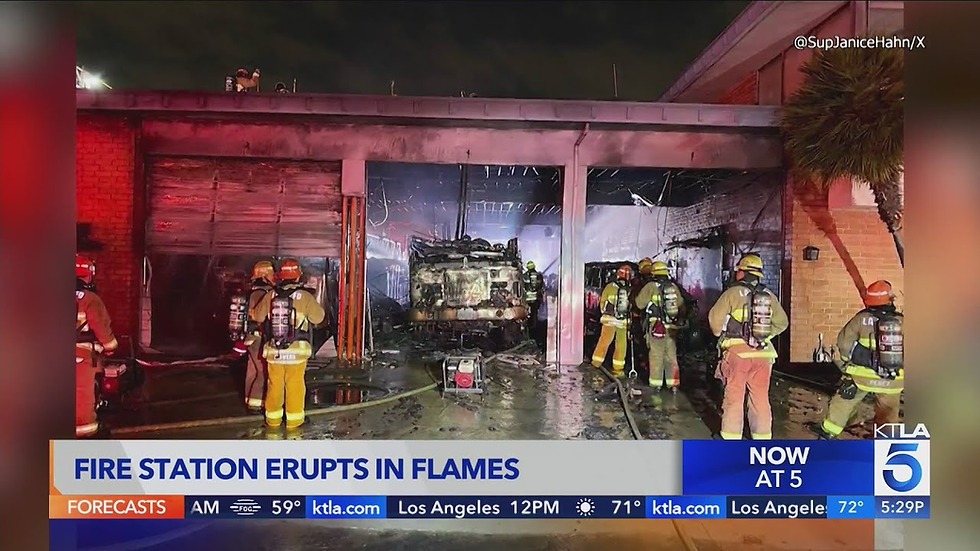
The blaze apparently began in the station's apparatus bay, where the engines and other emergency vehicles were kept. Firefighters woke to smoke and flames and initially confronted the fire in T-shirts and flip-flops before additional crews arrived. Nobody was injured, but the station was badly damaged, along with fire engines, paramedic vehicles and equipment. The building had no automatic sprinkler system, something fire officials said was common in older stations. Apparently, even fire stations occasionally operate on the assumption that the fire department will arrive in time.

There is, of course, nothing particularly mysterious about a fire station catching fire. It contains vehicles, fuel, electrical equipment and all the ordinary ingredients available to any building with ambitions toward combustion. But logic isn't really the issue. Certain places carry expectations. Banks should have money. Hospitals should have doctors. Swimming pools should contain water. And fire stations should, at the very least, enjoy a slight competitive advantage when the building catches fire.

The firefighters did eventually extinguish the blaze, although only after reinforcements arrived from other stations. Perhaps that’s the most reassuring part of the story. Even the people we call when something catches fire occasionally have to call the people we call when something catches fire.
When the Chips Are Literally Down
In July 2022, firefighters in Ocala, Florida, were called to deal with a burning tractor-trailer containing approximately 40,000 pounds of potato chips and other snacks. Nobody was injured, no buildings were threatened, and the fire was brought under control. From an emergency-management perspective, it was a successful operation. From a snacking perspective, the losses were catastrophic.

Potato chips may seem like unlikely participants in a major fire, but they are surprisingly well qualified. They contain carbohydrates and, more importantly, plenty of cooking oil. Given enough heat, that combination provides considerable fuel. Anyone who has ever opened a bag and wondered why something containing twelve actual chips requires packaging large enough to accommodate a family of four may take some comfort in knowing that the remaining space is apparently an important firebreak.

Firefighters attacked the blaze with a high-powered stream of water while bags of chips and snacks spilled from the trailer. Photographs from the scene show what appears to be the aftermath of a convenience store experiencing a particularly violent disagreement with itself. Crews eventually extinguished the fire and cleared away the remains, presumably while resisting the instinct to ask whether anyone had brought dip.
No one was hurt, which allows us to concentrate on the important lesson: almost anything becomes less innocent when you assemble 40,000 pounds of it in one place. A potato chip is a snack. Twenty tons of potato chips is an industrial event requiring its own emergency response. Somewhere between those two quantities, lunch becomes infrastructure.
When Getting It Wet Makes Things Worse
In August 2026, firefighters were called to Lucerne Farms in northern Maine, where approximately 100 tons of hay had caught fire. Nobody was injured, and no buildings or equipment were damaged. There was no lightning strike, discarded cigarette or suspicious farmer fleeing across a field carrying an empty gasoline can. The likely culprit was considerably more troubling. The hay had gotten wet.

This seems unfair. Water has spent most of this post trying to maintain its reputation as the thing we use when something catches fire. But hay operates by different rules. When it’s baled or piled while containing too much moisture, bacteria and other microorganisms begin breaking down the plant material, generating heat in the process. Hay is also an excellent insulator, so that heat can become trapped deep inside the pile. If temperatures continue climbing, chemical reactions take over and eventually the hay can ignite without anybody providing a spark. In other words, a pile of wet grass can slowly manufacture its own fire.
Farmers take this seriously enough that monitoring the internal temperature of stored hay is a normal part of agricultural fire prevention. Around 130°F, a haystack deserves attention. As temperatures climb, the risk increases; at sufficiently high temperatures, moving the hay can itself be dangerous because suddenly exposing the hot interior to oxygen can encourage ignition.
The Maine firefighters ultimately allowed much of the pile to burn itself out while protecting the surrounding property.

It was probably the sensible approach. There are moments when nature presents us with a problem so contrary to ordinary experience that intervention begins to feel presumptuous. If the wet hay has decided to set itself on fire, then the hay has made its position clear.
Special Delivery
In July 2026, the driver of a garbage truck in Oklahoma City noticed that the contents of his vehicle had caught fire. Garbage truck fires are not particularly unusual, but what happened next was. Rather than wait for the fire department to come to him, the driver drove to Fire Station 31, pulled into the parking lot and dumped the burning load onto the pavement. Most people call the fire department. This man apparently decided delivery would be faster.

The firefighters, who could hardly complain about response time, came outside and extinguished the pile. Nobody was injured, the truck was saved and the fire was prevented from spreading. It was an impressively efficient solution, although probably not one the Oklahoma City Fire Department intends to promote with roadside signs reading BURNING GARBAGE? DROP OFF HERE.

There is a more serious reason garbage trucks occasionally find themselves transporting fire. Batteries - particularly lithium-ion batteries from phones, laptops, power tools and other rechargeable devices - can be crushed or damaged by the compacting machinery inside collection trucks. When that happens, they can enter thermal runaway, producing intense heat and potentially igniting everything around them. The modern garbage truck, it turns out, must now contend not only with everything we throw away but with the possibility that some of it has brought its own ignition system.
Still, there is something wonderfully satisfying about the driver's response. He had a truck full of burning garbage, knew precisely who dealt with burning things, and removed every unnecessary step between uniting the two. No emergency call, no complicated directions, no waiting beside the road for flashing lights to appear. He simply took the fire to the fire department.
Things That Really Shouldn't Be on Fire
Fire has been with us for so long that we've stopped thinking of it as extraordinary. We light it under frying pans, put it on birthday cakes and build little brick alcoves in our homes specifically so we can sit around watching it. Our ancestors once huddled around flames because something with large teeth was waiting beyond the light. We do it now with a glass of wine and central heating.

Progress is complicated.
We've been thinking about fire more than usual lately. Last week, the 26-story apartment building where we live caught fire. Everyone got out safely, which is the only part of that sentence that really matters. The building itself won't be habitable for at least a year, and life has consequently acquired rather more cardboard boxes, hotel rooms and conversations with insurance companies than had been on the calendar. There’s nothing particularly funny about watching a place you live become somewhere you can't live. But there is something humbling about discovering how quickly all our confidence in buildings, systems and carefully arranged lives can disappear behind a little smoke.
Maybe that's why the ridiculous fires are worth remembering. The burning rivers, combustible cheese, suicidal hay and indestructible Swedish determination remind us that fire has never been particularly interested in the categories we've assigned to things. We discovered it, harnessed it and built civilization around it, but control was always a slightly optimistic description of the relationship. Sometimes the river burns. Sometimes the fire station burns. Sometimes 27 tons of cheese burn for days beneath Norway. And when nobody gets hurt, we're allowed to stand at a safe distance, look at the smoke and admit that after several hundred thousand years of practice, we are still occasionally surprised by what catches fire.
Authors Note: After spending an entire post discussing things that really shouldn't be on fire, it seemed appropriate to offer three products connected to fire - one that streams television, one that puts fires out, and one of the greatest novels ever written about people whose job description involves starting them.
Amazon Fire TV Stick HD —

This is admittedly the safest interpretation of “Fire Stick” available online. Amazon's latest HD model plugs into your TV, comes with an Alexa Voice Remote and streams the usual collection of movies, television and live content. Best of all, despite the name, it has so far shown remarkably little interest in setting the television on fire. Get it here
Prepared Hero Emergency Fire Blanket XL —
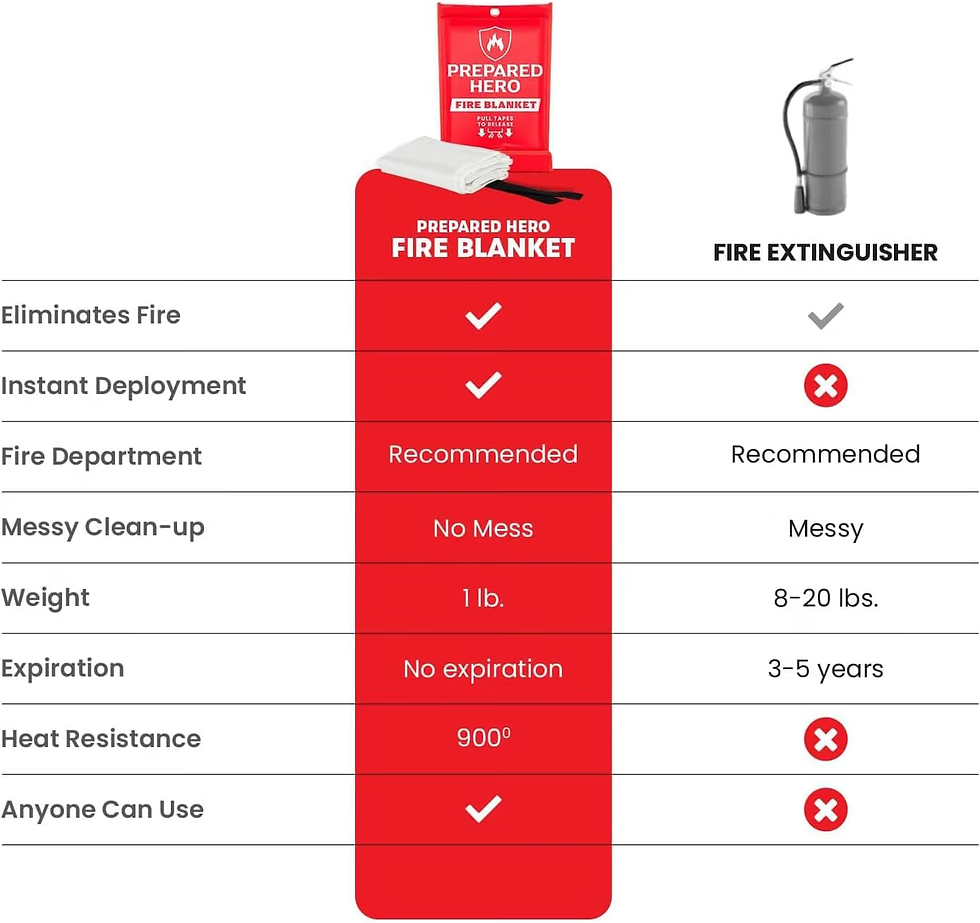
After recent events, this one feels considerably less theoretical. This four-pack of extra-large 47 × 71-inch fire blankets is designed to smother small kitchen, grease and other household fires by cutting off their oxygen supply, without the spray and cleanup of a conventional extinguisher. Pull the tabs, cover the fire and get yourself somewhere safe. Hopefully, it's the sort of thing you buy and spend the rest of your life mildly annoyed that you never needed. Get it here
Ray Bradbury's Fahrenheit 451 — Deluxe Slipcase Edition —

If we're going to have a post about things burning that shouldn't, we can hardly ignore the novel in which firefighters have been reassigned to burning books. Bradbury's 1953 classic about censorship, conformity and a society increasingly distracted from thinking for itself remains unsettlingly good company decades later. This handsome Deluxe Slipcase Edition also seems particularly appropriate: if you're going to own a book about people burning books, you might as well own one you'd be especially irritated to see them burn. Get it here
As always, any purchases made through these links help support the continued production of essays examining the thin and increasingly questionable line between human civilization and organized nonsense.



Comments