
They Call This Progress?

Humanity has a touching faith in the word new. The future keeps arriving looking rather pleased with itself. It’s sleek, expensive, and finished in a shade of silver that suggests both surgical competence and an unwillingness to discuss the price. We welcome it into our homes, clear space for it in our kitchens, and admire the little lights that confirm it’s thinking. The old thing may still perform its duties with quiet distinction, but its position has become embarrassing. It belongs to an earlier understanding of happiness. The new thing, according to the packaging, has corrected this.

We’ve been raised, after all, to believe that newer means better. The evidence is printed on every box. Improved. Advanced. Revolutionary. And we’ve been remarkably accommodating about the terms. Instructions now take longer to read than the activity they describe. Settings require research. Objects purchased to perform modest household duties ask questions of an unexpectedly personal nature before agreeing to begin. We stand there, obediently supplying an email address, as though this were a perfectly reasonable preliminary to something our parents accomplished by turning a knob.
Occasionally, though, an old advertisement surfaces and disturbs the arrangement. Beneath the lacquered hair and the almost medicinal cheerfulness, a beautifully attired woman demonstrates a small piece of ingenuity so sensible that you find yourself leaning forward.

A movement, a compartment, a mechanism. Someone had noticed an ordinary irritation and taken the trouble to remove it. You look across the room at its expensive descendant and begin to suspect that a useful idea may have been misplaced during the renovations. The hairstyle invites forgiveness. The engineering invites a closer look.
The appliances, cars, and everyday products of the 1950s and ‘60s offer quite a few of these uncomfortable little encounters. Compared with their modern descendants, they could be inefficient, inconvenient, or alarmingly indifferent to human survival. They could also be ingenious in ways we appear to have stopped valuing. So, what did we gain, what did we abandon, and who decided which improvements counted? Before accepting the next box marked new, it may be worth asking whether a few of the things we left behind deserve another turn.
The Refrigerator That Remembered You Had to Eat
In 1956, Frigidaire introduced a refrigerator called the Cold Pantry, a name that suggested someone in the company had actually visited a kitchen. Its attractions included shelves that rolled towards you, bringing the food at the back within reach without requiring the evacuation of everything in front. There was also a transparent vegetable compartment that tilted down and lifted out, allowing you to carry its contents to the sink.

These were thoughtful responses to the inconvenient fact that people eventually need to remove things from refrigerators. Seventy years later, many of us still approach a jar behind the leftovers with the care normally reserved for dismantling an explosive device.
Today’s premium refrigerator has broader ambitions. Samsung’s Family Hub models, for example, can display photographs, stream entertainment, and let you inspect the contents remotely while shopping.

That last feature has an obvious use for anyone who has returned home with a third bottle of something already adequately represented. But the entertainment requires a little more explanation. Somewhere in the development process, the refrigerator was invited to become a communications center, while the business of reaching a small container behind a large casserole remained largely between you and your shoulder. The old designers brought the shelf to the person. Their successors can send the person a picture of the shelf. There are circumstances in which this feels like an unnecessarily elaborate negotiation.
Fairness requires acknowledging that the Cold Pantry was an expensive flagship, beyond the reach of most households, and that modern refrigeration has made substantial advances in insulation, efficient compressors, and temperature management. Some newer models also retain sliding or flexible shelving; good sense has not been entirely purged from the industry. Still, a compartment that lifts out for cleaning and a sturdy shelf that brings its contents within reach deserve attention alongside the next screen. We don’t need to revive the entire refrigerator, with its period appetite for electricity. A few of its manners would do. It seems reasonable to ask that the appliance helping us organize our lives should also help us retrieve our lunch.
The Toaster That Didn’t Need a Career in Technology
The Sunbeam Radiant Control toaster arrived in 1949, just in time to make the following decade’s breakfast look unusually well organized. Put in a slice of bread and it lowered itself into the machine. When the toast was ready, it rose gently back into view, rather than being expelled with the urgency of someone escaping a building. There was no lever to push.

More impressively, its thermostat responded to heat radiating from the bread’s surface, using temperature as an indication of browning instead of simply waiting for a timer to expire. It was an elaborate piece of engineering devoted to a refreshingly modest ambition: giving you the toast you had asked for.
Heating caused a wire to expand; a mechanical linkage amplified that tiny change to lower the bread. As the wire cooled, it lifted the finished toast back out. A rather elegant arrangement for something that had never attended a product innovation seminar. Meanwhile, anyone who has hovered over a less accomplished toaster knows the familiar morning calculation: another few seconds might improve matters or produce something suitable for sketching with. A numbered dial offers the appearance of precision, although the relationship between yesterday’s setting and today’s breakfast can feel surprisingly informal.
Modern toasters do offer useful refinements. Breville’s “Lift & Look” lets you inspect progress without cancelling the cycle, while “A Bit More” acknowledges, with admirable frankness, that it’s designed for “precision browning”.

Its newer Eye Q models go further, using optical sensors to monitor the bread’s actual color and stop at the selected shade. That’s a meaningful advance, and also a pleasing return to the principle Sunbeam understood decades ago: pay attention to what is happening to the bread. The methods differ; the sensible ambition survives. What deserves a wider comeback is that combination of responsive control, effortless operation, and engineering that quietly earns its place. A toaster that knows when the toast is ready remains a fairly persuasive idea.
The Washing Machine With Too Many Opinions
The automatic washing machine offered households of the 1950s and 1960s a fairly compelling proposition: put the clothes in and escape. There were still decisions to make about temperature, fabric, and washing time, but the controls generally presented these as practical questions rather than an assessment of your lifestyle. Manufacturers were also experimenting with thrift. Maytag’s 1961 range included a “suds saver” model, part of a tradition of machines that could save wash water for another load. This required some household choreography

and was hardly suitable for every collection of dirty clothes, but the intention was clear. Water, detergent, and the energy used to heat them were worth thinking about before they disappeared down the drain. Sustainability had arrived wearing an apron, without waiting for the marketing department to name it.
Today’s more ambitious washing machines can remember preferences, suggest programs, dispense detergent automatically, and notify your phone when the washing is finished. These are useful accomplishments, particularly for anyone whose usual method involves guessing the detergent quantity and rediscovering the wet towels the following morning. But somewhere among the personalized recommendations, laundry planners, and downloadable possibilities, the relationship can acquire an unexpected formality. You wanted clean shirts; the machine would like to establish your requirements. Samsung even offers a feature called “Laundry Recipe,” which recommends a cycle based on information about the load.

One appreciates the assistance, although it’s a curious moment in domestic history when washing your underwear begins to sound like preparing it for dinner.
The strongest case for the modern machine, however, is what happens behind the controls. ENERGY STAR documents substantial reductions in washing-machine water and energy consumption alongside increasing capacity - improvements that deserve rather more applause than another notification. There’s little reason to restore the generous water consumption of an old top-loader merely because its dial was easy to understand. What deserves a comeback is the confidence that you can see what the machine does, choose what you need, and leave it to get on with things. Give the ordinary wash an obvious place on the panel. After all, the original attraction was being released from the laundry, and it seems a pity to be recruited back as its administrator.
The Cooker You Could Operate With Dinner on Your Hands
A kitchen’s an ambitious place to install controls that object to moisture. There will be steam. There will be splashes. At some point, someone will need to reduce the heat immediately after washing a potato. The familiar cooker knob accommodated these circumstances with relatively little discussion: grasp it, turn it, continue cooking. Certain modern touch controls prefer more favorable conditions. Bosch’s own troubleshooting advice notes that wet hands or a wet surface can prevent an induction hob from registering contact properly. Perfectly understandable from an engineering perspective, although one might have hoped the design brief would mention what happens in kitchens. The saucepan, meanwhile, has continued with its plans.

Some older designers gave considerable thought to the cook’s physical circumstances. Frigidaire’s Flair, introduced in 1960, combined a pull-out cooking surface with elevated ovens whose doors lifted up and away. It looked as though dinner might shortly be served aboard a spacecraft, but beneath the spectacle were practical ideas about space and access.

Raising the ovens reduced the need to bend down, while lifting the doors cleared them from the opening. The arrangement had its compromises - putting ovens above a cooking surface creates its own questions about reaching past hot pans - but it showed an interest in how people moved while preparing a meal. Someone had considered the whereabouts of your back, your arms, and their relationship to the casserole. These remain relevant departments.
Modern cooking technology gives us plenty worth keeping. Induction heats suitable cookware directly and transfers energy more efficiently than conventional gas cooking; smooth surfaces also spare us some of the archaeology involved in cleaning around old burners. Physical knobs, accessible ovens, and thoughtful door mechanisms are still available in parts of today’s market, too. The comeback doesn’t need to involve rebuilding the Flair. It could mean giving these practical considerations greater priority: controls you can identify and operate readily, shelves that bring a heavy dish within comfortable reach, and doors that leave room for the person carrying it. Keep the clever technology underneath. Above it, remember that the customer may be holding a hot pan and has rather limited enthusiasm for further instructions.
The Car Had Knobs. It Also Had Other Problems.
The cars of the 1950s and ‘60s could make quite an entrance. Some had fins suggesting imminent departure from the atmosphere; others offered a modest little body and the optimistic conviction that four people and their luggage would somehow fit inside. Their dashboards, however elaborate, generally provided physical controls for ordinary tasks. A knob stayed where you had last encountered it. With familiarity, you could adjust the radio by touch while continuing to observe the road.

In some modern cars, changing a setting means consulting a screen, locating the appropriate menu, and confirming that your finger has landed where you intended. The road ahead, however, has declined to pause during this process. We’ve spent decades telling drivers not to fiddle with their phones, then built something remarkably similar into the dashboard and given it responsibility for the ventilation.

Before nostalgia gets behind the wheel, though, it should watch what happened when the Insurance Institute for Highway Safety crashed a 1959 Chevrolet Bel Air into a 2009 Chevrolet Malibu. The test, conducted in 2009, was a particularly forceful reply to the claim that old cars were safer because they were solidly built. The Malibu’s passenger compartment remained intact; the Bel Air’s collapsed. Occupants of the newer car would have fared far better in a comparable collision.

There’s a substantial difference between a car that looks as though it could survive an accident and one designed to help you survive it. Even a very handsome steering wheel becomes difficult to admire when it’s coming towards your chest.
Fortunately, we don’t need to choose between surviving the journey and being able to turn down the fan. The useful comeback is already receiving encouragement: Euro NCAP’s 2026 safety assessments examine the clarity and accessibility of essential controls, rewarding direct physical operation for key functions such as indicators, windscreen wipers, and hazard lights. This is a safety-rating measure, rather than a law ordering every dashboard back to 1962, but the principle is welcome. Keep the modern crash protection and the screens that help us navigate. Give familiar, frequently needed functions controls we can find without an extended visual search. The humble button has considerable experience in this field. It’s spent years waiting patiently beneath the screen while everyone investigated more expensive ways to press it.
The Television That Knew When to Stop Talking
The television of the 1950s and ‘60s made relatively few enquiries about the person sitting in front of it. You switched it on, allowed it a moment to compose itself, and selected a channel. Reception might require negotiation with an aerial, and changing programs could involve getting out of your chair, but even that inconvenience attracted some ingenious attention. Zenith’s 1956 Space Command remote used little hammers striking aluminum rods to produce ultrasonic signals. It needed no batteries. Pressing a button supplied the energy required to send the command. More pleasingly, Zenith’s president had wanted a way to silence commercials. Somewhere near the beginning of remote-control history, an executive had correctly identified the need to make television stop talking.

Today’s television has considerably more to say before you reach the program. There are recommendations, promotions, applications, and opportunities to resume something you abandoned for good reason. On some sets, viewing information can also help determine which advertisements you receive, subject to your settings and consent. Samsung describes technology that recognizes what’s being watched; LG provides settings for switching off home-screen promotions and choosing whether the set starts on its home page or the last-used input. These choices are welcome, although having to locate the setting that makes a television return to being a television suggests a modest philosophical detour.
Nobody needs to surrender a magnificent modern picture, subtitles, on-demand viewing, or access to stories from across the world in exchange for a small screen showing whatever the broadcaster has decided is good for them.
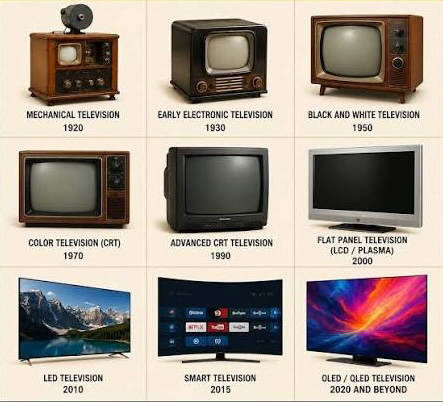
The gains are extraordinary. What deserves a comeback is the television’s willingness to get out of the way: start where you left it, make the essential controls obvious, and let recommendations wait until requested. A television can offer a thousand possibilities without presenting all of them each time you sit down. Sometimes the most sophisticated thing it could do is recognize that you’ve already chosen.
The Mixer, the Can Opener, and the Limits of Assistance
By the early 1960s, even the can opener was developing ambitions. Ronson’s Can-Do, advertised as a “kitchen magician,” was a handheld electric appliance that opened tins, mixed drinks, whipped sauces, mashed potatoes, and sharpened knives through interchangeable attachments.

It came with a hardwood mounting board to keep the collection together, and could be purchased in white, yellow, or pink, depending on how conspicuous you wanted your magician to be. Beneath the salesmanship was a sensible proposition: one motor, several useful jobs, and somewhere to put the attachments afterwards. The last detail suggests an unusually intimate acquaintance with kitchen drawers.
The Can-Do neatly complicates the idea that our grandparents’ kitchens were temples of restraint. They enjoyed a gadget, and manufacturers were happy to offer one with a sufficiently impressive repertoire. Electric mixers, however, needed little justification from anyone who had beaten a substantial mixture by hand. The same principle survives in today’s stand mixers and their attachments; KitchenAid still maintains compatibility across generations for accessories using its power hub.

Modern can openers offer other worthwhile refinements, from comfortable grips and side-cutting mechanisms to hands-free electric operation. Convenience is, of course, a personal matter. The boundary between useful assistance and unnecessary equipment depends considerably on whose hands are doing the work.
What might deserve a comeback is the Can-Do’s compact, organized approach to versatility. Combining several jobs in one appliance makes sense when it performs them well, changes attachments easily, and leaves you with less to clean and store. Otherwise, the promised kitchen magician has merely made the worktop disappear. There’s a useful calculation involving effort saved, cleaning created, cupboard space surrendered, and whether the existing tool was causing any difficulty. A mixer that regularly kneads bread has earned its place. One purchased to express an intention to become the sort of person who regularly kneads bread holds a more ceremonial role. Old or new, the kitchen assistant should reduce your workload. Otherwise, you have just acquired another dependent.
When Something Broke, That Was the Beginning of a Conversation
When an appliance broke, there was once a reasonable expectation that someone might open it and investigate. The repairer would identify a worn belt, tired switch, or failing component, then discuss the price of restoring order. It wasn’t always cheap, prompt, or successful. But the machine’s first failure didn’t necessarily constitute its resignation. Today, the conversation can reach replacement rather quickly when a modest fault requires an expensive assembly, the part is unavailable, or the labor costs make a new appliance look financially persuasive. The device has developed a small problem. Unfortunately, its proposed treatment is another device.

Older machines were not universally dependable, and the refrigerator still humming after sixty years is a survivor, rather than a character reference for everything built alongside it. Nor does a mechanical control automatically make something easy to repair. What deserves a comeback is the expectation that a useful object can have another chapter: accessible components, available parts, service information, and a repair bill that bears some sensible relationship to the fault. Efficiency matters while a machine is running. Keeping it running deserves a place in the discussion too. Having taught our appliances to communicate, we might reasonably hope for something more constructive than a farewell message.
They Call This Progress?
There’s no need to bring back whole decades. Keep the safer cars, the efficient washing machines, the refrigerator that uses less electricity, and the television that can bring you a film from halfway around the world. But spare a thought for whoever actually did the work in those immaculate old kitchens. The advertisements tended to congratulate the appliances while leaving the woman beside them permanently on duty, smiling through another demonstration. An easier life ought to include hers.

Still, there was something worth keeping in the attention paid to an ordinary gesture. Reaching for a jar. Turning down the heat. Lifting a heavy dish without negotiating an obstacle course. These are small things until your hands hurt, your back has had enough, or you’re simply tired at the end of a day that’s already required more decisions than it deserved. At that point, a well-placed handle can offer more practical kindness than an impressive list of capabilities.
We’ve become accustomed to doing a little unpaid work for the things we own: setting them up, learning their preferences, managing their updates, discovering which feature has moved. Some of that effort buys us real convenience. Some merely earns us permission to carry on. There should be room in the future for objects that ask less of us, that can be understood without a tutorial and repaired without a financial reckoning. We were promised an easier life. It remains a reasonable thing to ask for.

Eventually, someone has to make dinner. The demonstrations are over, the packaging has gone out, and the kitchen belongs again to a person who is hungry and would quite like to sit down. This is where all those promises have to earn their keep. A shelf within reach, a control that makes sense, a machine that can be fixed – small considerations, maybe, until you’re the person depending on them. Somewhere among the things we left behind there may be a seventy-year-old idea worth inviting back, especially if it leaves us a little more time for the meal and the company. Someone is waiting at the table.
Authors Note: Having spent several thousand words questioning whether we need more equipment, we should probably hesitate before suggesting you buy some. Fortunately, these three have relatively modest ambitions. And none appears interested in becoming the communications center of your home.

A wind-up timer with a retro face, a magnetic back, and up to sixty minutes in which to make yourself useful. Wind it fully, turn it back to the time required, and let it get on with counting. It won’t recommend a recipe or ask how dinner went. It will simply announce that you should probably check the oven - an admirably restrained contribution to the evening. Get yours here.

An example of progress earning its name. This manual opener cuts around the side of the tin below the rim, avoiding sharp edges on the lid, while built-in pliers let you lift it away without fishing about with your fingers. Comfortable grips and an easy-turning knob complete the arrangement. It doesn’t mix drinks or sharpen knives like the Ronson, but getting the chickpeas out without a minor injury is a respectable specialization. Get yours here.

A retro-style bamboo bread box with ventilation holes and a window through which to inspect the current occupants. It gives your loaf somewhere to live without turning bread storage into another electronic responsibility. There is some assembly required, so the future hasn’t been entirely excluded. Once installed, however, it asks very little of you. Put bread in. Take bread out. Try to leave enough for breakfast. Get yours here.
As always, any purchases made through these links help support the continued production of essays examining the thin and increasingly questionable line between human civilization and organized nonsense.


Comments