
More Money Than Necessary

There’s a particular pleasure in buying something one doesn’t need. The useful purchases arrive burdened with responsibilities: the refrigerator must refrigerate, the shoes must fit, the washing machine must justify the trouble of getting it through the door. An unnecessary purchase enjoys a more elegant arrangement. It need only be wanted, preferably by someone who has had a difficult week.

Most of us conduct these transactions under modest supervision. A bank balance intervenes. A spouse raises an eyebrow. Somewhere between the shop window and the payment terminal, a small, tiresome voice asks whether we already own something remarkably similar. We answer that this one is different, although we would prefer not to be examined on the particulars.
In certain households, however, that voice has historically struggled to find employment. The money arrives regularly, the servants are discreet, and the person responsible for saying “perhaps not” discovers that enthusiasm offers better prospects. A passing fancy acquires drawings. The drawings acquire contractors. By the time anyone asks what the thing is for, the marble has been ordered.

Today’s billionaires have updated the materials rather than the impulse. The marble has become a rocket, and apparently a trillion dollars is now something a person might reasonably feel they’re falling short of.
Across countries and centuries, people with extraordinary fortunes have found increasingly elaborate ways to spend them. They’ve worn treasuries around their necks, imported monasteries, improved the bathroom beyond any reasonable expectation of the bathroom, and rearranged the earth to accommodate their personalities. Some spent their inheritance. Others were less particular about whose money it was. The currencies differed but the absence of anyone saying, “Are you quite sure?” was remarkably consistent.
The Necklace That Needed Its Own Introduction
Bhupinder Singh, Maharaja of Patiala - India
For a ruler, jewelry has rarely been merely decorative. It announces lineage, authority, and the reassuring possibility that the household could survive an awkward harvest. Bhupinder Singh, Maharaja of Patiala, understood this language fluently and approached luxury with the confidence of a man who had never needed to put anything back.
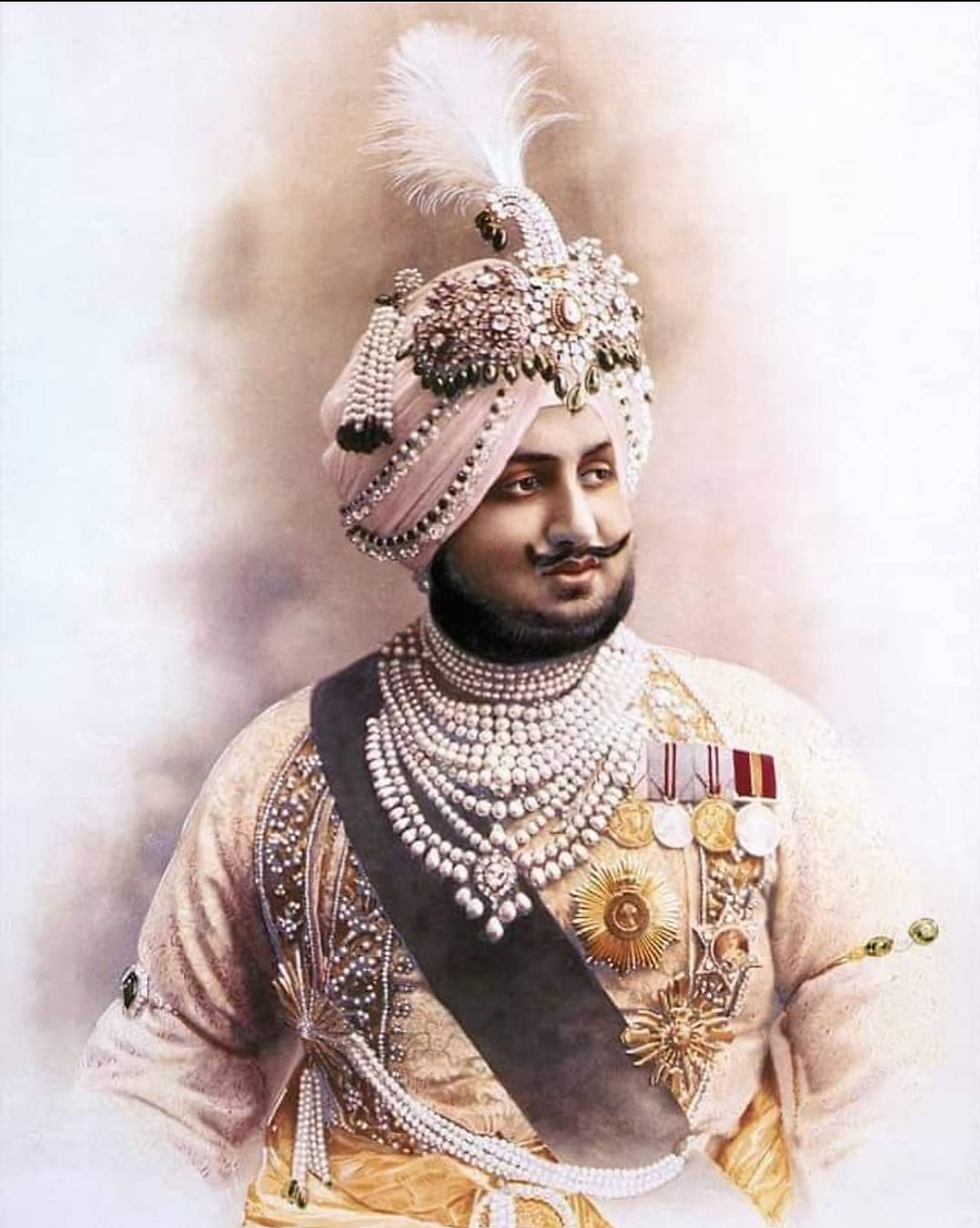
His collection of Rolls-Royces reportedly reached 44. He also acquired aircraft in the early days of aviation. Getting somewhere was really only part of the point.
His jewelry purchases followed much the same philosophy. In 1928, he entrusted Boucheron with a commission that incorporated 7,571 diamonds and 1,432 emeralds, along with other precious stones. These were gems from his own treasury, which suggests that even before the shopping began, storage was becoming an issue. Boucheron describes it as the largest order ever placed at Place Vendome, the Paris square where jewelers are accustomed to customers arriving with ambitious ideas and the means to finance them. The maharaja managed to impress even that crowd.
Cartier, meanwhile, had been occupied with his neck, completing the Patiala Necklace that same year: five tiers of platinum chains, 2,930 diamonds, and the enormous De Beers diamond - more than 234 carats - at its center.
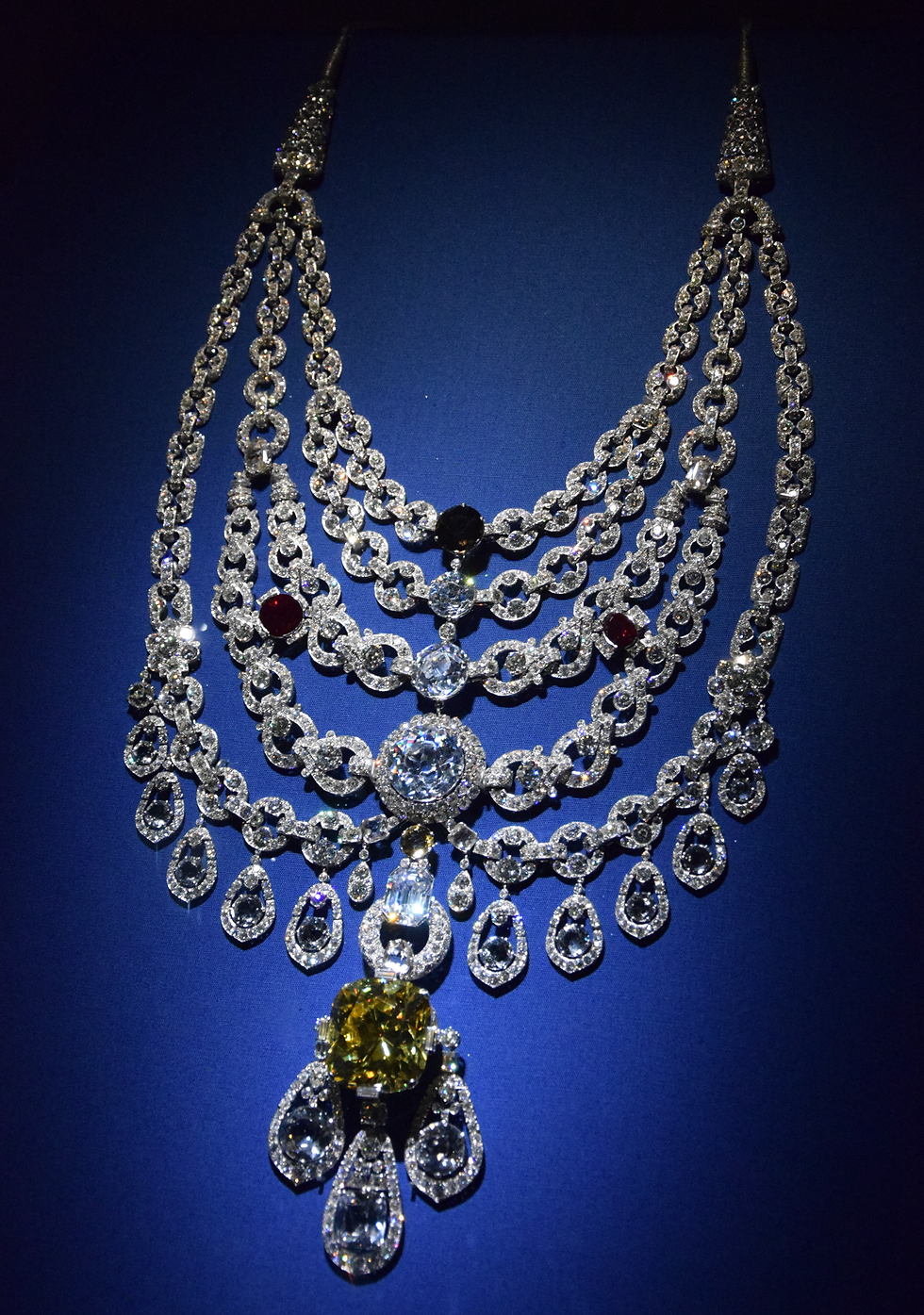
Calling it waste might be overstating the case. The craftsmanship was extraordinary, and the stones retained real value; this was extravagance rather than a fortune thrown into the sea. But after the cars, the aircraft, and enough jewelry to keep a Paris workshop thoroughly occupied, the necklace supplied the finishing touch. Most people get dressed before leaving the house. Bhupinder Singh put on enough diamonds to make maintaining eye contact an unreasonable expectation.
His Name Was Already Hamad
Sheikh Hamad bin Hamdan Al Nahyan - United Arab Emirates
Putting our names on things begins innocently enough. A schoolbook. A suitcase. A towel, if the household has developed territorial difficulties. Sheikh Hamad bin Hamdan Al Nahyan, a billionaire member of Abu Dhabi’s ruling family, pursued the principle on a somewhat larger canvas. Known as the “Rainbow Sheikh,” he had already acquired seven Mercedes in different rainbow colors, offering a solution to the otherwise neglected problem of choosing a car to match one’s mood. His collection also included a giant Dodge truck with living quarters inside. Ordinary proportions were evidently becoming restrictive. By 2011, enormous, excavated waterways on his island, Al Futaisi, spelled HAMAD across roughly two miles of terrain. The name could be seen in satellite imagery, which considerably expanded the potential audience for a monogram.

The construction cost is difficult to establish reliably, but the logistical ambition is less elusive. This was lettering that required earthmoving equipment. Somewhere, somebody had to discuss the practical requirements of the “A”. Most signatures are completed before the ink dries; this one involved coastal engineering. One imagines the satisfaction of checking a map and finding that it had remembered you personally.
By 2013, the lettering had disappeared. Reports documented the erasure without establishing a definitive explanation, leaving us with an unusually large example of second thoughts. Perhaps the most revealing part is how little difference it made to the essential fact. Before the excavation, his name was Hamad. After the excavation, his name was Hamad. An island had briefly been required to confirm it.
Please Use the Underground Entrance
William John Cavendish-Scott-Bentinck, 5th Duke of Portland - Britain
Cavendish-Scott-Bentinck was born in 1800 into a family whose wealth came from owning enormous quantities of the places where other people lived and worked. A former member of Parliament, he inherited the dukedom from his father in 1854, along with Welbeck Abbey in Nottinghamshire and a substantial property empire. In 1872, his London estates alone reportedly produced nearly £105,000 in net annual income - roughly US$20 million a year today, before counting his country estates. He could afford almost any society he wanted. Increasingly, he wanted very little of it.
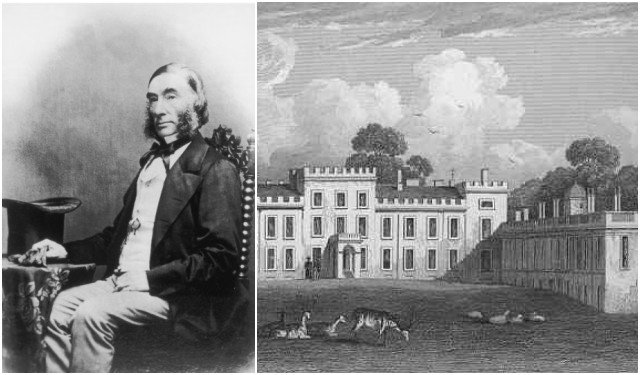
His preference for solitude went considerably beyond declining dinner invitations. He supposedly wore three pairs of socks at once, ate exclusively roast chicken, and managed contact with servants through notes and carefully arranged routines; his bedroom door had two letterboxes, allowing correspondence to come and go without requiring its author to appear. Precisely what drove his withdrawal from most human contact remains uncertain, but his staff could apparently reach him more easily by post than by knocking.
At Welbeck, he commissioned two and three-quarter miles of tunnels, some large enough for carriages, together with subterranean rooms, a ballroom, and an underground donkey stable. Above ground, he built one of the world’s largest riding schools and extensive gardens and estate buildings. An account published in 1881 estimated that the duke had devoted approximately £100,000 annually to improvements for more than eighteen years, keeping some 1,500 workers employed. The scale is clear: his home spent nearly two decades operating like a major public works scheme.

The Harley Foundation, which preserves the estate’s history, states that the spending produced more than an elaborate escape route. It supported local employment and created remarkable buildings; the duke supervised his projects and inspected architectural models before construction. When he died in 1879, he left an extraordinary estate whose buildings still attract attention. His extravagance lay in the scale of the solution: an immensely wealthy man could arrange his entire surroundings around the wish to remain undisturbed. Most of us avoid an awkward encounter by crossing the street. The Duke of Portland had the resources to put the street underground.
The Monastery Came Flat-Packed
William Randolph Hearst - United States
William Randolph Hearst, the American newspaper magnate, had an appetite for collecting that made the distinction between a furnishing and a building increasingly inconvenient. At San Simeon on California’s coast, he worked with architect Julia Morgan to create Hearst Castle: 165 rooms surrounded by gardens, terraces, and swimming pools, filled with paintings, tapestries, sculpture, antique furniture, and architectural fragments imported from Europe.

The collection there contains more than 25,000 pieces. Most collectors eventually need another cabinet. Hearst needed another hill.
He bought historic ceilings, fireplaces, and doorways to incorporate into his homes, then progressed to purchasing medieval Spanish monasteries. One was already sitting dismantled in a New York warehouse when, in 1931, he acquired substantial portions of Santa María de Óvila, a former Cistercian monastery in Spain. Workers took the buildings apart, packed the stones, and sent them to California aboard eleven ships. Buying an antique because it would look lovely at home is understandable. Requiring a fleet to bring it home suggests the enthusiasm has advanced considerably.
This purchase was intended for Wyntoon, his northern California estate, where Hearst envisioned a new castle even more ambitious than San Simeon.
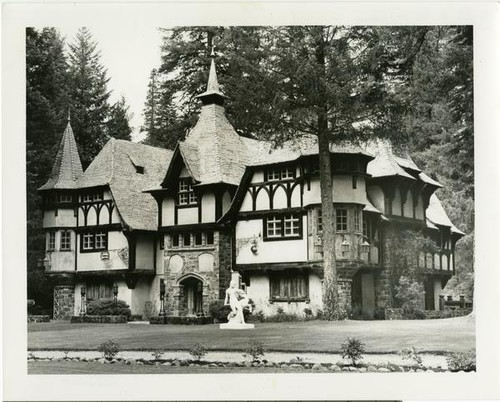
The plans included incorporating the monastery’s church into a 150-foot indoor swimming pool, complete with a diving board. Centuries of religious architecture would provide a distinguished setting for getting wet. But the proposed castle’s estimate exceeded US$50 million in 1931 - roughly US$1.1 billion in today’s money - and the Depression was squeezing even Hearst’s finances. The grand scheme was abandoned. He now owned two dismantled monasteries on opposite sides of America, neither of which he had managed to put back together.
The Óvila stones eventually passed to San Francisco and spent decades in Golden Gate Park, where fires damaged packing crates and erased markings needed for reconstruction.

Some were ultimately assembled into a chapter house at the Abbey of New Clairvaux in California, returning at least part of the building to monastic use. San Simeon remains a magnificent testament to his eye for beautiful things. The dismantled monastery revealed the difficulty of acquiring something magnificent before deciding what it was for.
The Leading Man Also Owned the Theatre
Henry Cyril Paget, 5th Marquess of Anglesey - Britain
Henry Cyril Paget was 23 when he inherited his father’s title in 1898, along with the family homes at Beaudesert in England and Plas Newydd in Wales. The estates produced about £110,000 annually - roughly US$24 million in today’s dollars. This was income arriving every year, before he needed to consider such inconveniences as employment. His predecessors had supplied a distinguished military pedigree and the expectation that he would behave like a conventional aristocrat. Henry preferred costumes, jewelry, and an audience.
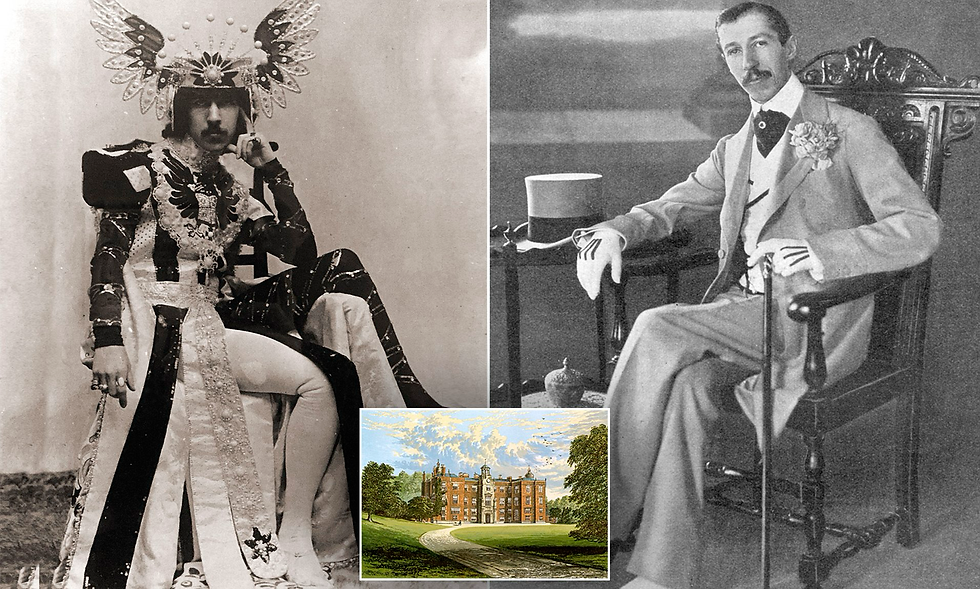
His enthusiasm extended well beyond a few adventurous waistcoats. He accumulated luxurious clothes, elaborate theatrical costumes, jewels, and motor cars, reportedly modifying a car to spray perfume from its exhaust. One account puts a single year’s underwear bill at £3,000: approximately US$650,000 in modern purchasing power. His marriage to his cousin Lilian quickly became troubled, and they agreed to lead separate lives. Whether he was escaping expectations, pursuing applause, or simply enjoying himself is hard to establish. What is clear is that restraint had very little influence over the wardrobe.
At Plas Newydd, he converted the family chapel into the 150-seat Gaiety Theatre, eventually installing a professional company and taking productions on tour. His signature Butterfly Dance involved billowing white silk illuminated by colored lights, earning him the nickname “the Dancing Marquess.” This was no solitary performance to a room of obliging servants: local people attended for free, and some performances raised money for charity. Henry could be generous, daring, and serious about theatre. Owning the building merely removed the uncertainty surrounding who would get a part.

By 1904, after fewer than six years of this arrangement, he was insolvent, with debts of approximately £544,000 - roughly US$114 million today. That was money still owed, despite the enormous income already available to spend. Auctioneers began selling his possessions to satisfy creditors including clothes, jewelry, cars, and household equipment. Henry left Plas Newydd and died in Monte Carlo in 1905, aged 29. It’s easy to laugh at the extravagance. He’d inherited enough to keep the show running for a lifetime. Within six years, even the costumes belonged to the creditors.
Never Throw a Better Party Than the King
Nicolas Fouquet - France
Nicolas Fouquet came from a wealthy French family. Appointed superintendent of finances in 1653, he became responsible for finding money for Louis XIV’s chronically strained treasury, while becoming conspicuously wealthy himself. Family money, advantageous marriages, and financial dealings involving the crown helped build an estate valued at more than 15 million livres - at a time when a servant might earn 100 livres a year. His debts reportedly exceeded even that impressive fortune, but creditors rarely feature prominently in a portrait commissioned by the borrower.

Fouquet possessed a particular talent for making success visible. At Vaux-le-Vicomte, southeast of Paris, he employed the day’s most noted architect, painter, and landscape designer to create an estate whose buildings, interiors, and gardens seemed united in their opposition to modesty. On 17 August 1661, he invited the king to an evening featuring a magnificent feast, a new comedy-ballet by Molière, and fireworks. For most hosts, providing sufficient chairs constitutes a successful reception. Fouquet had arranged cultural history.

The difficulty was the guest of honor. Louis XIV was establishing his personal authority, and a finance minister with spectacular wealth, influential friends, and a palace worth admiring presented several potential irritations at once. The familiar version has the king seeing the party, becoming jealous, and ordering Fouquet’s arrest. In reality, Louis and Fouquet’s rival, Jean-Baptiste Colbert, had already moved against him. The party didn’t create the danger; it supplied an exceptionally well-lit demonstration of the wealth and influence that made him dangerous. On 5 September, D’Artagnan - the actual musketeer, rather than merely the novelist’s hero - arrested him in Nantes.

After a lengthy trial, Fouquet was convicted of misappropriating public funds and sentenced to banishment. Louis considered that insufficient and substituted life imprisonment. Fouquet died in captivity in 1680, while the artistic team he had assembled became instrumental in the king’s own projects, including Versailles. The evening remains an instructive approach to entertaining the boss. There are occasions when hospitality would benefit from slightly worse catering, although a disappointing fish course probably wouldn’t have saved him. Fouquet had demonstrated how magnificently a man could live. Louis kept the designers and made sure Fouquet never lived that way again.
Even the Toilet Accessories Had Standards
Prince Jefri Bolkiah - Brunei
Prince Jefri Bolkiah, youngest brother of the Sultan of Brunei, enjoyed an unusually convenient combination of family connections and financial responsibility. He served as finance minister and chaired the Brunei Investment Agency, which managed the reserves generated by the small Southeast Asian country’s oil and gas wealth. Alongside these public duties, he ran Amedeo, his own sprawling business empire.

Managing the national investments while pursuing substantial investments of your own requires careful boundaries. The subsequent litigation suggests these were not always the strongest feature of the arrangement.
Amedeo’s ambitions included luxury housing, hotels, entertainment developments, and industrial facilities. This was more than a prince ordering expensive toys, although the distinction became difficult to maintain when the accounts were examined. After its collapse in 1998, an investigation concluded that approximately US$14.8 billion from the investment agency had been paid to Jefri or used for his benefit. The government sued him. It wasn’t simply a tally of personal shopping receipts, but the disputed funds financed an extraordinary accumulation of assets. Jefri contested the allegations and agreed to a settlement requiring the return of substantial assets.

The 2001 auction of Amedeo’s stock made the excess easier to picture. Around 10,000 lots went up for sale, including 200 refrigerators, 16,000 tons of Italian marble and granite, hundreds of ornate furnishings, and two unused Mercedes-Benz fire engines. There were also gold-plated bathroom fittings, including toilet-brush holders. These were largely corporate supplies intended for palaces and luxury developments, rather than merely the contents of Jefri’s bathroom - which is reassuring, particularly regarding the fire engines.
An auction is wonderfully indifferent to the ambitions that preceded it. Grandeur becomes a lot number. Furnishings intended to impress distinguished guests are inspected by people wondering whether they will fit in the van. At this level, extravagance begins to look less like pleasure than a warehouse management problem. The gold plating survives; the idea that justified it goes rather cheaply
The Emperor Paid for His Own Applause
Jean-Bédel Bokassa - Central African Republic
Jean-Bédel Bokassa began his career in the French army, rose to command the Central African Republic’s armed forces, and seized the presidency in a coup in January 1966. He subsequently became president for life, then decided that life might be more agreeable as an emperor. His personal fortune was difficult to separate from the country’s finances in general. What he possessed was something more useful than a large bank balance: the power to decide where the national money went. In 1976, he declared an empire. Apparently, being president of a republic had become a little limiting.
For his coronation on 4 December 1977, Bokassa took Napoleon as his model and restraint as an unnecessary complication. There was a gigantic, gilded eagle throne, a robe weighing about 32 pounds, and a diamond-topped crown reportedly costing US$2 million - roughly US$11 million in today’s dollars.

Sixty new Mercedes-Benz cars transported the guests, while 240 tons of food and drink were flown in for the celebrations. The feast included caviar requiring two chefs to carry it and a seven-tier cake. This was a promotion announcement with the logistical requirements of a military operation.
The entire coronation reportedly cost about US$20 million, approximately US$110 million in today’s purchasing power. At the time, the country’s annual GDP was around US$250 million, making the ceremony’s bill equivalent to roughly eight percent of a year’s economic output. France, playing an integral role in this story, supplied substantial support for the spectacle, adding an uncomfortable international dimension to what might otherwise be mistaken for one man’s expensive costume party. This is where the amusement catches in the throat. The expense was real enough. The prosperity it was meant to advertise was largely confined to the people wearing the costumes.

The imperial arrangement lasted less than three years. In September 1979, French-backed forces helped remove Bokassa while he was visiting Libya, and the country became a republic again. He returned in 1986 and was sentenced to death, which was later commuted. He was released under an amnesty in 1993 and died in 1996. The coronation had purchased the appearance of permanence at extraordinary expense. Less than two years after the ceremony, the emperor was gone. The people left outside the spectacle still had needs no coronation had answered.
More Money Than Necessary
Most of us have bought something that required a little creative explanation on the way home. A jacket for a life we don’t lead. Kitchen equipment for the person we intend to become. Something beautiful that briefly made an ordinary Tuesday feel less ordinary. There’s pleasure in these small departures from good sense, and a world in which every purchase had to defend its practical value would be a fairly miserable place to browse. We all want beautiful things, memorable evenings, and some evidence that our time here has been more than a succession of appointments.
The trouble begins when the explanation becomes unnecessary. Nobody asks where the thing will go, what it will cost to maintain, or whether purchasing a second monastery suggests an unresolved problem with the first. Desire passes directly into construction. The people paid to make these things happen get very good at making them happen and what they produce can, of course, be magnificent. A visitor standing beneath a magnificent ceiling is allowed to enjoy it without pretending that the accounts balanced. Beauty doesn’t settle every debt, but neither does a bad balance sheet make beauty disappear.

Still, it would be too easy to dismiss the whole collection as expensive stupidity. There was beauty here, and skill, and work that fed families. There was a man who wanted to dance and another who wanted to be left alone. Those are recognizable wishes, even when their execution requires a theater company or several miles of excavation. What changes the taste is whose money paid for it. An inherited fortune can finance a private absurdity. A country’s reserves carry the claims of people who will never be invited to admire the result, but who have already contributed to it.
Maybe enough is hardest to recognize when you’ve never had to do without. Another room, another diamond, another title might finally settle whatever remains unsettled. Meanwhile, somewhere beyond the gates, people are eating, arguing, putting children to bed, making plans for the morning. Their lives have the usual deficiencies. So do the lives inside. The crown arrives, the photographs are taken, and eventually someone has to help you out of the robe. In the morning, you’re still yourself. That may have been the problem all along.


My takeaway: Enjoying the rewards of hard work is reasonable. The trouble begins when spending loses its limits and possessions become a substitute for purpose.